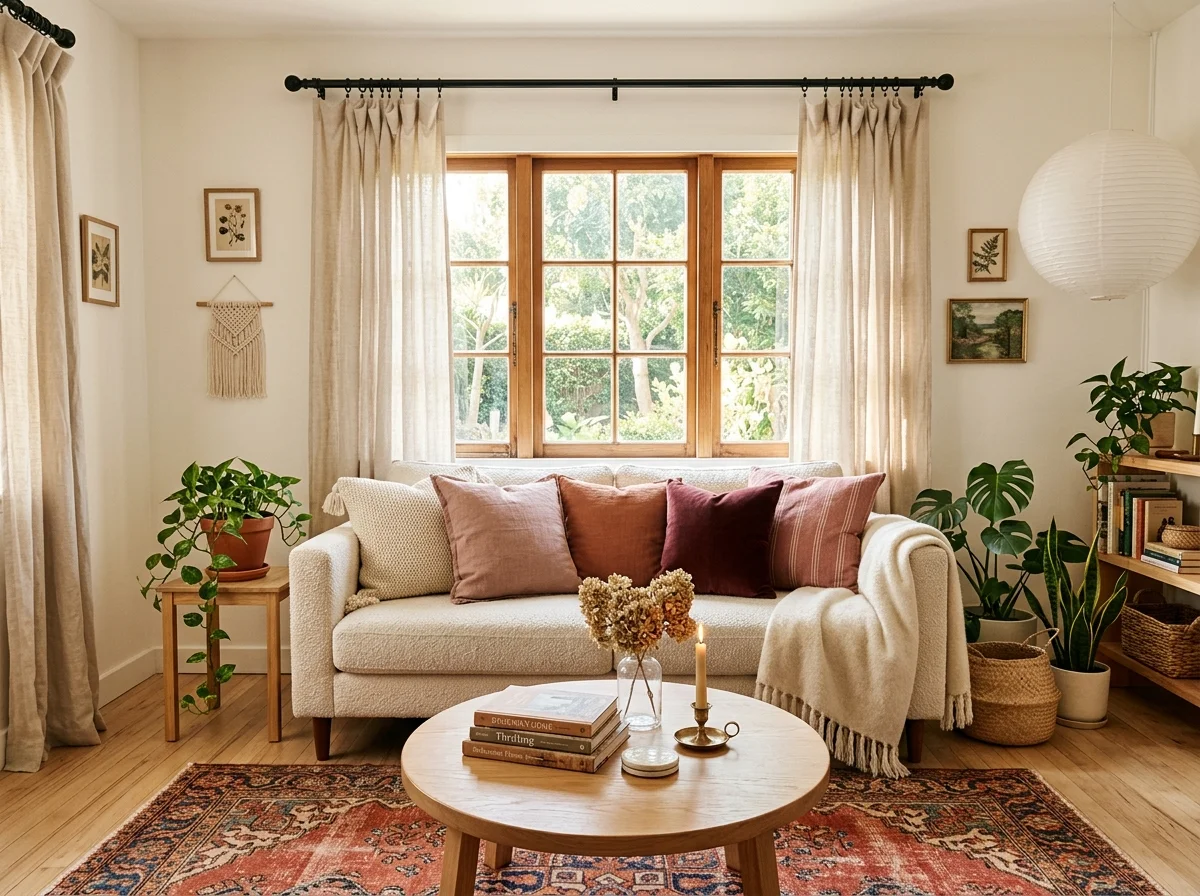
The flat I lived in during my late twenties had a £600 total decorating budget across two years. The rug was a £400 wool one from an importer that closed in 2019. The sofa was a £150 IKEA find with a hand-sewn linen slipcover. The dining chairs were four for £80 from a charity shop. The lamps came from estate sales. People who visited assumed it had cost three times what it had. The cosy was real and it was budget. Most expensive decoration is unnecessary if the underlying choices are right.
A cosy room is rarely a money problem. Most expensive interior decorating is solving for the wrong things — buying a £3,000 sofa for a room with the wrong lighting and the wrong rug. Reverse the priority order — spend on the things that do the most cosy work — and the budget cosy room is achievable for surprisingly small total sums.
From the same corner of the site: Where Do You Find Good Thrifted Home, Apartment Decorating Ideas That Survive a Tenancy, and Where to Buy Cosy Home Essentials.
A cosy home is built on decisions, not budgets. These eighteen moves — the heart of the playbook — warm any home for very little, in roughly the order of impact-per-pound. Start at the top with the light and the rug; the rest builds from there. None of it requires a renovation, and most of it comes with you if you move.
1. Change the Light Before Anything Else
The cheapest, highest-impact cosy move costs under £40: swap every cool-white bulb for warm 2700K. Cool light is what makes a cheap room feel cheap and a beige rental feel institutional. Before spending on anything else, fix the light — it transforms every room you own and costs almost nothing.
2. Add Lamps, Not Overhead Glare
A few lamps — charity-shop brass, high-street ceramic — lighting a room low and warm from several points beats a single harsh overhead every time. Lamps are cheap secondhand, transform the atmosphere, and come with you if you move. Layered lamplight is the budget's single biggest cosy lever.
3. Spend on the Rug, Save Elsewhere
If the budget allows one real investment, make it a wool rug — it grounds a room, warms the floor, and lasts decades, doing more for a room than expensive furniture. A good rug under a high-street sofa reads warm; a good sofa on a bad rug reads cold. Buy direct from importers to halve the price.
4. Buy Quality Secondhand, Not Cheap New
The core budget principle: a solid secondhand piece beats a flimsy new one at the same price. Charity shops, car boots, estate sales, and Vinterior yield solid wood, brass, and character for a fraction of new flat-pack — and they last. Buy the quality old thing, not the cheap new thing, every time.
5. Paint Is the Cheapest Transformation
A tin of paint transforms a room, an alcove, or a tired piece of furniture for under £40. Drench a small room in a warm tone, paint a dated chest, deepen an alcove behind shelving. No other spend changes a room so much for so little. Paint is the budget decorator's most powerful tool.
6. Layer Soft Furnishings for Instant Warmth
Throws, cushions, and a sheepskin disguise tired furniture and add your colours for very little. One good wool throw, cushion covers over existing inserts, a sheepskin on a hard chair. The soft layer is cheap, portable, and the quickest way to make a budget or rented room feel warm and yours.
7. Fill the Place With Plants
Plants are the best-value warmth there is — life and softness for £10 to £30, from a local nursery rather than a supermarket. A big floor plant transforms a corner; trailing greenery softens shelves; herbs warm a kitchen. Greenery brings the one thing a hard, cheap room most lacks: something alive and growing.
8. Dress the Windows Properly
Full, floor-length curtains — even budget ones hung high and wide on a cheap or tension rod — read finished where landlord blinds read cold. The largest soft surface in the room, done right, warms the whole space and softens the acoustics. Buy enough fabric for fullness; the height and length matter more than the price.
9. Hang Art and Mirrors on a Budget
Bare walls read unfinished. Framed prints, postcards, and charity-shop frames make walls personal for very little, and a thrifted or budget mirror bounces light and enlarges a room. The walls do huge work for a room's character; you can dress them with cheap frames, free prints, and a single good mirror.
10. Swap Hardware to Brass
Replacing handles and knobs on cabinets, dressers, and wardrobes with brass transforms cheap and flat-pack pieces for £20 to £50. It's a screwdriver job with an outsized warming effect, and on a rental you keep the originals to swap back. The smallest spend with the biggest effect on builder-grade and flat-pack.
11. Use Baskets to Tidy and Warm
Woven seagrass and rattan baskets hide clutter and add natural texture at once, for £20 to £40. For blankets, logs, toys, or plants. They warm and tidy a room in a single cheap buy, and natural fibre reads far cosier than plastic storage. Useful and warming together — the budget's efficient double act.
12. Restyle With What You Already Own
Before buying anything, restyle what you have — group objects in odd numbers, vary heights, edit surfaces clear, move a lamp, rehang the art lower. Costs nothing, and a room arranged with intention reads considered where the same things scattered read cluttered. The free upgrade is arrangement, not acquisition.
13. Restore Rather Than Replace
A tired sofa, chair, or wooden piece is usually worth restoring over replacing — wax the wood, rewire the lamp, reupholster the good frame. A £20 chair with a £60 recover beats anything new at the price and is unique. Restoration keeps quality and character in a room for a fraction of buying new.
14. Add Candles and Real Flame
A cluster of candles adds the warmest, oldest light there is for around £15, and a real flame — even an electric or gel version — gives a room a living focal point. Lit in the evening, candles drop a room into a register no bulb reaches. Cosy you can light in seconds, for almost nothing.
15. Prioritise the Rooms You Use Most
With limited money, don't spread it thin across the whole house — concentrate on the rooms you actually live in: the living room and bedroom first. A few rooms done well read far better than every room done cheaply. Finish the spaces you spend time in before touching the ones you pass through.
16. Buy Slowly and Build Over Time
The budget's best friend is patience. A room built up gradually from considered, quality, often-secondhand pieces reads collected and lasts; a room furnished in one cheap sweep reads flat and wears out. Buy the best version you can afford when you can afford it, and let the room come together over months, not a weekend.
17. Know Where to Spend and Where to Save
The whole playbook in one rule: spend on what you touch daily — the bed and its linen, the sofa, the rug, the lighting — and save on what rotates or matters less. Put the limited budget where your body and eye spend the most time, and the room reads richer than its total cost. The split is the strategy.
18. Texture and Layers Beat Buying More
A cheap room reads expensive not from more stuff but from layered texture — a wool throw against linen, a jute rug under a wool one, a chunky knit, a sheepskin. The contrast of materials gives a budget room the depth that money usually buys. Layer what you have in varied textures before spending on anything new.
Where the Money Actually Goes
The eighteen moves above are the playbook; below, the detailed economics — where to spend, where to save, and how the budget breaks down room by room, so you can plan a whole home's worth of cosy against a real number.
Where the Money Actually Goes
The spending priority for cosy, in order of return on investment:
1. Lighting (£30-300 total). Bulbs at 2700K throughout the house, two or three floor and table lamps from charity shops or estate sales, ideally on dimmers. The cosiest investment in any home, and the cheapest of the high-return categories.
2. The rug (£400-1,500). A wool rug, 8x10 feet, from a direct importer. The single biggest furniture purchase that pays back its cost in cosy across a decade.
3. Textiles (£200-600). Two wool throws (one heavy, one medium), linen curtains for the main living room and bedroom, linen bedding for the bed.
4. Paint (£100-300 for materials, plus your weekend labour). A correctly chosen warm paint colour in the main living spaces. Free to apply if you do it yourself.
5. One generous piece of seating (£200-1,000). A vintage armchair or one good sofa. Vintage almost always wins per pound at this stage.
The total for the entire list comes to between £930 and £3,700 depending on choices. Everything else in the room — side tables, art, smaller furniture, accessories — can be sourced for £20-150 per item from charity shops, flea markets, and vintage sellers.
Where to Skip Entirely
The biggest budget waste in home decor is matching coordinated sets. A bedding set with matching cushion covers and a coordinating throw, all from one retailer, costs more than the components separately and reads less collected.
The same logic applies to:
- Matching dining sets (table + 6 chairs + sideboard) — buy them separately for better quality at lower total
- Three-piece living room sets (sofa + loveseat + chair in matching upholstery) — mix instead
- Matching cushion sets (3 or 5 cushions in coordinated patterns) — buy individually
- "Bedroom packages" (bedframe + 2 nightstands + dresser + mirror) — never buy as a set
- "Wall art sets" (3 prints sold together) — single pieces always
The savings from skipping coordinated sets compound across the room. £300 saved on cushions because you bought them individually. £200 saved on the dining sideboard because you found a vintage one. £400 saved on the bedside tables because you used two different vintage pieces. Total savings often exceed £1,000 across a single room.
The Vintage and Secondhand Strategy
For furniture, vintage and secondhand almost always wins at any budget point under £1,500 per piece.
Charity shops and high-street secondhand stores. Best for: side tables, dining chairs, small accent furniture, smaller upholstered chairs. Look in university towns and wealthier suburbs for the highest-quality pieces. Budget per piece: £15-100.
Local auction houses. Best for: dining tables, larger upholstered furniture, sideboards and chests of drawers, mirrors, paintings. Local auction houses sell estate contents weekly in most British and US cities. Budget per piece: £30-500.
Online vintage marketplaces. Pamono, Vinterior, Chairish, 1stDibs. Best for: specific mid-century or designer pieces. Budget per piece: £100-1,000. More expensive than auction houses but with verified provenance and condition.
Facebook Marketplace and Gumtree. Best for: large furniture that local sellers want gone (sofas, dining tables, bookcases). Local pickup means rock-bottom prices. Budget per piece: £20-300.
Estate sales. Best for: complete room contents, kitchen ceramics, dining linens, artwork, smaller decor. Estate sales in good neighbourhoods produce a year's worth of cosy decor in a single weekend. Budget per piece: £5-50.
The High-Low Mix
The reason high-end-only or budget-only rooms tend to look less cosy than mixed rooms is that the visual rhythm comes from variation. A room with three vintage pieces, two high-end purchases, and several budget finds reads as collected. A room from a single source (whether that source is a luxury showroom or a flat-pack retailer) reads as merchandised.
A typical cosy budget room mix:
- One generous piece (sofa, dining table, or large rug) at the upper end of the budget — £500-1,500
- Two or three vintage pieces from auction houses or vintage markets — £100-400 each
- Four to six charity-shop or flea-market objects — £15-80 each
- Several free or near-free elements (foliage from the garden, books from existing collection, personal objects)
The mix gives the room visual texture without requiring any single piece to bear too much weight. The cheaper components don't have to look expensive because the more expensive components anchor the room.
What IKEA Does Well, and What It Doesn't
IKEA is genuinely useful for budget cosy when you know what to buy and what to skip.
Worth buying at IKEA:
- Linen curtains (Aina, Lenda, or Vivan ranges) — £30-70 per panel
- The Pax wardrobe system for built-in storage
- Basic dining tables and consoles in solid wood (Mörbylånga, Mockelby)
- The Strandmon armchair (£250-350) — a workhorse of budget cosy
- Bedframes in solid wood (Hemnes, Tarva)
- Bedside tables in solid wood (Hemnes, Hurdal)
- Sheepskin rugs (real, surprisingly affordable)
- Basic lamps in metal and fabric (Skaftet, Rödd)
Skip at IKEA:
- The brightly-coloured pieces in any range
- The Kallax shelf unit (looks like office storage in any room)
- Most upholstered furniture with synthetic fabric covers
- The fabric room dividers and curtains in patterned designs
- Synthetic throws and any "throw blanket" that's polyester
- Most kitchen accessories (the IKEA branding shows)
- Any piece in their "decor" or "accessories" department
DIY That's Actually Worth Doing
Some DIY is genuinely budget-positive (saves money and looks better). Other DIY is budget-negative (takes longer and looks worse than buying right).
Worth DIYing:
- Sewing simple linen cushion covers from cut linen (saves 70% versus buying)
- Hanging picture wire and shelving (saves a tradesperson visit)
- Painting (saves a decorator)
- Refinishing thrifted wooden furniture with sandpaper and natural oil
- Building simple plywood floating shelves
- Making cyanotype or simple monoprint artwork for framing
Not worth DIYing:
- Upholstery (specialist skill, looks visibly amateur if done poorly)
- Electrical work (illegal in the UK without certification, dangerous everywhere)
- Curtain making for windows larger than 1m wide (sewing straight lines on a long curtain is harder than it looks)
- Refinishing or French-polishing high-end vintage pieces (use a specialist)
- Most "Pinterest hack" projects involving spray paint on plastic
The DIY worth doing saves time and money. The DIY worth skipping is the kind that looks visibly amateur even on the best-styled shelf.
Budget Cosy Room by Room
Living room (total £700-1,500): A vintage sofa or armchair from auction (£200-500), a wool rug from a direct importer (£500-900), two charity-shop lamps with new 2700K bulbs (£40-100), a vintage coffee table or trunk (£50-200), one wool throw and three linen cushion covers (£100-180), one piece of original art or vintage print (£50-200), and several books and objects already owned.
Bedroom (total £600-1,400): Linen bedding (£180-320), bedside table sourced vintage (£40-150), one floor lamp or pair of wall sconces (£60-200), linen curtains (£80-200), wool rug beside the bed (£120-300), and one piece of art (£50-200). The bedframe can be the existing one or sourced vintage for £80-300.
Kitchen (no full renovation, budget £200-600): Bulb replacement throughout (£30-50), a vintage object or two (cast-iron pan, wooden bowl, brass utensils — £40-150 total), a cotton or wool runner (£60-150), one piece of art for the non-cabinet wall (£40-200), and replacement of cabinet hardware with brass or aged brass from B&Q or Schoolhouse (£100-300).
Dining room (total £400-1,200): A vintage table from auction (£100-400), four to six dining chairs sourced individually or as a mismatched set (£20-80 each, total £80-480), a pendant light replaced or sourced vintage (£80-300), a cotton tablecloth or linen runner (£40-100), and brass candlesticks for the table (£40-150).
Bathroom (total £150-400): Replace cool-white bulbs (£20-40), one cotton bath mat that's big enough (£40-80), a small painting or vintage piece (£20-100), beeswax candles and a candleholder (£20-50), and folded face cloths in oatmeal or warm white linen (£40-80).
The Total Picture
A complete cosy home — living room, bedroom, kitchen warmth, dining room, bathroom — using the budget cosy approach lands between £2,000 and £5,000 of total spend, depending on choices. Comparable furnished-from-new costs run £8,000-15,000 for a similar room count.
The budget cosy home reads as more sophisticated, not less, because the high-low mix and the vintage components create the visual rhythm that single-source new furnishing cannot replicate.
Cosy is not bought; it is built from the right small decisions across two or three years. The budget version is the same cosy as the expensive version, sourced differently.