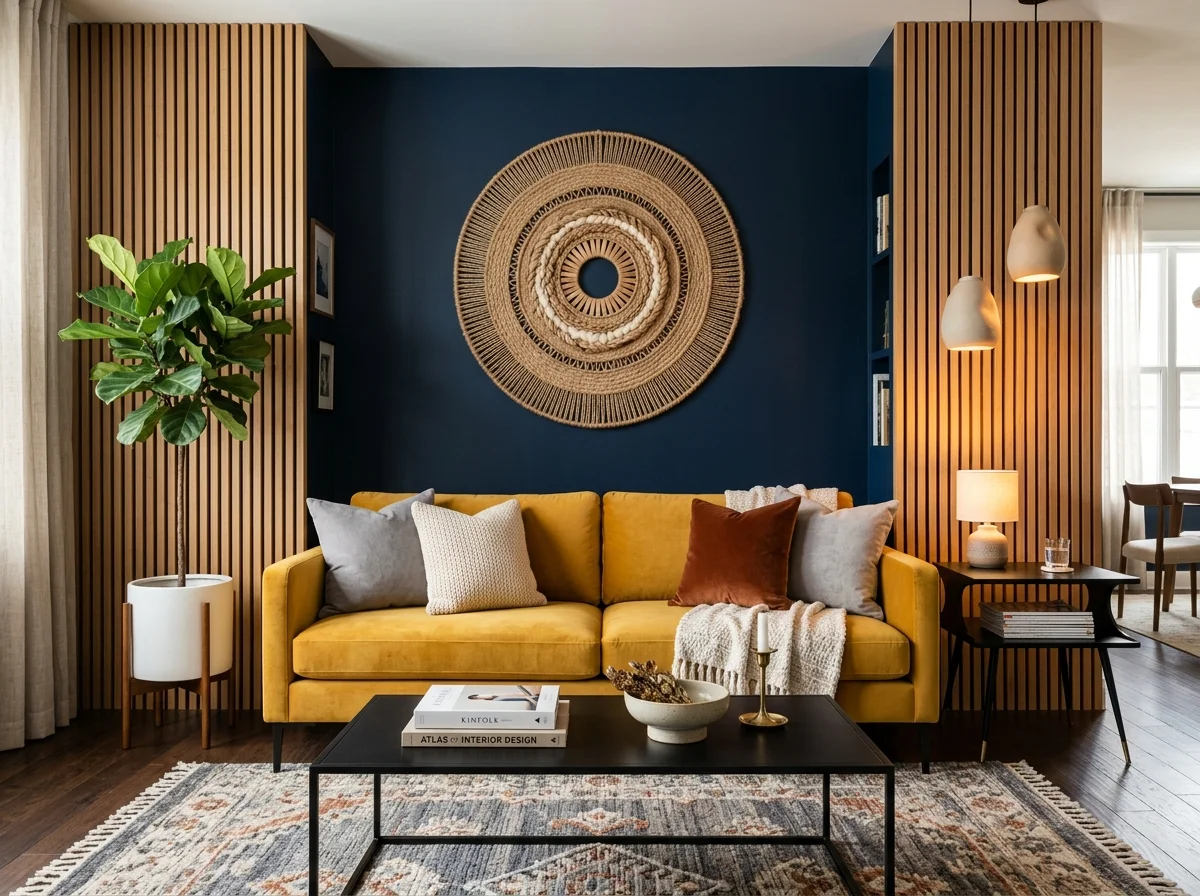
The wool throw on the sofa came from Foxford in 2022. The linen bedding came from MagicLinen during a sale. The dining table came from an Edinburgh auction house. The brass lamp came from a charity shop in Stockbridge. The ceramic vase on the mantel came from a maker in Lewes I follow on Instagram. The art above the fireplace came from a student exhibition. Six sources for six categories. None of them came from the same shop. That is the actual sourcing pattern for a cosy home.
A cosy home is rarely sourced from a single retailer. The catalogue-source approach — buying a complete room from one shop — produces interiors that read as showrooms rather than as homes. The sourcing pattern that actually works is multi-channel, with each category sourced from the specialist or marketplace that excels at it.
This guide covers the categories that matter and where each is best sourced, with price ranges and quality notes.
Keep reading from here: Area Rug Buying Guide for Warm Rooms, Linen Bedding Buying Guide, and Where Do You Find Good Thrifted Home.
Knowing where to buy is half of building a cosy home well. These eighteen sources and rules cover every category — bedding, rugs, furniture, lighting, art — and the high-low strategy that gets a collected, quality home for less. Use them as a directory and a spending plan.
1. Linen Bedding: Buy From Specialists
For linen bedding, the specialists are worth it: Piglet in Bed, Tekla, Cultiver, MagicLinen, and Bed Threads source good European flax and finish it for softness and longevity. Expect £150 to £320 for a full set that lasts a decade. Skip fast-fashion linen, which is usually a lighter weight or a blend that pills within a season.
2. Wool Rugs: Direct Importers Beat the High Street
A wool rug from a direct importer — Revival, Lawrence of La Brea, Tuesday Made, or a local rug dealer — costs a fraction of the high-street price for the same quality, because you skip the markup. For vintage character, look at Etsy sellers and auction houses. The source is half the value of any rug.
3. Vintage Furniture: Vinterior and Pamono
For furniture with character and patina, Vinterior and Pamono aggregate dealers across Europe, and they're where to find the mid-century, antique, and one-off pieces that make a room read collected. Prices run from bargain to investment. A single vintage piece among new ones is what stops a room reading like a showroom delivery.
4. Lighting: Brass and Ceramic From Independents
Good lighting comes from independents and specialists — Original BTC, Pooky, and Tala for warm, well-made fittings; charity shops and Vinterior for vintage brass and ceramic lamps at £40 to £150. Lamps are where to spend, since lighting does more for cosy than almost anything; the warm metal and ceramic age beautifully.
5. Upholstery: Spend on the Sofa, Save on the Chair
The sofa is the one piece worth investing in — a well-made frame from a maker like or sofa.com or a quality independent lasts decades. Save on accent chairs, which can be vintage or high-street, and reupholster a good old frame rather than buying new flimsy. Spend where you sit most; save where you sit least.
6. Throws and Cushions: Mix High and Low
Throws and cushions are where high-low works best — one good wool throw and quality down inserts, dressed in covers that can be high-street or independent. The insert and one real wool throw carry the quality; the covers can rotate cheaply with the seasons. Spend on the fill and one good throw, save on the rest.
7. Kitchen and Tableware: Earthenware From Makers
For the open-shelf earthenware, mugs, and serving pieces that warm a kitchen, buy from independent potters, craft markets, and specialists rather than matching sets — the slight variation reads collected and human. A few handmade pieces among everyday stuff give open shelves their lived-in warmth. Etsy and local makers are full of them.
8. Curtains: Made-to-Measure Where It Counts
Curtains read finished only when full and floor-length, which usually means made-to-measure for the main rooms — worth it for the windows you see most. For secondary rooms, ready-made extra-long panels from John Lewis or similar, hung high and wide. The fabric and the fullness matter more than the brand; buy enough of it.
9. Paint: The Specialists Are Worth the Premium
Farrow & Ball, Little Greene, and Paint & Paper Library cost more, but the depth of pigment and the way the colours hold across changing light justifies it for the rooms that matter. For ceilings, trim, and secondary rooms, colour-matched trade paint saves money. Spend the premium on the walls you look at most.
10. Plants: Local Nurseries Over Supermarkets
Plants from a local nursery or a specialist grower are healthier, better-established, and cheaper for the size than supermarket plants, and the staff will tell you what suits your light. A big, healthy floor plant transforms a corner; buy it well-grown from people who know plants rather than grabbing a stressed one from a shelf.
11. Charity Shops and Car Boots for Character
The single best source of character on a budget is the charity shop, car boot, and estate sale — vintage brass lamps, solid wood furniture, ceramics, frames, mirrors, and books by the yard. The hunt takes patience but the patina and the prices are unbeatable. Most collected-looking rooms are built partly from these.
12. Baskets and Storage: Natural Materials From Importers
Woven baskets, seagrass storage, and rattan from fair-trade importers and homeware specialists bring natural texture and hide clutter at once. They're cheap, warm, and endlessly useful — for blankets, logs, toys, plants. A few natural-fibre baskets do more for warmth and tidiness together than almost any other budget buy.
13. Art: Affordable Originals and Good Prints
Art needn't be expensive — degree shows, local art fairs, and print platforms like King & McGaw or Desenio give you real character on the walls for a range of budgets. One larger piece beats several small ones. Original work from a student or local artist often costs less than a mass-market print and means far more.
14. Mirrors: Vintage for Warmth, New for Scale
A mirror does double cosy duty — bouncing light and adding depth. Vintage and antique mirrors bring warmth and patina from charity shops, Vinterior, and auctions; for a large statement mirror at scale, the high street is fine. Position any mirror to reflect a window or the warmest light, and it works twice as hard.
15. Hardware: Swap to Brass to Transform Cheap
Replacing the handles, knobs, and pulls on existing or flat-pack furniture and cabinetry with unlacquered brass or aged-bronze hardware transforms cheap pieces for very little. Specialists like Corston and Armac Martin, or budget brass from larger retailers, do it. It's the smallest spend with the biggest warming effect on a kitchen or a dresser.
16. Buy Slowly and Buy Once
The most important principle isn't a shop but a habit: buy slowly, and buy the best version you can afford rather than a cheap placeholder you'll replace. A room built up over time from considered, quality pieces reads collected and lasts; a room furnished in a single cheap sweep reads flat and wears out. Patience is the budget's best friend.
17. Reupholster and Restore Rather Than Replace
A solid old sofa, chair, or wooden piece is almost always worth restoring over replacing — a good frame reupholstered outlasts anything new at the same price, and the bones of old furniture are better. Local upholsterers and french polishers bring tired pieces back to life. Restoring keeps quality and character in the room for less.
18. Know Where to Spend and Where to Save
The whole strategy in one rule: spend on the things you touch, sit on, and sleep in daily — the sofa, the bed and its linen, the rug, the lighting — and save on the things that rotate or matter less — cushion covers, accessories, secondary-room pieces. Put the money where your body and your eye spend the most time, and the room reads richer than its total cost.
The Detailed Category Guide
The eighteen sources and rules above are the directory; below, the same categories in depth — what to look for, what to spend, and how to judge quality in each, room by room and item by item.
Linen Bedding and Bath Linen
Piglet in Bed (UK): mid to premium. £200-400 for a full set. Excellent washes, generous sizing, frequent sales bring premium quality to mid-range prices. Sale items at end-of-season are particularly worth watching.
MagicLinen (Lithuania): budget to mid. £100-250 for a full set. Lithuanian-grown flax, washes well over many cycles, sizing slightly looser than premium brands. Best value at the mid-tier.
Cultiver (US/UK): premium. £250-500 for a full set. Belgian flax with refined finishes. Wider colour range than most competitors. Quality lasts a decade-plus.
Tekla (Denmark): premium design-forward. £200-400 for a full set. Smaller colour range, more design-oriented choices (striped duvets, contrast pillows). Aesthetic-conscious without sacrificing quality.
Hale Mercantile (Australia): premium artisan. £300-700 for a full set. Heavier weight than most, with more visible texture. For the highest-end commitment.
IKEA (Sweden, global): budget. £60-150 for a full set. The Aina, Bergpalm, and Puderon lines are real linen at low prices. Lighter weight than premium brands but acceptable for guest rooms or starter setups.
H&M Home washed linen: budget. £40-100 for a full set. Lighter weight than IKEA's better lines but more polished aesthetic. Good for accent pillowcases or for starter bedding.
For bath linens (towels, washcloths, bath sheets):
The White Company (UK): £30-60 per bath sheet. Reliable Egyptian cotton, consistent quality, generous sizing.
Coyuchi (US): £30-80 per bath sheet. Organic cotton, ages beautifully.
Hamamcılı (Turkey): £15-50 per bath sheet. Turkish cotton hammam towels, lighter than thick American-style towels but dry quickly.
COS: £25-60 per bath sheet. Affordable cotton in warm neutrals.
Wool Throws and Blankets
Foxford (Ireland): £80-200 per throw. Irish wool from a heritage mill. Range of patterns and plain weights.
Avoca (Ireland): £100-250 per throw. Heavier weight than Foxford. Premium feeling.
Tweedmill (Wales): £60-180 per throw. Welsh wool. Often available in warm colours and traditional patterns.
Pendleton (USA): £180-400 per throw. American wool. Heritage patterns. Heavier weight than most British wool throws.
Lapuan Kankurit (Finland): £80-200 per throw. Finnish wool. Modernist patterns alongside traditional.
Begg & Co (Scotland): £150-400 per throw. Scottish cashmere blends. The premium tier.
Heritage charity shops: £15-40 per vintage throw. Charity shops in wealthy postcodes regularly produce vintage Welsh wool, Foxford, or Pendleton throws at deep discounts. The best value source if you have the time.
Aelfie (US): £80-200 per throw. Contemporary patterns in wool. Designer-led but accessible.
Vintage Furniture
Local auction houses: £30-500 per piece. The single best source for vintage furniture per pound spent. Local auction houses run weekly sales in most British and US cities. Online bidding has made these accessible to anyone.
Vinterior (UK): £150-2,000 per piece. Verified vintage marketplace with curated quality. More expensive than auction houses but with better condition descriptions and easier delivery.
Pamono (Europe): £150-3,000 per piece. Strong on mid-century European pieces. Higher prices but high-quality verification.
1stDibs (global): £300-50,000+ per piece. Premium vintage marketplace. Top-end provenance and authenticity guarantees.
Chairish (US): £150-3,000 per piece. US equivalent of Vinterior. Strong selection of American mid-century, antique, and contemporary vintage.
Facebook Marketplace and Gumtree: £20-300 per piece. Best for large furniture at rock-bottom prices. Local pickup constraint keeps prices low.
Estate sales: £5-300 per piece. Complete room contents at low prices. Estate sales in wealthy postcodes produce vintage furniture at deep discounts on the last day.
Junk shops and salvage yards: £20-200 per piece. Local junk shops in market towns and city neighbourhoods regularly produce surprise finds.
Lighting Fixtures
Schoolhouse (USA): £150-800 per lamp. American-made ceiling pendants, wall sconces, and table lamps in warm brass, ceramic, and aged finishes. Strong heritage aesthetic.
Plank Hardware (UK): £80-400 per piece. Hardware and lighting in unlacquered brass, aged finishes. Excellent value for the quality.
Cox & Cox (UK): £80-300 per lamp. Range of warm-toned lighting including table lamps with linen shades, pendants, and floor lamps.
Pooky (UK): £60-300 per lamp. Generous range of ceramic and brass lamps, linen shades sold separately.
Houseof (UK): £80-400 per piece. Modern lighting in warm finishes.
Soho Home (UK): £200-800 per lamp. Designer-grade lighting with mid-century influence.
Pamono and Vinterior for vintage lighting: £80-1,500 per piece. The best vintage table lamps and floor lamps live here.
IKEA selectively: £30-150 per lamp. Specific lamps work — the Skaftet base series, the Rödd and Hektar floor lamps, the Krusning paper shade. Most IKEA lighting doesn't suit cosy interiors; these specific items do.
Ceramics and Vessels
Independent makers via Instagram and small studios: £20-300 per piece. The best source for hand-thrown ceramics with character. Follow ceramicists in your area or in cities you'd order from.
Crafts Council UK directory: verified British makers searchable by category.
Etsy (selectively): £15-150 per piece. Some excellent independent ceramicists sell through Etsy. Filter aggressively to avoid mass-produced dropshipped items.
Auction houses for vintage ceramics: £5-200 per piece. Vintage Royal Copenhagen, Wedgwood, Arabia, and other heritage ceramics regularly available.
Heath Ceramics (USA): £80-400 per piece. The premium American ceramic standard. Mid-century glazes that still feel current.
Skagerak (Denmark): £40-200 per piece. Danish design-led ceramics with restrained aesthetics.
Art and Prints
Local art schools and graduate shows: £30-300 per piece. Original work from working artists at accessible prices. Most cities have one or two art schools with end-of-year exhibitions.
Saatchi Art: £80-2,000 per piece. Online marketplace for original art across price ranges. Filter by size and price for accessible options.
Etsy original art (selectively): £20-300 per piece. Many working artists sell through Etsy. Look for prints with clear edition numbers and original paintings from artists with consistent body of work.
Local galleries: £100-3,000 per piece. Independent galleries in any city carry working artists at varying price points. Many run installment plans for higher-priced works.
Print specialists: Counter-Print, House of Pictures, Affordable Art Fair for curated selections.
Vintage prints from auction houses: £20-300 per piece. Botanical prints, vintage maps, framed photographs.
Hardware (Cabinet Pulls, Knobs, Taps)
Plank Hardware (UK): £8-40 per pull. Unlacquered brass, aged brass, hand-forged options. Excellent value.
DeVol Kitchens (UK): £15-80 per pull. Designer-grade hardware. Higher prices, exceptional quality.
Schoolhouse (USA): £15-60 per pull. American-made hardware in heritage finishes.
Original BTC (UK): £20-80 per pull. Designer hardware. Strong range of aged brass.
Etsy (selectively): £5-30 per pull. Independent metalworkers produce custom hardware at competitive prices.
Anthropologie: £8-30 per pull. Mixed quality but occasionally excellent options.
Curtains and Curtain Rods
Curtains: MagicLinen, Piglet in Bed, Cultiver, IKEA, H&M Home (in roughly that order from premium to budget).
Curtain rods: Linen Tales for premium wooden rods, IKEA for budget metal and wood rods, Etsy for custom-length brass rods.
Bespoke curtain makers: local upholsterers and curtain specialists in any city. £200-800 per pair for custom-made curtains in supplied fabric.
High-Street Selectively
A few high-street and mass-market retailers produce occasional quality:
H&M Home: linen curtains, linen pillowcases, simple ceramics, candles. Skip the patterned items and trend pieces.
Habitat (UK): lighting and selective furniture. Mid-tier quality at accessible prices.
Anthropologie: ceramics, lighting, smaller home items. Quality variable; choose carefully.
Zara Home: linen items and basic ceramics. Skip the heavy trend pieces.
West Elm: selective furniture and basic items. Quality variable; vintage almost always wins per pound.
CB2: modern accessories and selective furniture.
What to avoid universally: any home retailer's "rustic farmhouse" range with mass-produced distressed-look items. The visual signature is recognisable across multiple retailers and the items age badly.
Putting It Together: The Multi-Source Cosy Room
A complete cosy living room sourced multi-channel:
- Walls painted in Farrow & Ball Setting Plaster
- Sofa: vintage from auction house or Vinterior, £400-800
- Armchair: vintage leather from charity shop, £80-200
- Coffee table: vintage trunk or wooden table from local salvage, £40-200
- Wool rug: direct-import or vintage Persian from auction, £500-1,200
- Curtains: MagicLinen panels, £200-300
- Throw: Foxford or vintage charity-shop wool, £40-100
- Cushions: mixed sources (H&M Home, MagicLinen, vintage), £100-200
- Lamps: vintage from auction houses and charity shops, £80-300
- Ceramics: independent makers via Instagram or Etsy, £50-200
- Art: local art school or Saatchi Art original, £100-400
Total: £1,690-3,900 for a complete living room sourced multi-channel. The equivalent from a single high-end retailer would run £6,000-15,000.
A cosy home is built from twenty different sources, not from one catalogue. The shopping pattern is multi-channel by design, and the result is a room that reads as collected rather than as merchandised.