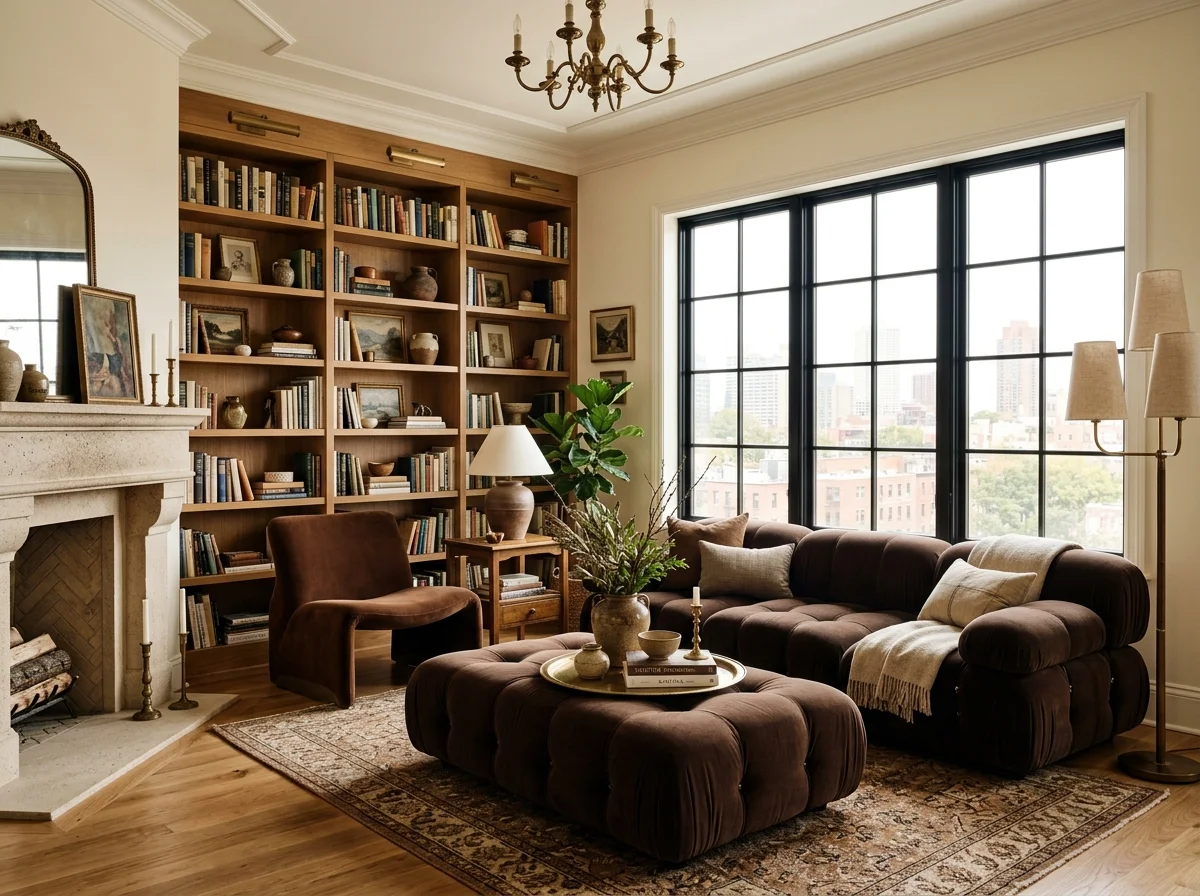
The oak dining table came from an auction house in the Borders for £180. The wing chair beside the fireplace was £40 from a charity shop in Morningside. The framed botanical prints above the sideboard were £8 each from a flea market in Stockbridge. The brass lamp on the side table came from a Facebook seller for £25 who wanted it gone the same week. None of these things cost what they look like. The strategy is knowing where to look.
The "thrifted home" Instagram aesthetic looks impossible to reproduce until you understand the sourcing strategy. The accounts producing those interiors aren't shopping at one specific source — they're working five or six different sources continuously, knowing which one suits which object category.
Pairs well with Budget Cosy Home Playbook, Home Decor Ideas Under £100 That Aren't, and Where to Buy Cosy Home Essentials.
Thrifting well is a skill — knowing where to look, what to grab, and what to leave. These twelve strategies help you find the vintage brass, solid wood, and characterful pieces that make a room while skipping the junk. Use them as a sourcing playbook for charity shops, car boots, and online resale.
1. Shop Charity Shops in Wealthier Areas
Charity shops in affluent neighbourhoods receive better donations — quality furniture, brass lamps, real ceramics, good frames — often at the same low prices as anywhere else. A short trip to a wealthier area's high street is the single best charity-shop strategy. The donations reflect the donors; shop where the good things are given away.
2. Arrive Early at Car Boots and Flea Markets
At car boots and flea markets, the best pieces go in the first hour. Arrive early, walk fast on a first pass to spot the good stalls, then circle back to negotiate. The early bird genuinely gets the brass lamp and the solid oak chest; arrive late and you're picking over what the dealers already passed on.
3. Hunt Estate and House-Clearance Sales
Estate sales and house clearances offer whole rooms of quality at once — an entire household's furniture, lighting, and ceramics, often priced to clear. They're the fastest way to find genuinely good vintage pieces in volume. Watch local listings and clearance company sites; a single good sale can furnish a room.
4. Learn to Spot Solid Wood
The most valuable thrifting skill: recognising solid wood and good construction. Solid wood is heavier, has grain that continues around edges, and often dovetailed drawer joints; veneer and chipboard are lighter and edge in laminate. A solid wood piece, even battered, is worth restoring; chipboard never is. Weight and joints tell you.
5. Grab Brass and Ceramic Lamps
Vintage brass and ceramic table lamps are among the best thrift finds — £15 to £40 for pieces that cost ten times as much new, and the patina reads collected. Rewiring is cheap and simple. Lamps do more for cosy than almost anything, so a thrifted lamp is a double win: warm light and warm character for very little.
6. Collect Frames and Mirrors
Old frames and mirrors are thrifting staples — cheap, plentiful, and full of character. Buy good frames even with bad art inside (reframe your own), and snap up vintage mirrors for the warmth and light they bring. A gallery wall built from thrifted frames reads collected and costs a fraction of new framing. The frame is the value.
7. Don't Pass Up Ceramics and Glassware
Vintage ceramics, stoneware, and glassware bring warmth and the handmade, collected look to shelves and tables for pennies. Vases, bowls, jugs, candlesticks, and serving pieces with age and character beat matching new sets. The slight imperfection of old, handmade pieces is exactly what styled shelves and tables want. Buy the ones that speak to you.
8. Check Condition Before You Commit
Thrifting well means assessing fast: check furniture for woodworm, structural wobble, and water damage; check upholstery you can't easily recover; check electricals are rewireable. Buy quality materials and timeless shapes with honest wear; skip anything with damage you can't fix or live with. Patina is good; rot is not. Know the difference on the spot.
9. Use Online Resale for Specific Hunts
When you're after something specific, online resale — Vinted, eBay, Facebook Marketplace, and Vinterior for vetted vintage — lets you search and wait rather than hope. Set alerts for the piece you want. Online lacks the serendipity of the charity shop but wins for finding a particular thing; combine both for the full sourcing toolkit.
10. Restore and Reupholster Your Finds
A thrifted piece often needs work to shine — a wax or oil for tired wood, a rewire for a lamp, reupholstery for a good-framed chair. Budget for the restoration as part of the buy. A £20 chair with a £60 recover is still a fraction of new, and the result is a unique, quality piece. The finds are raw material; restoration is where they become yours.
11. Buy What You Love, Not What You Need
The best-thrifted rooms come from buying the pieces that genuinely speak to you when you see them, not from hunting a shopping list. Thrifting rewards the open-minded — the unexpected lamp, the odd chair, the painting you can't explain. A room of things you love, gathered over time, reads personal and collected in a way a planned scheme never can.
12. Edit So It Reads Collected, Not Cluttered
The risk of thrifting is accumulation — a room of finds becomes a junk shop. Edit ruthlessly: keep the best pieces, group them with breathing room, and let some finds move on if they don't earn their place. A collected room has a few great thrifted pieces among quieter ones, not every bargain you ever found. Restraint turns hoarding into curating.
The Detailed Sourcing Guide
The strategies above are the playbook; below, the same thinking in depth — which sources yield what, how to assess condition and value on the spot, and how to build a thrifted room that reads collected rather than cluttered.
Charity Shops in Wealthier Areas
The single most useful source for small objects, ceramics, books, and occasional furniture. The key is the neighbourhood — the donations reflect the area, so charity shops in expensive postcodes (Stockbridge in Edinburgh, Notting Hill in London, Brookline in Boston) consistently produce better finds than equivalent shops in less affluent areas.
Best for: ceramics, vintage books, brass candlesticks, small mirrors, vintage lamps, framed art, occasional small chairs and side tables, linens, baskets.
Budget per piece: £5-50.
Visit frequency: weekly if possible. Inventory turns over fast.
Local Auction Houses
Probably the highest-yield single source. Estate contents go through local auction houses constantly. Most British and US cities have at least one auction house running weekly sales. Online bidding has made these accessible to anyone.
Best for: dining tables, sideboards, chests of drawers, mirrors, paintings, larger upholstered furniture, complete sets of china, lighting.
Budget per piece: £30-500.
Strategy: focus on mid-week sales (less competition than weekend), bid on mixed lots where the desirable item is one of several (the lot often sells under the value of the single piece), and physically inspect before bidding when possible.
Estate Sales
A weekend's worth of cosy decor in a single visit, when timed well. Estate sales run on advertised days (usually Fridays through Sundays) at the actual home of someone who has died or downsized. Everything is priced, available, and aggressively discounted on the last day.
Best for: complete kitchen contents (china, silver, linens), framed artwork, garden tools, vintage lamps, smaller furniture, books in quantity.
Budget per piece: £5-100. Last-day visits often produce £2-5 prices on items priced at £20-50 on the first day.
Find them: estatesales.net, regional estate sale Facebook groups, local newspaper classifieds.
Facebook Marketplace and Gumtree
The best source for large furniture at rock-bottom prices. Local sellers who want pieces gone often price below what they paid, and the local-pickup constraint keeps prices down.
Best for: sofas, dining tables, large bookcases, beds, freestanding wardrobes, outdoor furniture.
Budget per piece: £20-300. Sofas that retailed at £1,500 sell for £100-300 on Facebook regularly.
Strategy: filter for newly-listed items (sellers often price too low on first listing, then raise). Use the "free" filter occasionally — some sellers genuinely give away furniture they need to remove. Inspect carefully before pickup — Facebook condition descriptions are unreliable.
Online Vintage Marketplaces
Pamono, Vinterior, Chairish, 1stDibs, and Etsy's vintage category. These sources cost more than the previous four but offer specific designer pieces with verified provenance and reasonable condition descriptions.
Best for: specific mid-century pieces, designer furniture, mid-century lighting, specific glassware, Scandinavian ceramics, designer accessories.
Budget per piece: £100-1,500 typically. Higher for designer originals.
Useful when you want a specific aesthetic or maker that doesn't show up reliably at local sources — a Wegner chair, a 1970s Murano lamp, a Royal Copenhagen vase.
Knowing What's Worth Restoring
Not every thrifted piece is worth taking home. The criteria:
Structural soundness. The frame, joints, and main components are intact even if the upholstery, finish, or hardware is shot. A solid-wood chair with worn upholstery is restorable; a chipboard chair with the same upholstery is not.
Solid materials. Real wood, real brass, real ceramics. Veneer over chipboard, plastic-coated metal, or pressboard masquerading as wood are skip categories regardless of price.
Good proportions. A piece with awkward dimensions or proportions doesn't improve with restoration. The shape has to be right.
Reasonable restoration cost. A piece needing £500 of restoration to look right was probably not a £40 thrift bargain. Calculate restoration cost honestly before purchasing.
The thrift-to-vintage spectrum looks easy on Instagram and takes years to learn. The accounts producing those interiors are working five or six sources continuously, not one.
When to Skip Thrifted Decor
Some categories almost never work secondhand:
Mattresses. Hygiene, structural integrity, and condition unknowns. Always buy new.
Upholstered furniture with stains or smells. The reupholstery cost usually exceeds the savings. Skip unless you specifically want to reupholster.
Cheap chairs from previous decades. A 1990s flat-pack chair didn't improve with age. Modern flat-pack thrift finds are almost never worth taking home.
Anything with visible mould, deep insect damage, or structural cracks. Restoration is more expensive than starting over.