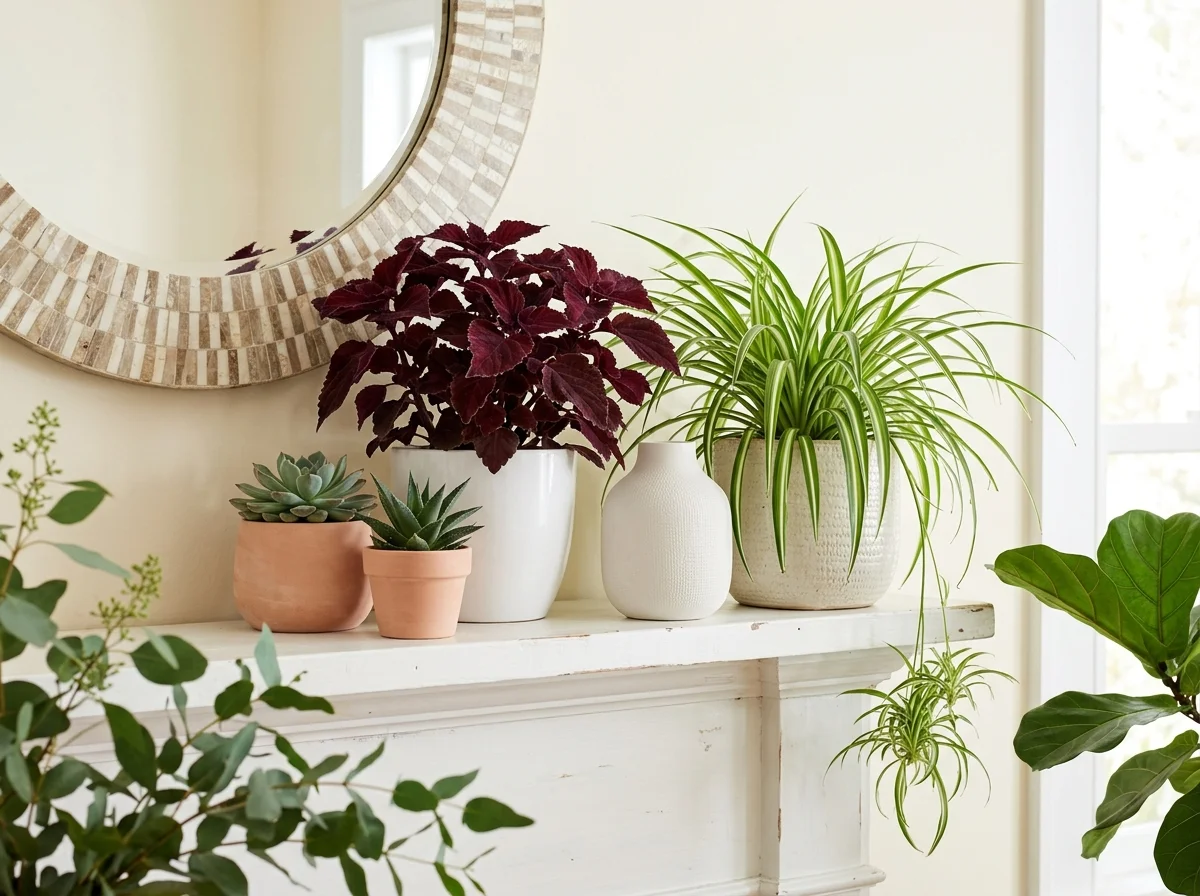
The dried hydrangeas came down from the mantel on the first of December. The brass candlesticks went up in their place, six of them in two clusters, with fresh fir cuttings between. The wool throw on the sofa changed from a light grey to a heavier oatmeal one. That was the entire winter transition. It took twenty minutes. The room shifted the way a person does when they pull on a jumper.
The seasonal-decor industry sells the wrong fantasy. The fantasy is that each season demands new cushion covers, new throws, new bedding, new artwork, and an entire bin of holiday-specific objects rotated in and out. The actual practice of seasonal styling is much smaller. Four small swaps, four times a year, in one or two rooms. That's it.
This calendar walks the year quarter by quarter — what to swap in, what to swap out, what to leave alone. The same logic applies in the northern and southern hemispheres; the dates shift but the moves don't.
If this is the room you're working on, Fall Decorating, Winter Mantel Styling, and Cosy Room-by-Room Guide go deeper on the pieces that fill it.
A home that shifts with the seasons stays alive all year — and it's the decoration that moves, not the furniture. These eighteen moves, organised through the year, keep a home seasonal with swaps and edits rather than spending. Take the ones that suit your home and build them into your own year's rhythm.
1. Keep the Bones, Shift the Decoration
The principle behind the whole calendar: the furniture, the big rugs, the wall colours stay constant year-round, and only the decoration shifts with the seasons. You're not redecorating four times a year — you're swapping textiles, stems, light, and small objects over an unchanging base. The bones carry the room; the seasonal layer is light, cheap, and reversible.
2. Build a Store of Seasonal Textiles
The engine of seasonal shifting is a stored rotation of textiles — lighter linens and cottons for the warm months, heavy wool and chunky knits for the cold. Keep the off-season set boxed, and twice a year swap them over. The textiles do most of the seasonal work, and rotating what you own costs nothing once the collection's built.
3. Lighten Everything for Spring
As spring arrives, lighten — pack away the heaviest winter layers, swap to paler linens, roll up the extra rugs, open the curtains wide, and bring in fresh stems. The act of subtraction and lightening is what shifts a home toward spring. Remove winter's weight first, then add the few fresh, bright touches that signal the new season.
4. Bring in Spring Stems and Bulbs
Spring's signature is fresh growth indoors — branches of blossom, tulips and daffodils in jugs, potted hyacinths and primroses on sills. The fresh stems and growing bulbs bring colour, scent, and life after winter's bare branches. A few vases and pots of spring growth are the cheapest, surest signal that the season has turned.
5. Keep Summer Light and Airy
Summer wants the lightest version of the home — sheer or open curtains, the lightest linens, bare or minimal floors, greenery and cut garden flowers, and as much natural light and air as possible. Pare back the layers entirely and let the home breathe. Summer styling is mostly about removing and opening up rather than adding anything at all.
6. Fill the House With Summer Greenery
Summer is the season of abundance outdoors, so bring it in — armfuls of garden flowers, herbs, foliage, and greenery in simple vessels around the house. The fresh, generous greenery reads as summer itself and costs nothing if you've a garden or a hedgerow. Let the season's growth fill the rooms with colour and life.
7. Deepen the Textiles for Autumn
As autumn arrives, swap the light summer textiles for deep, warm ones — rust, ochre, mustard, and brown in heavier wool and chunky knits. The shift in textile colour and weight turns the home toward the season more than anything else. Layer them onto sofas and beds and the rooms read autumnal and cosy at a glance.
8. Bring Autumn Branches and Foliage Indoors
Autumn's free decoration is the turning foliage — branches of coloured leaves, seed heads, dried grasses, bare twigs in tall vases. A big armful of autumn branches brings the season's colour and drama indoors for nothing. The real foliage reads richer than any bought decoration and is the surest sign autumn has arrived inside.
9. Layer Up for Winter Cosiness
Winter is the season to layer everything for maximum cosiness — the heaviest throws, sheepskins, extra cushions, doubled-up rugs underfoot. Pile on the soft, warm textures the cold months crave. Winter styling is about adding warmth and weight: the home at its most layered, enveloping, and built for long evenings indoors.
10. Shift the Lighting With the Season
Light tracks the seasons: bright and open in spring and summer, low and warm in autumn and winter. As the days shorten, add lamps and candles and warm the bulbs; as they lengthen, open up and pull back. The home's lighting is one of the most powerful and overlooked seasonal levers — match it to the daylight outside.
11. Rotate the Scents Through the Year
Scent marks the seasons as powerfully as anything visual — fresh and floral in spring, light in summer, spiced and warm in autumn, rich and resinous at winter. Swap candles and let seasonal cooking and flowers lead. Rotating the home's scent through the year is a subtle, powerful way to keep it feeling current with the season.
12. Edit the Mantel Each Season
The mantel is the home's seasonal focal point and the easiest thing to restyle — fresh greenery and blooms in spring, light and spare in summer, branches and warm tones in autumn, pinecones and candles in winter. Restyling the mantel four times a year, with natural seasonal elements, keeps the room's focal point current for the cost of a few stems.
13. Swap Cushion Covers, Keep the Inserts
The cheapest seasonal shift: swap cushion covers while keeping the inserts. Light linen covers for the warm months, wool and velvet for the cold, in seasonal tones. The covers store flat and cost little, and changing them shifts a sofa or bed's whole palette with the season. It's the small move that delivers an outsized seasonal change.
14. Layer or Lighten the Floor
The floor shifts with the season too — layer extra rugs and a sheepskin underfoot for winter warmth, then roll them up and lighten for spring and summer. The underfoot change is felt before it's seen and tracks the temperature. Layering the floor in the cold months and baring it in the warm is a subtle, effective seasonal move.
15. Bring Each Season's Nature Indoors
The thread through the whole calendar: let nature lead the seasonal styling. Spring blossom, summer garden flowers, autumn foliage, winter evergreen and pinecones — the season's own growth, brought indoors, is the truest and cheapest seasonal decoration there is. Forage and cut what's outside and the home stays honestly tied to the time of year.
16. Mark the Holidays, Then Return to Season
The holidays are punctuation, not the whole year — decorate fully for Christmas, then return the home to a seasonal-but-not-festive winter look that carries through to spring. Don't let the holiday decor either linger too long or leave the mantel bare. Mark the occasion, enjoy it, then shift back to the quiet seasonal base underneath.
17. Store Off-Season Pieces Properly
The calendar works only if the off-season pieces are stored well — textiles boxed and labelled, decorations packed safely, ready to bring out next year. Good storage makes the twice-yearly swap quick and keeps the rotated pieces in good condition. The home that shifts easily with the seasons is the one whose off-season layers are stored and ready to hand.
18. Build Your Own Year's Rhythm
The calendar is a framework, not a rule — build your own rhythm from it, around your home, your light, your climate, and the moments that matter to you. Some homes shift dramatically with the seasons, others barely; find the level of seasonal change that suits you and make it a gentle annual habit. The point is a home that stays alive through the year, however you choose to turn it.
The Detailed Seasonal Calendar
The eighteen moves above are the menu; below, the same thinking laid out through the year — the principle that the bones stay while the decoration shifts, and exactly what to swap, edit, and add as each season turns.
The Principle: The Bones Stay, the Decoration Shifts
The bones of a home — paint, furniture, rugs, art, light fixtures — should not change with the seasons. Painting the dining room green for spring and back to white for autumn is exhausting and expensive. Changing the rug under the sofa each season is impractical and wasteful.
What changes seasonally is what sits on top of the bones: the throw, the cushion cover (sometimes), the foliage, the candles, and at most one small decorative object near the entryway. Five things at most.
The calendar below walks four transitions:
- Spring shift — late February to mid-March
- Summer shift — late May to early June
- Autumn shift — early September
- Winter shift — late November to early December
The Spring Shift: Lightening Without Removing
Spring is the gentlest transition. Winter has gone on long enough that the room wants light and air, but the cold mornings aren't done yet. The shift is less about adding spring decor and more about easing winter out.
What goes: The heavy oatmeal wool throw. The dried winter foliage (eucalyptus, dried hydrangeas, pine cones). The deep-toned candles in burgundy or oxblood.
What comes in: A lighter wool or wool-cotton throw in a pale colour — bone, soft grey, butter yellow. Fresh foliage in the largest vase — branches with new growth (forsythia, magnolia, cherry blossom, pussy willow). Plain white or beeswax candles. One bowl of citrus on the kitchen worktop. One bunch of tulips on the dining table.
What stays: Everything else. The paint, the rugs, the cushions, the art, the lamp on the sideboard, the books on the coffee table.
Spring is the season most often over-decorated. There is no need for pastel cushion covers, bunny figurines, or anything labelled "Easter." A bowl of speckled brown eggs in a wooden bowl on the kitchen counter is the maximum.
The Summer Shift: Lift the Weight Out
By late May, the winter throw should be gone. The summer shift is about removing weight rather than adding decoration.
What goes: Any remaining heavy textiles. The heavy curtain weight (linen panels stay; wool drapes get stored). The dried winter foliage entirely.
What comes in: A linen or light cotton throw, used less for warmth and more as visual softness on the back of the sofa. Fresh-cut summer foliage in any large vessel — branches of hydrangea, foxglove, peonies, dahlias, eucalyptus, or whatever the garden or local market produces. Open windows. A jug of cold water with a sprig of mint on the kitchen counter.
What stays: Everything structural. Don't store rugs for summer — bare floors look stark in a UK or Pacific Northwest summer, and the rug provides acoustic softness regardless of season.
Summer benefits from edited, not minimalist, rooms. The light is good and the room reveals itself. Take three objects away rather than adding three.
Summer benefits from edited, not minimalist, rooms. Take three objects away rather than adding three.
The Autumn Shift: The Most Substantive Change
Autumn is when the most happens. The light shifts noticeably from August to October, the days shorten, and the home wants to receive warmth.
What goes: The summer linen throws (light cotton stays). Any remaining fresh summer flowers. The lighter candles.
What comes in: Wool throws back on the sofas — one heavy one folded across the back, another available in a basket nearby. Dried botanicals replacing fresh — wheat sheaves, dried hydrangeas, eucalyptus bunches, branches with seasonal leaves. A bowl of squashes, gourds, or pomegranates somewhere visible. Deeper-toned candles — taper candles in oxblood, burgundy, or burnt orange. The reading lamp on a timer to switch on at 4:30pm.
What stays: Everything structural. The summer rug stays through autumn and winter — a deeper rug for autumn is a luxury, not a requirement.
Autumn is the season most worth over-investing in among the four. The light is melancholy and beautiful in equal measure, and the home rewards layering more between September and November than at any other time.
The Winter Shift: Restraint and Weight
By late November, the autumn arrangement starts to look tired. The winter shift strips the colour back and adds physical weight to the room.
What goes: The dried autumn botanicals, especially anything brown or rust-toned. The pomegranates and squashes. The deep-toned candles get used down, not replaced.
What comes in: Evergreen cuttings — fir, pine, cedar, holly, eucalyptus — in the largest vase. White or off-white candles in clusters of three or five (uneven numbers; even numbers read as set design). Heavier wool throws everywhere a throw lives. A bowl of conkers, walnuts in shell, or clementines on the kitchen counter. One garland — only one — along a mantel or banister if you have one.
What stays: Everything structural plus, importantly, the autumn lamp routine. The 4:30pm lamp timer continues through January.
December is the only month where slightly more decoration is forgivable. A tree if you do trees. A wreath on the door. A garland on the mantel. A bowl of mixed citrus and pine cones. Limit it to one significant element per public room, plus the tree in the main living space.
What to Skip Every Season
Themed cushion covers. Cushion covers labelled by season — pumpkin-printed for autumn, snowflakes for winter — date the room and require constant rotation. Solid linen or cotton covers in neutral colours work year-round.
Holiday-specific objects. Resin Santas, plastic bunnies, glittered eggs, ceramic turkeys. These objects are merchandised to look essential and store badly. A few inherited Christmas ornaments on a tree is enough; the rest is filler.
Whole-room redecorations. Painting a feature wall for autumn, replacing the rug for summer, hanging different artwork by season. The bones stay. Decoration shifts on top of them.
Buying new every year. A wool throw lasts ten winters. A brass candlestick lasts thirty. Dried hydrangeas last several seasons. The seasonal storage box should fill once and stay roughly the same.
The Single Storage Box Rule
If all your seasonal decorations don't fit into two under-bed boxes — one for autumn/winter, one for spring/summer — you have too many. The constraint forces editing. Anything that didn't earn its place from the year before doesn't come back out the next year.
Within that constraint, the box should hold:
For autumn/winter: a heavy wool throw, a set of candle holders, a string of unlit fairy lights, one or two ceramic vessels for dried botanicals, a small garland or wreath, a few ornaments if you keep a Christmas tree.
For spring/summer: a lighter throw, a set of candleholders if different from winter ones, one or two clear glass vases for fresh flowers, and possibly a linen tablecloth.
The fresh foliage, fresh flowers, citrus, conkers, and other seasonal elements are bought or foraged each season rather than stored.
A home that shifts gently with the seasons reads as alive. A home that gets gutted and re-merchandised every three months reads as a department store. The work of seasonal styling is small and ongoing — four moments a year, twenty minutes each. That is enough.