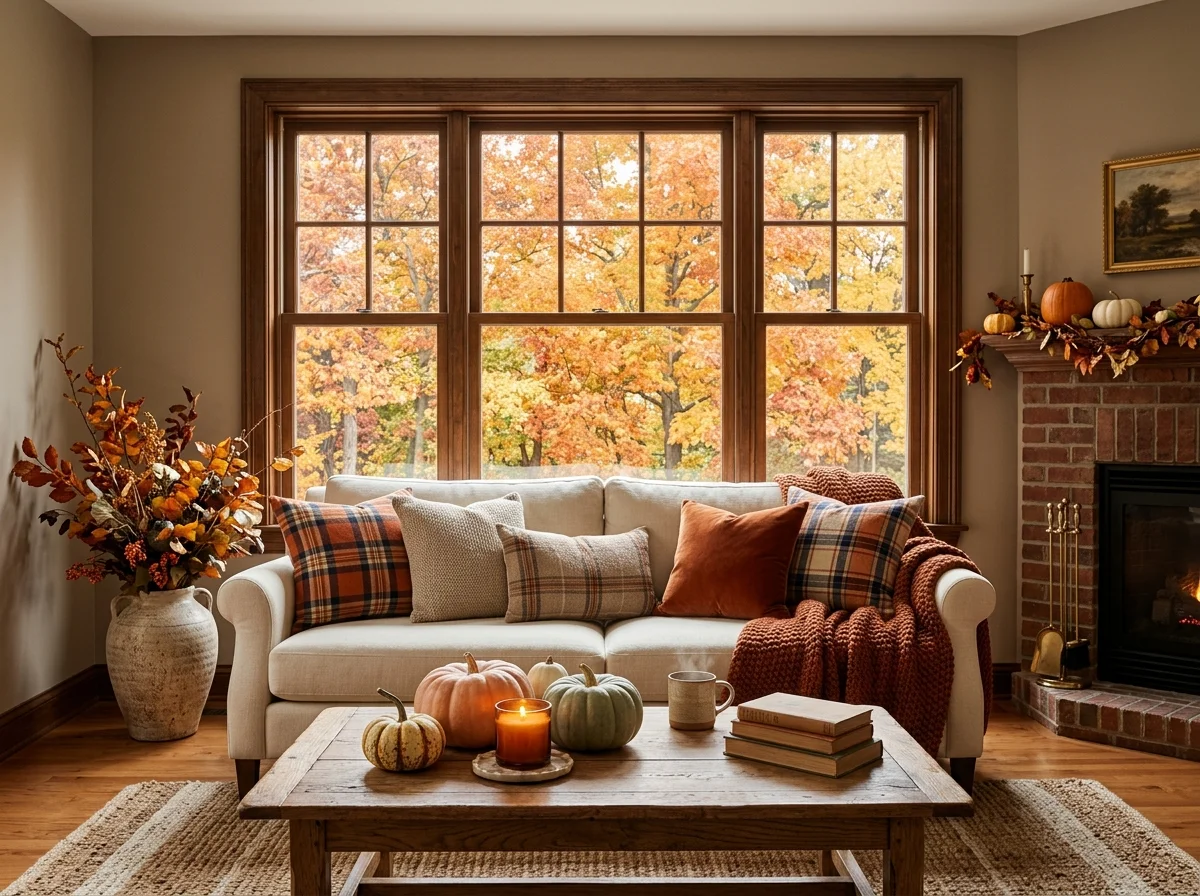
The hydrangeas dried in the same vase they'd held fresh in August — I just stopped changing the water and they faded from pale blue to ochre and parchment. By early September they were the only thing on the mantel except a row of beeswax candles. The room had moved from summer to autumn without any conscious decoration. That is the standard.
Autumn decorating gets ruined by the seasonal aisle. Plastic pumpkins, polyester garlands, signs that say "Pumpkin Spice." None of that is necessary. The actual practice of autumn styling is closer to bringing the outside in — leaves, branches, dried flowers, candle light, wool — and letting the room layer up the way you do when you reach for a jumper.
This sits alongside Seasonal Home Styling Calendar, Winter Mantel Styling, and Textile Layering Guide in the same series.
Autumn is the season a home is built for — the moment to lean into deep warmth, rich texture, and the low golden light of shorter days. These thirteen ideas bring the season in without a single plastic pumpkin. Pick the ones that suit your rooms and turn the cooler months into the cosiest stretch of the year.
1. Bring in Branches and Foliage
Autumn branches — turning leaves, bare twigs, seed heads, dried grasses — in a tall vase or jug bring the season indoors with height and natural drama for free. A big armful of foraged branches is the single most effective autumn decoration. The colour and form of real autumn foliage reads richer than any shop-bought decoration.
2. Shift the Textiles Deep and Warm
Swap summer's light linens for autumn's deep warmth — rust, ochre, mustard, and brown throws and cushions, in heavier wool and chunky knits. The shift in textile colour and weight turns a room toward the season more than any decoration. Layer them on the sofa and bed and the room reads autumnal and cosy at a glance.
3. Use Heirloom Pumpkins, Not Plastic
Real pumpkins and squash in muted, heirloom shades — pale grey-green, dusty pink, deep orange, cream — clustered on a mantel, a table, or a doorstep read sophisticated and natural where bright plastic ones read tacky. A grouping of varied real pumpkins is the restrained autumn statement, and they compost when the season's done.
4. Layer the Lighting Lower and Warmer
As the days shorten, shift the lighting to match — more lamps, more candles, warmer bulbs, lower levels. Autumn is when the home's lighting earns its keep, the low golden glow against the early dark. Light the room in layered warm pools and the long evenings become the cosiest part of the year rather than something to endure.
5. Add Sheepskin and Chunky Knits
Autumn is the season to bring out the heaviest, softest textures — a sheepskin over a chair, a chunky cable knit throw, a wool blanket, extra cushions. The tactile warmth reads autumnal and invites the nesting the season calls for. These are the layers you actually reach for as it cools, and they read cosy even unused.
6. Style With Natural, Earthy Objects
Wooden bowls, ceramic and clay vessels, woven baskets, stone, and dried botanicals bring the earthy, organic warmth autumn wants. A bowl of conkers or acorns, a wooden tray, a clay jug of dried grasses. The natural materials and muted tones read grounded and seasonal, and they suit the deep warm palette the season calls for.
7. Warm the Walls With Deep Colour
Autumn is the moment a deep, drenched wall colour comes alive — a rust, a deep ochre, a moss, a tobacco brown. If you're painting, this is the season for it, and the deep tone glows under the low autumn light and lamplight. Even a single deep accent — a painted alcove, a feature wall — turns a room toward the season's depth.
8. Bring Out the Candles
Candlelight is autumn's signature — clusters of pillars and tealights, scented candles in amber and spice, tapers at dinner. The flicker against the early dark is the warmest light there is, and the scent of a good autumn candle fills the house with the season. Light them as the evenings draw in and the room transforms.
9. Dress the Table for Autumn Suppers
An autumn table — a linen runner in a warm tone, candles, a low arrangement of branches or seed heads, earthy ceramics — sets the scene for the slow, warm suppers the season invites. Add a few small pumpkins or dried elements. The deep, natural table reads seasonal and grown-up, and it makes an ordinary supper feel like an occasion.
10. Add a Throw to Every Seat
The simplest autumn move: a throw on every seat — the sofa, the armchairs, the bedroom chair, the window seat. As it cools, the throws get used, and even unused they read cosy and seasonal. A house with a soft layer within reach of every seat is a house ready for autumn, inviting you to settle in wherever you land.
11. Layer Rugs for Underfoot Warmth
As the floor turns cold, layer the rugs — a wool rug over a jute base, an extra runner where bare feet land, a sheepskin by the bed. The underfoot warmth is felt before it's seen, and the layered texture reads rich and autumnal. Warming the floor is one of the season's most effective and least obvious cosy moves.
12. Fill the House With Autumn Scent
Scent is half the season — simmering spices, a clove-studded orange, an autumn candle, a bowl of apples, woodsmoke from the fire. The smell of autumn does as much for the feeling of a home as anything visual. A pan of mulling spices on the hob or a good seasonal candle fills the house with the warmth the season is named for.
13. Light the First Fire of the Season
If you have a hearth or wood-burner, the first fire of autumn is the moment the season truly arrives. The flame, the warmth, the gathering it draws — nothing else makes a home feel as deeply cosy. Stack the logs, lay the fire, and the room with the fire becomes, as always, the room everyone wants to be in.
The Method Behind Deep Autumn Warmth
The ideas above are the menu; the principles below are the structure — the natural materials, the layered textures, and the lighting shifts that turn a home toward the deep warmth the season wants.
Start With the Natural Materials
Autumn is the most botanically rich season for indoor styling. By September, the garden and the woods have produced more usable material than any other time of year. Wheat sheaves at the height of harvest, dried hydrangeas straight from the bush, branches with turning leaves, seed heads, dried alliums and grasses, conkers, walnuts, acorns, and a range of squashes and pumpkins.
The base of an adult autumn arrangement is dried foliage in one or two large vessels. Wheat sheaves bundled and tied with linen string in a tall vase. Dried hydrangeas in a heavy ceramic jug. Pampas grass in a stone urn — not the pink-dyed version sold for weddings, just the natural straw-coloured stems.
One large arrangement does more than five small ones. Concentrate the visual mass.
The Autumn Colour Palette
The colours that age well in autumn styling are the natural ones: oxblood, deep burgundy, terracotta, ochre, warm brown, mossy green, brass, unbleached linen, and parchment. Together they read as a Dutch still life rather than a department store.
Pumpkin orange, the dominant Pinterest autumn colour, only works when the pumpkin is real. A pile of heritage-variety pumpkins in real bright orange (Cinderella, Cushaw, or standard sugar pumpkins) on a stone hearth looks like a harvest. Plastic versions in the same colour look like a craft store. The fibre matters as much as the colour.
Mix the palette across textiles: an oxblood velvet cushion, a burgundy wool throw, a terracotta ceramic vessel, an ochre candle. Use three colours from the palette across a room, not five — restraint reads as editorial.
The Mantel as the Anchor
If you have a mantel, it carries the visible autumn shift. Strip it of summer arrangements first. The autumn version: one large dried botanical in a heavy vessel on one end, three to five tall candles in unmatched brass holders clustered toward the other end, and one horizontal element — a row of small pumpkins, a stack of two or three vintage books, a brass tray — across the middle.
The candles want to be tall tapers in deep colours: oxblood, burgundy, terracotta, dark burnt orange. Unscented (so they can be lit during meals). Beeswax in natural amber is also correct.
The arrangement reads as still-life rather than display because the objects relate to each other in scale and material. A nine-inch candle next to a 30-inch dried branch creates rhythm. A three-inch candle next to the same branch reads as miscellaneous.
Bring the Wool Back
The single most autumnal cosy move is to layer wool back into rooms that have been on linen all summer. Heavy throws on the sofa. A wool blanket folded at the foot of the bed. A new sheepskin on a wooden chair. Wool slippers by the door.
Wool throws in the £80-200 range from brands like Foxford, Avoca, Tweedmill, and the various Pendleton importers last for decades. One good wool throw, used through ten autumns, costs less per use than a synthetic seasonal throw bought new each year and discarded.
The colours that work across multiple autumns and winters: oatmeal, warm grey, charcoal, burgundy, dark teal, mossy green. Plaids and tartans in muted colourways earn their place; bright plaid patterns date faster.
Adjust the Light Earlier
September is when the lamp timer changes. The reading lamp by the chair, set to switch on at 7pm in June, needs to move to 4:30pm by mid-September. The room benefits from being lit ahead of the fading daylight rather than after.
Add one or two extra candles to the main room. A bowl of clementines with a lit candle next to it on the kitchen table after dinner. A picture light on a piece of art that wasn't lit before. The added light sources do as much for the autumn mood as any decorative change.
The lamp timer is the most underrated autumn decoration. Light the room before the daylight goes, not after.
What to Skip in Autumn Decorating
Plastic pumpkins of any size. Real pumpkins are abundant and cheap from late September through November.
Themed signage. "Hello Autumn," "Cosy Season," "Fall Y'all" — all of it goes in the bin. The signage industry sells a season; the season is happening anyway.
Halloween that bleeds into the autumn arrangement. Halloween lasts one night. The witches, the skeletons, the cobweb decorations all come down November first. The autumn arrangement continues to Thanksgiving in the US, or to early December anywhere else.
Faux maple-leaf garlands. Real maple leaves dropped from real trees outside cost nothing and look better. A small bowl of fallen leaves on a side table outperforms £40 of faux-foliage garland.
Autumn rewards layering more than any other season. The light is melancholy and the room compensates. Start with the dried botanicals, light the candles before sunset, and the rest follows on its own.