A lamp clicks on at four in the afternoon in February. The brass shade throws an oval of light across an oak side table — onto the open spine of a library book, onto the rim of a half-drunk mug, onto the wool throw bunched in the corner of the sofa where the dog was earlier. Nothing in that scene is staged. That is what cosy is: a room that has been received by someone, and that holds the evidence.
This guide walks the house room by room. Each section answers the same three questions: what does this room actually need to feel cosy, what should you leave out, and where does the money go if you have any. I have stripped wallpaper off four houses across Edinburgh and the Scottish Borders over the past nine years, and the strongest pattern I have seen is that the houses people remember are not the most expensively decorated — they are the most carefully edited.
This sits alongside Cosy Living Room Decorating Ideas That Actually, Cosy Bedroom Design, and Textile Layering Guide in the same series.
Before the room-by-room detail below, here are the twenty moves that make any space cosier — the principles that recur in every room of the house. Some cost nothing, some are a weekend's work. Start with the bulbs and the rug; the rest builds from there.
1. Change Every Bulb to 2700K
The cheapest, highest-impact cosy move in any room is the bulb. Cool-white light flattens everything and reads institutional; warm white at 2700K makes paint glow, wood warm, and skin look alive. Buy them in bulk and swap every bulb in the house in one afternoon — it changes more for less than anything else.

2. Light Low and in Layers
One overhead light makes any room feel like a waiting room. Aim for several low light sources per room — table lamps, floor lamps, a candle, a fire — at different heights. Light pooled low and warm creates the depth and intimacy that a single ceiling fixture flattens. Count to three lamps minimum.

3. Buy the Rug Before the Sofa
A good rug grounds a room more than expensive furniture does. A wool rug under a basic sofa reads warm; a good sofa on a bare floor or a cheap rug reads cold. Size it so the front legs of the seating sit on it. If the budget forces a choice, spend on the rug and live with the high-street sofa.

4. Anchor Every Room on a Focal Point
A cosy room points at something — a fireplace, a window, a bookcase, a piece of art — not at a blank wall or only a television. Arrange the seating to address the focal point, and the room reads composed. A room with no focal point feels unsettled however nicely it's furnished.

5. Layer Textiles in Three Weights
Warmth you can feel comes from texture. Combine a heavy weight (a wool rug, a velvet cushion), a medium (linen curtains, cotton upholstery), and a light (a fine throw, a linen cover). The contrast between weights reads cosier than any colour scheme — a neutral room with three textures beats a colourful room with one.

6. Drench a Room in One Warm Colour
Painting walls, ceiling, and trim in a single warm tone wraps a room and makes it feel enveloping and considered. Deep tones drench best in evening rooms — a study, a dining room, a snug. The continuous colour blurs the boundaries and the room reads as a deliberate cocoon rather than a white box with coloured walls.

7. Hang Curtains High and Floor-Length
Curtains mounted at the ceiling line and falling to just kiss the floor make any window — and any room — read taller and more finished. Frame-height curtains that stop at the sill shrink a room every time. The extra fabric and height is one of the biggest cosy upgrades for the least structural change.

8. Mix Furniture, Don't Match It
A matching suite reads as a single delivery; a mix reads as a room assembled over time. Combine an upholstered sofa with a leather or caned chair, two or three timber tones, and at least one piece older than you. The variation is what makes a room feel collected and lived-in rather than bought in one go.

9. Add a Reading Nook or Cosy Corner
Every home benefits from one small, single-purpose pocket of comfort — a chair, a light, a soft surface, books within reach, backed into a corner. The cosy corner is the most achievable project in the house and often becomes the spot the household actually uses most. A square metre, done well.

10. Bring Greenery Into Every Room
Something alive warms a room in a way no object can. A floor plant in a corner, a trailing plant on a shelf, herbs on a sill, cut stems on a table. Vary the heights and let it be real — faux always reads faux in person. Greenery is the quickest, cheapest life a hard-surfaced room can get.

11. Style Surfaces for Use, Not Show
A coffee table, a mantel, a shelf reads cosy when it's styled for use — a stack of real books, one object, a tray for the remotes — not crammed with decoration. Leave breathing room between things. The lived-in, slightly imperfect surface reads warmer than a perfectly arranged display.

12. Test Paint in the Actual Room
The most-regretted decoration decision is paint chosen from a phone screen. Sample warm neutrals on boards, move them around the room, and look at them at 11am, 4pm, and under lamplight. The colour that holds its warmth across all three is the one to commit to. The 11am colour is not the 7pm colour.

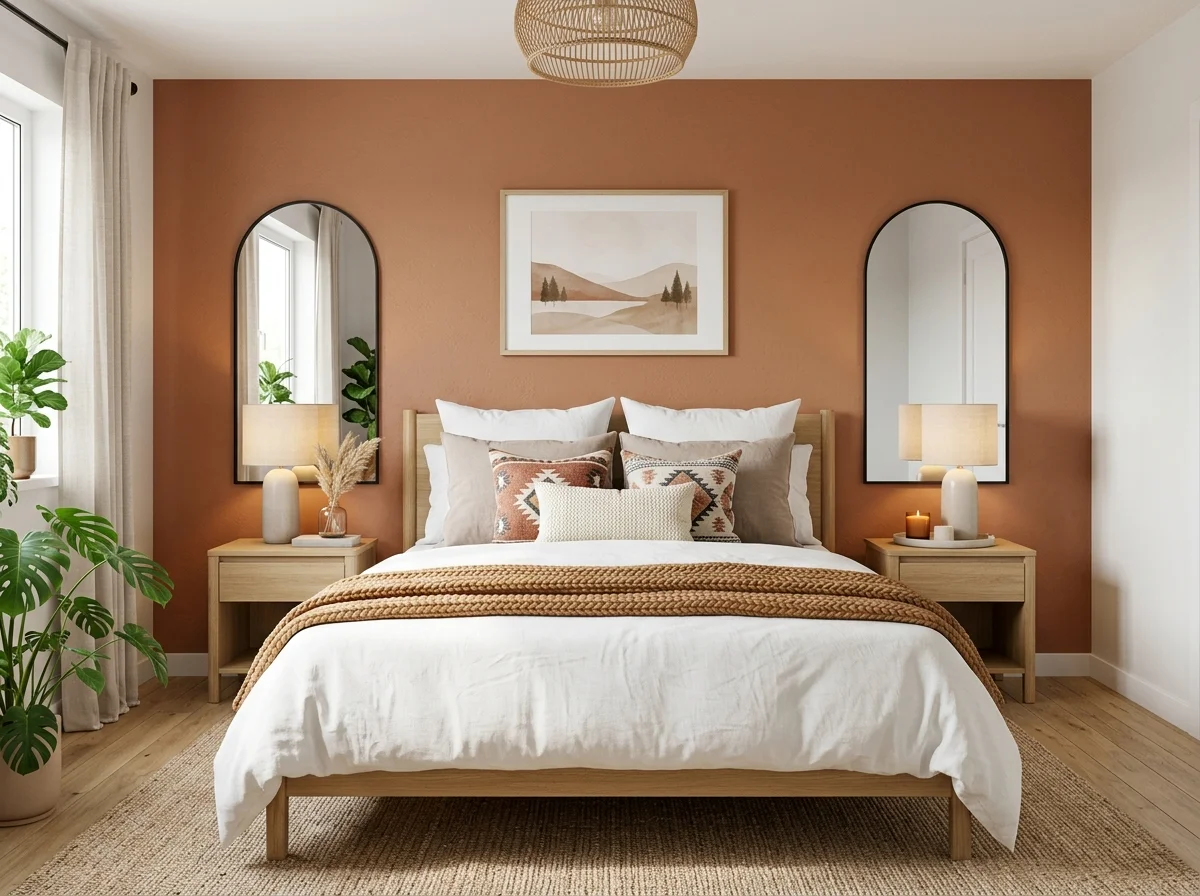
13. Make the Bed the Focal Point of the Bedroom
In a bedroom, dress the bed like it's used — washed linen, a heavyweight duvet, a folded throw — and give it a generous headboard. The bed is most of the room and most of the cosy. Get the bedding fabric and the headboard right and the rest of the bedroom is just decoration on top.

14. Warm the Kitchen With Wood and Brass
Kitchens turn clinical fastest. Bring back warmth with wood (open shelves, a butcher-block board, an island), unlacquered brass hardware, warm bulbs, and a runner underfoot. Even a few of these shift a hard, cool kitchen into a room you'd linger in. Herbs on the sill and a lamp on the worktop finish it.

15. Give the Dining Room a Reason to Linger
A dining room earns its keep when people stay after the plates are cleared. Hang the pendant low and warm, add candles, mix the chairs, ground the table on a rug, and put a lamp on a sideboard. The light and the seating are what turn a room used twice a year into one used every week.

16. Soften the Bathroom
The hardest room to make cosy is the bathroom, but small moves help: warm bulbs, a wooden stool or shelf, a stack of proper towels, a bath mat with substance, a candle, and a plant that likes humidity. The contrast of soft and warm against hard tile and porcelain is exactly what the room lacks.

17. Treat the Hallway as a Room
Hallways get neglected, but cosy begins before you're fully inside. A runner, a lamp on a console (not just an overhead), a mirror, art, and a place to drop keys turn a corridor into a welcome. The first warm, lit, considered space you step into sets the tone for the whole house.

18. Edit Before You Add
The hardest and most effective cosy move is restraint. A room reads inhabited but calm when there's space between objects and clear surfaces to set things down. Before buying another cushion or throw, remove three things at random and live with the gap. Cosy is not the same as full.

19. Add a Source of Real Flame or Glow
Fire is the oldest cosy. A working fireplace, a wood-burner, a cluster of candles, or even a convincing electric flame gives a room a living focal point and a warmth that bulbs approximate but never match. The flicker draws people in — it's why the room with the fire is always the room everyone sits in.

20. Repeat One Warm Accent Through the Room
A room reads intentional when one warm accent — terracotta, ochre, oxblood, mustard — appears in three places: a cushion, a piece of art, a ceramic. The repetition lets the eye connect the dots and the scheme reads deliberate. One accent, three touches, is the simplest way to make a room feel composed.

The Room-by-Room Detail
The twenty ideas above are the universal moves. Below, the same thinking applied room by room — how the living room, bedroom, kitchen, dining room, and the rest each earn their warmth, with the specific decisions that matter most in each.
What Makes a Room Feel Cosy, Mechanically
Three layers do the work. Get them right and the room will be cosy in any style. Get them wrong and a £2,000 boucle sofa under a single ceiling pendant still reads as a furniture showroom.
Layered light. A cosy room has at least three light sources at three different heights — typically a floor lamp at five feet, a table lamp at two feet, and a low source like a candle or a picture light below knee height. Overhead lighting is welcome only when dimmed to under thirty percent. Bulb temperature stays between 2400K and 2700K. Higher than that and the room reads as office. (Architectural lighting designer Sally Storey has been making this point in House & Garden for twenty years and the industry is finally listening.)
Textile weight. Hard surfaces multiply sound and reflect light. Soft surfaces absorb both. A cosy room has wool, linen, cotton, and ideally one rougher fibre like sisal or jute distributed across the floor, the seating, and at least one window. The rug matters more than the throw — a 3×5 rug under a sofa floats; a 9×12 rug grounds the entire seating arrangement.
Personal evidence. A room that looks like nobody lives there is not cosy. Cosy rooms hold proof of life: a stack of books you are actually reading, a half-finished embroidery hoop on the side table, the dog bed in the corner, ceramics made by someone you know. Showroom rooms fail this test instantly.
"The reason most rooms fail isn't taste, it's editing. People keep adding when the room is already asking them to take three things away."
The Living Room: Where Most People Start
The living room is where the return on cosy is largest. You sit in it most evenings, so every decision compounds.
Anchor the seating around something other than the television
Most British and American living rooms are arranged around a wall-mounted television, which means the seating points at the wall and the conversation dies. The fix is to rotate the seating ninety degrees to face an alternative anchor — the fireplace if you have one, a tall window, a pair of bookcases, or a large painting. The television goes on a side wall or inside a cabinet. Studio McGee's portfolio shows this pattern across half their projects and it works in flats as small as six hundred square feet.
Buy the rug first
The rug is the single most expensive cosy purchase per square foot of impact. A wool 8×10 from a direct-import seller like Lawrence of La Brea or Tuesday Made runs between £700 and £1,400 and lasts three decades if vacuumed correctly. A synthetic rug from a high-street home shop costs £150 and looks shiny within two years. If the budget allows only one investment, this is it.
The lighting plan: count to five
Standing in the middle of the room, you should be able to count five light sources. That sounds like a lot. In practice: one floor lamp by the reading chair, two table lamps on side tables flanking the sofa, one picture light or wall sconce over an artwork, and one candle or low-source lamp on the mantel or a low table. Add a dimmable overhead only if the ceiling is over nine feet and the room feels caverned without it.
What to leave out of the living room
Matching furniture sets. A sofa, loveseat, and chair in the same upholstery looks like a showroom and reads as cheap regardless of cost. Mix one larger upholstered piece, one vintage or antique chair, and one occasional chair in a contrasting material — leather, caned wood, woven seagrass. Three different timber tones is also fine. The eye reads variation as collection rather than purchase.
The Bedroom: Where Cosy is Most Forgiving
The bedroom is the one room where doing less almost always wins. You spend most of your time in it horizontal with the lights off, so heroic decorating effort returns very little. What matters is what you touch and what you see in the first ten minutes of the day.
The bed makes or breaks everything else
A bed that looks slept-in by 9am is cosier than a bed made to hotel standard. The fastest path to a good-looking bed: a flat washed-linen flat sheet (not a fitted top sheet), a heavyweight cotton or linen duvet cover, two sleeping pillows in the same case fabric as the duvet, two euro pillows behind those in a contrast fabric, and one folded throw at the foot. That is five pieces, no decorative-only pillow pile.
Linen specifically wrinkles correctly. Cotton percale wrinkles wrong. Cotton sateen looks like a hotel, which is the wrong reference for cosy. Spend on linen if you spend on anything in the bedroom — brands like Piglet in Bed, Tekla, and MagicLinen run between £180 and £320 for a full set in the EU.
Light the bedroom in three places, then dim them
A bedroom needs a bedside lamp on each side of the bed and one ambient source elsewhere — a floor lamp by an armchair, a sconce over a dresser, or a small lamp on a chest of drawers. Overhead lighting in a bedroom should be controlled by a dimmer or removed entirely. A pendant in a bedroom looks correct on Pinterest and feels wrong in person, every time.
Paint the bedroom the colour of the light at 7am
Walk into the room at the time of morning you actually wake up, and look at what colour the light is. That is the paint colour the room wants. North-facing rooms want warmer pinks and creams to compensate for blue light; south-facing rooms can hold cooler greens and ochres without going cold. Painting a north-facing room in a cool grey is the single most common mistake.
The Kitchen: Cosy Without Going Farmhouse
Cosy kitchens get accused of being twee. They don't have to be. Cosy in a kitchen is about warmth of material — wood, ceramic, brass, linen — not about decorative roosters or signs that say "Eat."
Open shelving for two shelves only
Open shelving over the worktop is cosy when it holds objects you use weekly: stacked dinner plates, a row of mugs, a few ceramic mixing bowls. It is uncosy when it holds decorative props or canisters labelled "FLOUR" in a sans-serif font. Two open shelves, low and accessible, beat four shelves stacked to the ceiling.
Get rid of the under-cabinet LED strip
The cool-white LED strip installed under most upper cabinets is the enemy of cosy. Replace it with warmer 2700K tape light, or remove it entirely and put one small ceramic lamp on the worktop instead. A 60-watt-equivalent table lamp in a kitchen sounds odd until you have one — it transforms the room after dinner when nobody wants overhead light.
One vintage piece per kitchen
A cosy kitchen needs at least one object older than you are. A wooden chopping board with a chipped edge. A cast-iron pan inherited from someone. A French butter dish with a hairline crack. The vintage piece does the editorial work of signalling that this room is used, not photographed.
The Dining Room: The Forgotten Cosy Room
If you have a dedicated dining room, you probably also have a problem: nobody uses it. A dining room used twice a year for Christmas dinner cannot earn its cosy. The fix is to make it usable on a Tuesday.
A dining table works as a homework desk, a weekend project surface, a place to spread out a newspaper. Furnish it that way. Add a lamp on the table — one of the few rooms where a table lamp in the middle of the table makes sense — and the room functions as a second living room any time it isn't holding plates.
The pendant light over the dining table should hang between thirty and thirty-six inches above the table surface. Higher and it floats; lower and it interrupts sightlines across the table. The pendant itself wants to be paper, woven rattan, brass with a fabric shade, or hand-blown glass — not chrome, not industrial.
Hallways and Entrances: Where Cosy Begins Before You're In
The first ten feet inside the front door tell the rest of the house what to expect. A cosy house with a clinical entryway feels like two different houses.
A runner rug instead of a doormat-and-tile arrangement. A bench or a small chair, even if nobody ever sits on it. A wall sconce or a small lamp instead of an overhead light. One ceramic dish for keys, set on something other than a console table from a flat-pack store. Coats hung on actual hooks rather than crammed into a coat cupboard. None of this is expensive. All of it changes the way the rest of the house reads.
A cosy house with a clinical entryway feels like two different houses. The first ten feet inside the door tell the rest of the room what to expect.
Bathrooms: The Hardest Room to Make Cosy
Bathrooms fight cosy because every surface is hard, every fitting is shiny, and the lighting is engineered to find the flaw in your skin. You can win this, but it takes commitment.
Replace the overhead light with a wall sconce or two flanking the mirror at face height (around 5'6"). Run a wool or cotton bath mat that is bigger than you'd think — at least 36 inches long. Add a small wooden stool or low table for towels and a candle. Hang one piece of art that has nothing to do with bathing. Use real bar soap on a wooden dish rather than a plastic pump bottle on the counter.
The single most cosy upgrade in any bathroom is a thick cotton bath sheet (not a bath towel) in a warm white or putty colour. £40 per towel at brands like the White Company or Coyuchi. Three of them is enough.
Children's Rooms: Cosy That Survives a Toddler
A child's bedroom that looks like a Pottery Barn Kids catalogue is not cosy. A child's bedroom that has been lived in for two years and shows it — bookshelf overflowing, drawings taped to the wall, a soft-edged corner with cushions and a sheepskin — is. The trick is to design for the second condition from the start.
A low bookcase the child can reach without help. A floor cushion or beanbag instead of a small chair. A reading-corner lamp with a low-wattage warm bulb. A wool blanket that can be dragged around the house. Avoid the murals, the painted clouds, and anything that locks the room into the age the child is right now.
Home Offices: Cosy Without Forfeiting Function
A home office that has been styled but not used will not be cosy. The objects that signal a working room — a real desk lamp, a stack of reference books, a planner open to this week — are what carry the warmth.
Use a desk lamp with a directional brass or articulated arm, not a generic LED ring light. Sit on a real chair, but soften it with a sheepskin or a wool seat pad. Keep a hardback notebook visible on the desk. Add a small lamp on a side surface for ambient light so the desk lamp doesn't have to be on all the time. The cables go behind, not draped across the floor.
If the room doing this work is a spare or in-between space rather than a dedicated study, the same logic scales up — see what to do with a bonus room for turning an underused room into a snug, library, or hybrid that actually gets lived in.
Light first, paint second, furniture third
Decide what bulb temperature the room is on before you decide anything else. This single decision determines whether your paint reads warm and whether the room feels welcoming at 6pm. Buy 2700K bulbs in bulk and replace every cool white bulb in the house in one go.Buy the rug before the sofa
A good rug under a basic sofa makes a room cosy. A good sofa on bare floor or a cheap rug does not. If your budget is limited, spend it on a wool rug from a direct importer and live with a high-street sofa for now.Edit by photograph
Take a photograph of the room on your phone. The camera flattens what your eye balances. Anything that pops in the photo as visually loud — a remote control, a phone charger, a brightly coloured book spine — is the thing to relocate or hide.Add one old thing per room
An inherited candlestick, a thrift-store wooden bowl, a vintage book. The age does not have to be expensive. Charity shops in any university town produce these objects weekly for under £15.Restraint with seasonal decoration
A cosy room benefits from one seasonal gesture, not a swap of the whole décor. A bowl of conkers in October. A pine garland on the mantel in December. Replace one item, not the room.
The houses that read as warmest over the long haul are not the most decorated. They are the ones where every room has been adjusted, lamp by lamp, throw by throw, to suit how the people inside actually live. The work of this magazine is to walk that adjustment, room by room. Start with the living room. The rest follows.