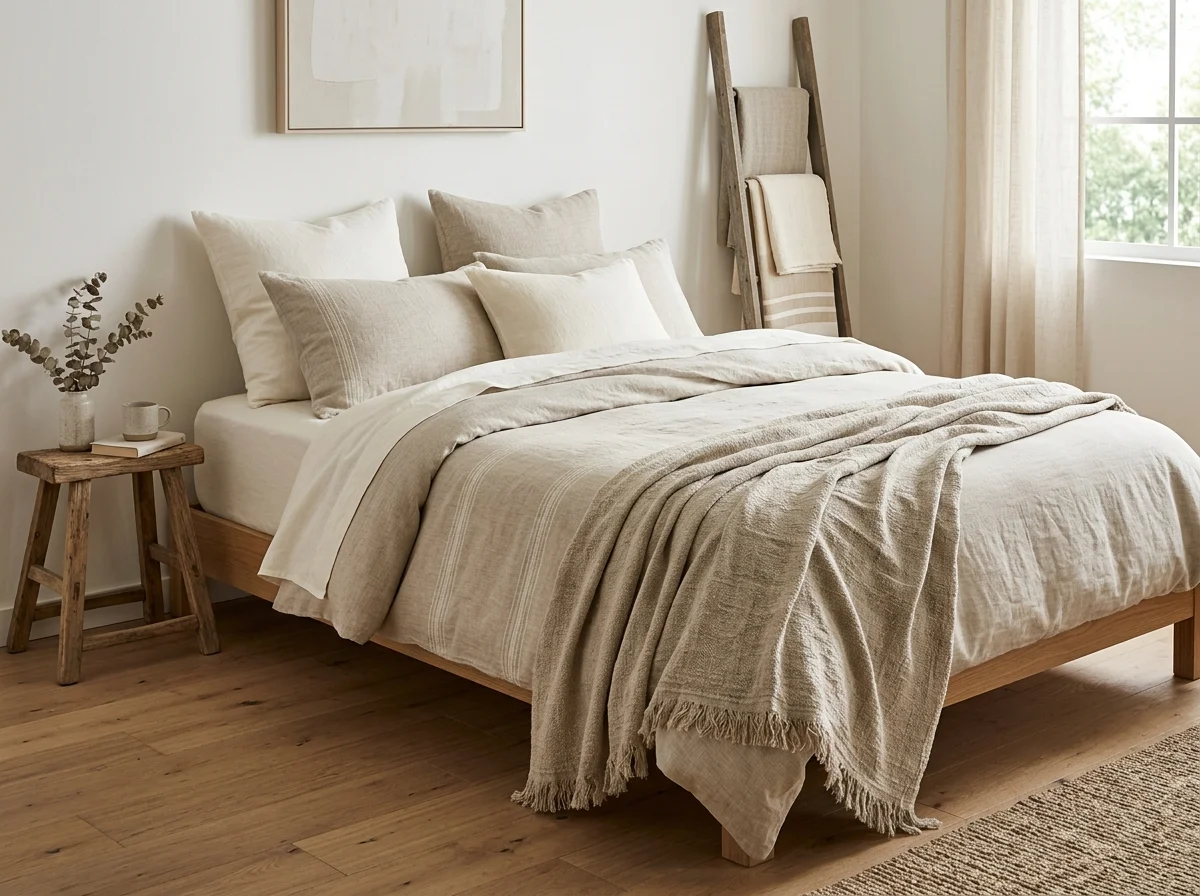
The linen sheets on the bed have been there for four winters. They are MagicLinen oatmeal, 170 GSM, washed three times before being sent. They have softened from "feeling like linen" to "feeling like the right surface against skin." A single set, washed every week or two, with no signs of wear beyond the natural softening. The cost per night across four years is about twelve pence.
Linen bedding has become widely available across price points, which is good and complicated. The good is that real linen at accessible prices now exists. The complicated is that "linen" gets used loosely — including for fibres that are not flax-based, for blends, and for low-grade flax that feels different from premium linen.
This guide walks the specific things to look for and the specific brands worth knowing.
From the same corner of the site: Where to Buy Cosy Home Essentials and Cosy Bedroom Design.
Good linen bedding is the single biggest upgrade you can make to a bedroom, but the quality, weight, and styling all matter. These thirteen tips and ideas cover what to buy, how to style it, and how to make a bed that reads cosy and lived-in. Pick what's useful for your bed and budget.
1. Buy European Flax Linen
The best linen bedding is made from European flax — grown in France, Belgium, and the Netherlands — which produces longer, stronger fibres than cheaper sources. Look for the European Flax certification or a maker who names the origin. It's the raw material that determines how the bedding feels and how long it lasts.
2. Choose a Mid-Weight Around 170 gsm
Linen weight matters: around 165 to 185 gsm is the sweet spot — substantial enough to drape beautifully and last, without being stiff. Too light feels flimsy and pills; too heavy is stiff and slow to soften. Mid-weight stonewashed linen is what reads cosy and gets better with every wash.
3. Start With a Flat Sheet, Not Just Fitted
A washed-linen flat sheet, layered over the fitted sheet and under the duvet, is the detail that makes a bed read properly dressed and cosy. It also lets you sleep under just the sheet in summer. The flat sheet is the layer hotel-style beds use and home beds often skip — and it's what makes the bed look made.
4. Layer the Duvet in a Heavyweight Cover
A heavyweight linen or cotton-linen duvet cover drapes with weight and reads substantial, where a thin cover looks flimsy and slides around. The weight is what makes the bed look inviting and stay put. Stonewashed linen in a warm neutral is the cover that anchors the whole bed.
5. Add Euro Pillows in a Contrast
Two euro (square) pillows behind your sleeping pillows, in a contrast fabric — a stripe, a small check, a deeper solid — give the bed height and a tailored, layered look. They're the styling layer that lifts a bed from functional to considered. Removed at night, they sit on a bench or the floor.
6. Fold a Wool Throw at the Foot
A wool or knit throw folded across the foot of the bed adds texture, warmth, and the layer you actually reach for on a cold night. It finishes the bed visually and reads cosy even unused. One good throw, not a pile — the foot of the bed wants one substantial layer, not three thin ones.
7. Choose Warm, Muted Colours
Linen in warm, muted tones — oatmeal, warm white, soft clay, sage, terracotta, charcoal — reads cosier and ages better than bright or cool colours. Warm white and natural oatmeal are the most versatile; a muted colour like clay or sage adds character. The natural, slightly imperfect dye of good linen is part of its warmth.
8. Embrace the Wrinkles
Linen's relaxed wrinkle is the point, not a flaw. It's what reads lived-in and cosy where crisp cotton reads like a hotel. Don't iron it; pull it straight from the wash and let it settle. The natural crumple is exactly the unforced, inhabited look a cosy bed wants — fighting it misses what linen is for.
9. Mix Linen With a Waffle or Knit
For texture-rich layering, mix linen with a waffle-weave or knit element — a waffle blanket, a knit throw, a waffle duvet over linen sheets. The different weaves catch light differently and keep an all-neutral bed from reading flat. Texture variation is what gives a calm-coloured bed its depth.
10. Buy From a Specialist, Not Fast Fashion
Quality linen comes from makers who specialise — Piglet in Bed, Tekla, MagicLinen, Cultiver, Bed Threads — who source good flax and finish it well. Fast-fashion linen is often a lighter weight or a linen-blend that pills and thins quickly. A specialist set costs more but lasts a decade; the source is most of the quality.
11. Wash Cool and Line Dry to Last
Linen lasts longest washed cool and line-dried or tumbled low. Hot washes and high heat weaken the fibres over time. Washed gently, good linen softens and improves for years. The care is minimal — no ironing, cool wash, low heat — and it's the difference between linen that lasts a decade and linen that thins in a couple.
12. Build the Set Over Time
You don't have to buy everything at once. Start with the duvet cover and pillowcases — the pieces seen most — then add the flat sheet, euro pillows, and a throw as budget allows. Building the set over time spreads the cost and lets you live with the colour before committing fully. Quality, gradually, beats a cheap full set at once.
13. Judge Quality by Feel and Weight
Before buying, judge linen by feel where you can: it should feel substantial and supple, not papery or stiff, with a slight irregularity to the weave that marks real flax. Order a swatch if buying online. Thread count is a cotton metric and means little for linen — weight and the hand of the fabric are what tell you the quality.
The Method Behind Buying Linen That Lasts
The ideas above are the menu; the principles below are the structure — what linen actually is, the weight and weave that matter, and how to judge quality before you buy.
What Linen Actually Is
Linen is made from flax fibres. Long flax fibres produce the smoothest, most durable linen; shorter fibres produce coarser, less consistent linen. Where the flax is grown determines fibre quality.
The premium flax-growing regions:
- Northern France: Normandy and the Lille region. Longest fibres, highest cost.
- Belgium: Particularly Flanders. Premium quality, slightly less expensive than French.
- Lithuania, Latvia, Belarus: Strong fibre quality at lower prices. Most premium-feeling budget linen comes from these regions.
Linen described as "European flax" generally means French, Belgian, or Lithuanian origin. The European Flax certification is a specific quality mark to look for.
Linen from China is usually shorter-fibre, sometimes blended with other fibres without disclosure. Avoid unblended Chinese linen unless the brand specifically certifies quality.
Weight (GSM) and What It Means
GSM (grams per square metre) measures fabric weight. For linen bedding:
- 140 GSM and below: very light. Suitable for summer or for hot-climate sleepers. May feel insubstantial in cold months.
- 165-185 GSM: the standard range for year-round bedding. Substantial without feeling heavy.
- 200-220 GSM: heavier weight. Slightly more substantial; warmer in winter; reads more luxurious.
- 240 GSM and above: very heavy. Often used for upholstery rather than bedding. Some premium bedding brands offer at this weight.
Most quality linen bedding sits in the 165-200 GSM range. Brand descriptions sometimes give the GSM; if not, ask before purchasing.
Washed vs Non-Washed
Linen bedding sold as "stonewashed" or "garment washed" has been pre-treated to soften the fibre before sale. The bedding feels soft on the first night.
Non-washed linen feels stiffer initially and softens over 5-10 wash cycles. Some brands sell non-washed linen intentionally (Hale Mercantile, some boutique makers); most premium consumer brands sell pre-washed.
For bedding, washed is the standard. The first-night softness matters because it's the experience you'll have for the next several months while the bedding fully breaks in.
The Standard Set Components
A complete linen bedding set includes:
- Flat sheet (not a fitted top sheet): substitutes for a duvet cover if using a flat sheet only, or sits on top of the fitted sheet under the duvet. The wrinkles fold naturally rather than crumpling.
- Fitted bottom sheet: with deep corners (35cm+ pocket depth) to fit modern mattresses.
- Duvet cover: standard sizing (135×200cm for single, 200×200cm for double/queen, 230×220cm for king).
- Two pillowcases: standard 50×75cm (UK) or 50×90cm (US/EU).
Optional additional components:
- Euro pillowcases: 65×65cm, used as decorative pillows behind sleeping pillows.
- Bolster cover: for larger decorative pillows.
For a guest room or a second set, the priority order is: duvet cover and pillowcases (most visible), then bottom sheet, then flat sheet.
Brands Worth Knowing
Premium
Cultiver (US/UK): £250-500 for a full set. Belgian flax, generous sizing, premium finishes. Range of warm neutrals and seasonal colours. Lasts a decade-plus.
Tekla (Denmark): £200-400 for a full set. Design-forward with confident colour and pattern choices. Smaller core range but each piece is considered.
Hale Mercantile (Australia): £300-700 for a full set. Heavy weight (200+ GSM), distinctive textured finish. For maximalist linen aesthetic.
Society Limonta (Italy): £400-900 for a full set. Italian-finished linen with refined colours. The highest tier of accessible linen bedding.
Mid-tier
Piglet in Bed (UK): £200-400 full set; sale items £130-280. European flax, frequent sales bring premium quality to mid prices. The best value premium-feeling linen.
Bed Threads (Australia/UK): £180-350 full set. Modular by-the-piece pricing makes it easy to mix and match colours.
Budget to mid
MagicLinen (Lithuania): £100-220 for a full set. Lithuanian flax, washed finish, generous sizing. The best value for entry-level real linen.
Linen Tales (Lithuania): £150-280 for a full set. Similar quality to MagicLinen with slightly more refined finishes.
LinenMe (Lithuania): £120-250 for a full set. Another strong Lithuanian option.
Budget
IKEA Bergpalm and Puderon (Sweden): £60-130 for a full set. Real linen at IKEA pricing. Lighter weight than premium options (around 140-150 GSM), but acceptable for guest rooms and starter bedding.
H&M Home washed linen: £40-100 per item. Lighter weight than IKEA's better lines but more polished aesthetic. Single pillowcases and duvet covers individually available.
Zara Home linen: £70-200 per item. Variable quality; check fibre content carefully.
Where not to buy
Mass-market home retailers' "linen-look" or "linen-style" lines that turn out to be linen-cotton blends or polyester. Always check fibre content. If the label says "linen-blend" or "100% linen and cotton," the bedding is partially synthetic or partially cotton — not what you're paying for.
What to Look For in Specifications
When buying online, look for:
- 100% linen in the fibre description (not "linen blend" or "linen-rich")
- European flax or Belgian, French, Lithuanian origin
- OEKO-TEX Standard 100 certification (ensures no harmful chemicals)
- Stonewashed, garment-washed, or pre-washed finish for immediate softness
- GSM specification of 165 or higher
- Generous pocket depth for fitted sheets (35cm+ depth)
- Hidden zips or button closures on duvet covers
What to avoid:
- "Linen-look" or "linen-feel" labels (usually means polyester or microfiber)
- Unspecified fibre origin
- Bedding under £80 for a full double set (almost always blended or synthetic)
- "Easy-care" or "wrinkle-free" linen (chemically treated; loses the natural texture)
Colours That Work Across Years
Linen bedding colours that age well:
- Oatmeal or natural unbleached — the most flexible neutral
- Soft white or warm cream — easy to keep looking fresh
- Soft pink (dusty pink, not bright) — works with most bedroom palettes
- Sage green (muted) — calming and current
- Soft grey with warm undertone — versatile if not too cool
Colours to avoid or use cautiously:
- Bright primary colours (date quickly)
- Saturated jewel tones (limited longevity)
- Patterns with strong contrast (read busy in the bedroom)
- Polka dots and small geometrics on bedding (read as children's room)
Mixing two colours within a set (e.g., oatmeal duvet with a striped pillowcase, or solid bedding with a contrast euro pillow) reads more sophisticated than fully matching sets.
Caring for Linen
Linen bedding is more forgiving than its reputation suggests.
Washing: machine wash cold or warm (30-40°C). Powdered or liquid detergent without bleach. Skip fabric softener — linen doesn't need it and softener can leave residue.
Drying: tumble dry low for the softness, or line dry for the texture. Tumble drying produces softer linen with less wrinkles; line drying produces more textured linen with more visible folds.
Ironing: unnecessary. The wrinkled finish is the look. If you must, iron damp on linen setting.
Storage: fold and stack rather than hanging. Keep in a cool dry place. Linen lasts 10-15 years with proper care.
Stains: treat quickly with cold water. Avoid hot water, which sets stains. Most linen stains respond to oxygen-based stain treatments.
A real linen set lasts 10-15 years. The cost per night across that time is single-digit pence. It's the rare home item where premium upfront produces dramatic value over decades.
The Buying Decision in One Paragraph
For mid-budget cosy home: Piglet in Bed during a sale, or MagicLinen at full price. £150-280 for a full set. European flax, washed finish, 165-185 GSM. In oatmeal, soft pink, or sage green. Two sets so one can be in the wash while the other is on the bed.
For premium: Cultiver in a colour you'll love for a decade. £250-400 for a full set. The investment pays back through years of use.
For guest room: IKEA Bergpalm or MagicLinen entry-level set. £60-150. Real linen at a price that doesn't sting.