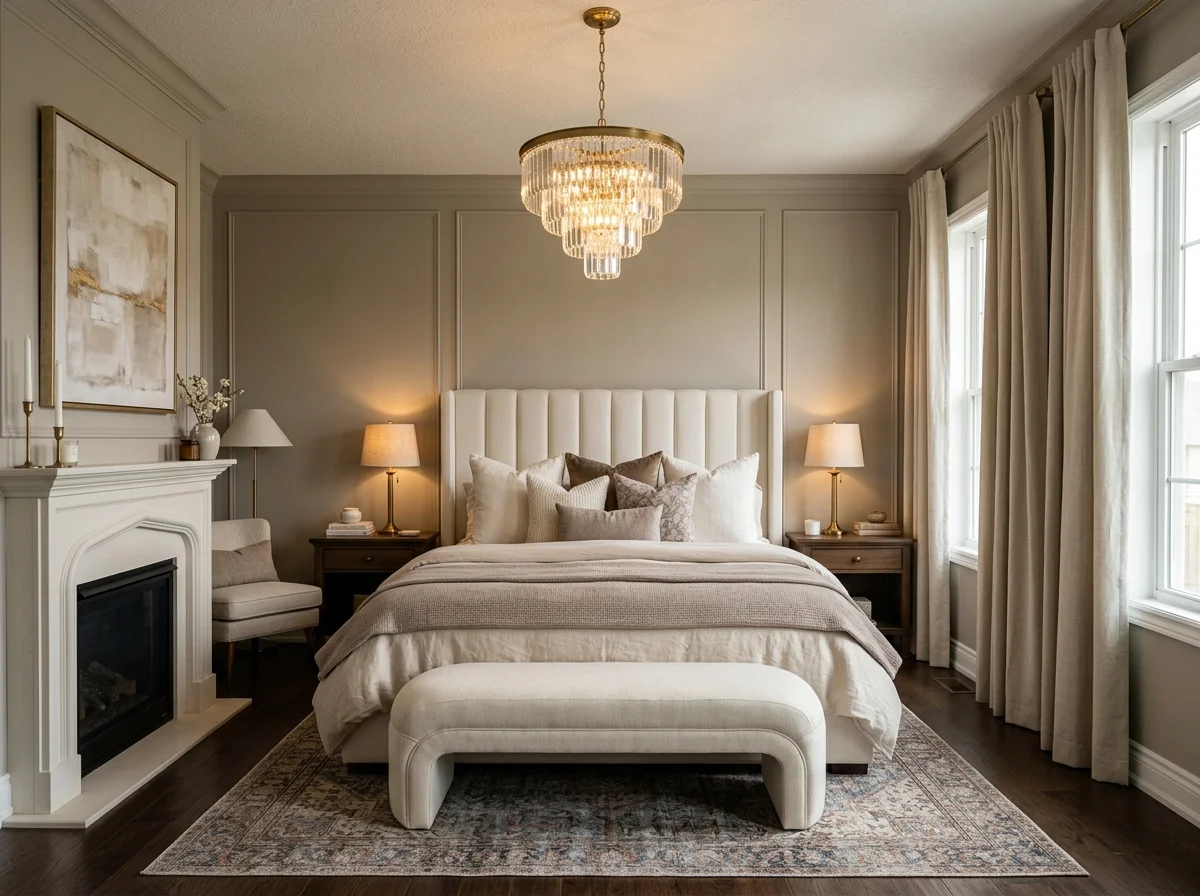
The sheets at the foot of the bed are pulled tight on one side and loose on the other, because that's the side I sleep on. A wool throw is folded in thirds across the bench. The bedside lamp is on its second bulb of the winter — I leave it on a timer so it clicks on at 4pm in December, before the room goes blue. That single timer changed how the room feels more than any cushion ever has.
Bedrooms forgive design more than other rooms because you spend most of your time in them horizontal with the lights off. That same fact means the decisions that do matter — the ones you touch and see at the edges of sleep — are concentrated. Five elements carry the weight.
If this is the room you're working on, Cosy Room-by-Room Guide, Small Bedroom Layout Ideas That Don't Sacrifice, and Linen Bedding Buying Guide go deeper on the pieces that fill it.
The five fundamentals below are the structure. These twenty-two ideas are the breadth — specific moves designers are using right now, each one stealable on its own. Pick three or four that suit your room rather than chasing all of them.
1. Make the Headboard the Focal Point
A generous upholstered headboard in linen, velvet, or bouclé is the single most effective cosy move in a bedroom. Go taller than feels normal — 48 to 60 inches reads dramatic and cocooning — and it makes sitting up to read genuinely comfortable. The headboard is the backdrop the whole room is read against, so spend here before anywhere else.

2. Extend the Headboard Wall to Wall
For real drama, run the upholstered headboard the full width of the wall, or panel the wall behind the bed so the bed reads as built into the architecture rather than a standalone object. Designers call it the disappearing bed frame — it creates spatial cohesion and makes even a plain room feel considered.

3. Hang Sheer Linen from a Canopy or Four-Poster
Canopy beds are back, softer and more modern than the heavy versions. A slim natural-wood or thin metal four-poster draped with sheer linen panels makes an enclosed, intimate sleeping pocket. Leave the frame bare for architectural calm, or drape it for the romantic version — both read cosier than a bare headboard alone.

4. Layer the Bedding in Three Textures
The trick the magazines call texture-maxxing: pair slubby linen sheets with a boxy waffle duvet and top it with a plush wool throw. Each material catches the light differently, which keeps even a fully neutral, monochrome bed from reading flat. Texture does what pattern used to — adds depth without the visual noise.

5. Drop the Bed Low to the Floor
A low-profile platform bed, Japanese-inspired, creates a grounded, restful feel and makes the whole room read larger and more open. It pairs naturally with minimal decor and clean lines for a calm, almost meditative atmosphere — and the lower sightline gives a small room back its sense of ceiling height.

6. Choose a Curved or Sculptural Bed Frame
Rounded headboards and organic, sculptural frames soften a room that angular furniture makes severe. A curved upholstered frame in oatmeal linen reads inviting and modern at once. Pair it with tactile, neutral bedding so the curves are what the eye lands on rather than competing pattern.

7. Build a Reading Nook in the Corner
A bedroom is no longer just for sleeping. An unused corner, a bay, or a window seat becomes a reading zone with a single accent chair, a small side table, a soft lamp, and a throw. It gives the room a second purpose and a place to be that isn't the bed — which, counterintuitively, makes the bed cosier.

8. Add Wall Sconces Either Side of the Bed
Swing-arm or fixed wall sconces flanking the bed free up the nightstands and throw light exactly where you read. Hardwired or plug-in with a cord channelled down the wall, they read more architectural and intentional than table lamps — and they leave room on the bedside table for a book and a glass of water rather than a lamp base.

9. Backlight the Headboard for a Soft Glow
A warm LED strip tucked behind a headboard or along a floating shelf above the bed throws a soft halo up the wall — gentle ambient light with no glare at face height. Keep it warm white, around 2700K, and on a dimmer. It's the quiet bit of drama that makes a bedroom feel like a retreat at night.

10. Colour-Drench the Room in a Deep Hue
Deep navy, espresso brown, charcoal, or forest green wrapped across walls, ceiling, and trim makes an intimate, luxurious cocoon — especially with brass or gold accents catching the lamplight. The enclosed darkness is exactly what a bedroom wants at night. Balance it with warm bedding and a pale rug so it envelops rather than swallows.

11. Put a Plush Rug Underfoot — and Layer It
Rugs in 2026 are bigger and softer. Run a deep wool pile under the bed extending well past both sides, and for real depth, layer it: a coarse jute or sisal base with a softer wool or vintage rug on top. Wool over jute gives you the warmth where bare feet land and the grounding underneath.

12. Bring Back Wall-to-Wall Carpet
Soft carpet underfoot is returning, and in a bedroom it makes sense — it absorbs sound, holds warmth, and creates a natural platform for layering a rug on top. Designers are choosing rich, grounding tones now rather than builder beige: bronze, butterscotch, deep moss. It's the warmest possible thing to step onto on a winter morning.

13. Make the Nightstand a Statement
The plain bedside table is over. A round, ribbed, stone-topped, or sculptural nightstand functions as a small statement piece in its own right. Mismatched pairs read collected; matched ones read catalogue. Keep the surface to a lamp or sconce, a book, and one small object — a nightstand is not a shelf.

14. Bring in Plants at Two Heights
A large potted plant in a corner and a trailing or hanging planter near the window soften the hard lines of a bedroom and bring something alive into the room. A fig, a palm, or a tall snake plant on the floor, plus a hanging pot or a small potted herb on the sill. Greenery reads restful in a way no object can.
15. Soundproof the Room with Soft Surfaces
A quiet bedroom is a cosy bedroom. Thick curtains, a rug or carpet, an upholstered headboard, and fabric on the walls all absorb sound and soften the acoustic hardness that makes a room feel like a box. The more soft surfaces, the more the room reads hushed and enveloping — the cosy you feel before you can name it.


16. String Warm Fairy Lights for Low Glow
A strand of warm-white fairy lights draped above the headboard, along a shelf, or through a canopy adds a low, magical layer of light for winding down — the gentlest possible source for the last hour before sleep. Keep them warm-toned and dimmable or battery-timed; cool-white strings read like a student room.

17. Hang Art Low, Above the Headboard
One piece of art hung low above the bed — or a pair, symmetrically — relates to the headboard rather than floating near the ceiling. Soft abstracts, a muted landscape, or a single large print in a warm frame settle the wall. Hang it so the bottom edge sits just above the headboard, not marooned in the gap.

18. Add a Bench or Trunk at the Foot of the Bed
A bench, an upholstered ottoman, or a vintage trunk at the foot of the bed gives somewhere to sit to put shoes on, somewhere to lay the throw at night, and storage if it lifts. It also visually finishes the bed, closing the composition the way a rug closes a seating arrangement.

19. Dress the Window in Floor-Length Drapery
Drapery is the bedroom accessory of the moment — not just framing the window but adding softness and architectural interest across a whole wall. Hang heavy linen or cotton from the ceiling line to the floor, wide enough to stack off the glass. The largest soft surface in the room, working quietly behind the bed.

20. Style the Bedside for the Last Five Minutes of the Day
The nightstand is the most personal surface in the house — it's the last thing you see. A small lamp, the book you're actually reading, a carafe and glass, a tiny dish for rings, maybe one stem in a bud vase. Style it for the five minutes before sleep, not for a photograph. Useful reads cosier than decorative.

21. Warm the Bed with a Sheepskin or Throw Blanket
Drape a real sheepskin over the corner of the bed or the reading chair, or fold a chunky knit throw across the foot. It's the layer you actually reach for on a cold night, and the texture reads cosy even when unused. Real shearling and natural-fibre knits beat acrylic, which mats and pills within a season.

22. Keep One Surface Completely Clear
The hardest move in a bedroom is restraint. Leave the dresser top, or one nightstand, almost entirely clear — a single object, nothing more. The empty surface is what lets the eye rest, and rest is the entire point of the room. A bedroom reads calm when there's somewhere for the gaze to land and find nothing demanding it.

The Method Behind the Ideas
Choose the ideas above that fit your room, then build them on these five fundamentals. The gallery is breadth; this is the load-bearing structure. Get these five right and any of the ideas above works on top of them.
The Bed: Dress It Like It's Used
A bed that looks slept in by 9am is cosier than a bed made to hotel standard. The fabric does most of the work. Linen specifically wrinkles correctly — it folds and softens in ways that read as inhabited rather than rumpled. Cotton percale wrinkles wrong; cotton sateen looks like a hotel.
The components: one washed-linen flat sheet (not a fitted top sheet), a heavyweight linen or cotton-linen duvet cover, two sleeping pillows in the same case fabric, two euro pillows behind them in a contrast fabric (a stripe, a small check, a deeper solid), and one folded throw at the foot of the bed. Five surface elements total.
Linen sets from Piglet in Bed, Tekla, MagicLinen, and Cultiver run between £180 and £320 for a full set in the UK and EU. The lifespan is decade-plus if washed cool and line-dried.
Two Bedside Lamps, One Ambient Source
A cosy bedroom needs a lamp on each side of the bed and one ambient source elsewhere — a floor lamp by an armchair, a sconce over a dresser, a small lamp on a chest of drawers. All bulbs run between 2400K and 2700K. The overhead light, if it exists, lives on a dimmer and stays off for evening use.
Bedside lamps want shades that diffuse the light rather than direct it. Linen drum shades, paper shades, and pleated fabric shades soften the bulb. Metal shades and exposed bulbs throw harsh light at face height, which is the opposite of what a bedroom needs at 10pm.
The lamps don't have to match. A pair from the same shop in the same finish reads as catalogue. Two lamps from different decades, in the same approximate height and warmth, read as collected. Charity shops and Vinterior produce mid-century brass lamps for £40 to £150 reliably.
The Floor Under Bare Feet
The first thing you touch in the morning is the floor. A wool rug beside the bed — even a small 3×5 — changes whether the room feels welcoming at 7am or cold. On a hard floor, the rug runs the length of the bed on the side you sleep on, with one foot of extension beyond the foot of the bed. On a fully carpeted bedroom, an additional natural-fibre rug over the carpet adds layers and warmth.
For partners sleeping on both sides, run a single large rug under the bed, extending two to three feet on each side. The rug should peek out from under the foot of the bed at least twelve inches. Wool, wool-cotton blends, or Berber pile read warmer than flat-weave kilims, which suit kitchens better.
Paint the Walls the Colour of the Light at 7am
The bedroom paint decision is best made by walking into the room at the time you actually wake up, and looking at what colour the light is on the wall. That is the colour the room wants painted.
North-facing rooms want warmer pinks and creams to compensate for the blue light — Farrow & Ball Setting Plaster, Sherwin-Williams Romance, Benjamin Moore First Light. South-facing rooms can hold cooler greens and ochres without going cold. East-facing rooms benefit from creamy whites that pick up the warm morning light without amplifying it. West-facing rooms can go deeper — muted ochres, soft terracotta tones, even moss greens if the room has enough light at midday.
Sample boards mattered more here than anywhere else in the house. Paint two-foot squares on the wall, in the corner where the bedside lamp falls and in the opposite corner where the morning light arrives. Live with them for at least three days before committing.
The bedroom paint colour question is decided at 7am and at 10pm, in the actual room. Anything else is guessing.
Window Treatments That Actually Block Light
A bedroom that isn't dark by 10pm isn't cosy — it's a hotel room with thin curtains. Layer two treatments: a thermal blackout liner against the glass, and a decorative curtain in linen or cotton in front. The blackout liner handles the sleep function; the linen curtain handles the visual.
Hang the curtain rod at the ceiling line, not at the top of the window frame. Curtains hung at frame height make any window read squat. Curtains that puddle slightly at the floor — about an inch of break — read finished. Curtains that stop above the floor read unfinished, every time.
Decorative panels in oatmeal linen, warm white, or natural cotton work in almost any bedroom. Heavy patterns and bold colours date faster than solids. The curtains are the largest soft surface in the room; let them sit quietly so the bed can be the focal point.
What to Leave Out of a Cosy Bedroom
A television. The blue light disturbs sleep and the black rectangle uncosies the room when off. If a television is unavoidable, put it inside a cabinet or behind a sliding door.
Decorative pillows that need to be removed every night. If the cushion pile cannot stay on the bed when you sleep in it, it is set dressing rather than bedroom design. Two euro pillows and a folded throw is the cosy maximum; everything else gets stored or removed.
Matching furniture sets. A bedframe, two nightstands, and a dresser in the same finish from the same store reads as a hotel suite. Mix a bedframe with two different nightstands — one painted, one bare wood, or two different timber tones in similar scale — and a dresser sourced from somewhere different again.
Overhead recessed lighting on a cool-white bulb. The single fastest cosy improvement in many bedrooms is to remove the cool-white pot lights and replace them with one warm pendant on a dimmer, used at low intensity for getting dressed in the morning only.
The bedroom is a forgiving room. Get the bed, the lamps, the floor, the paint, and the curtains right and the rest is decoration. Skip those five and no amount of decoration recovers it.