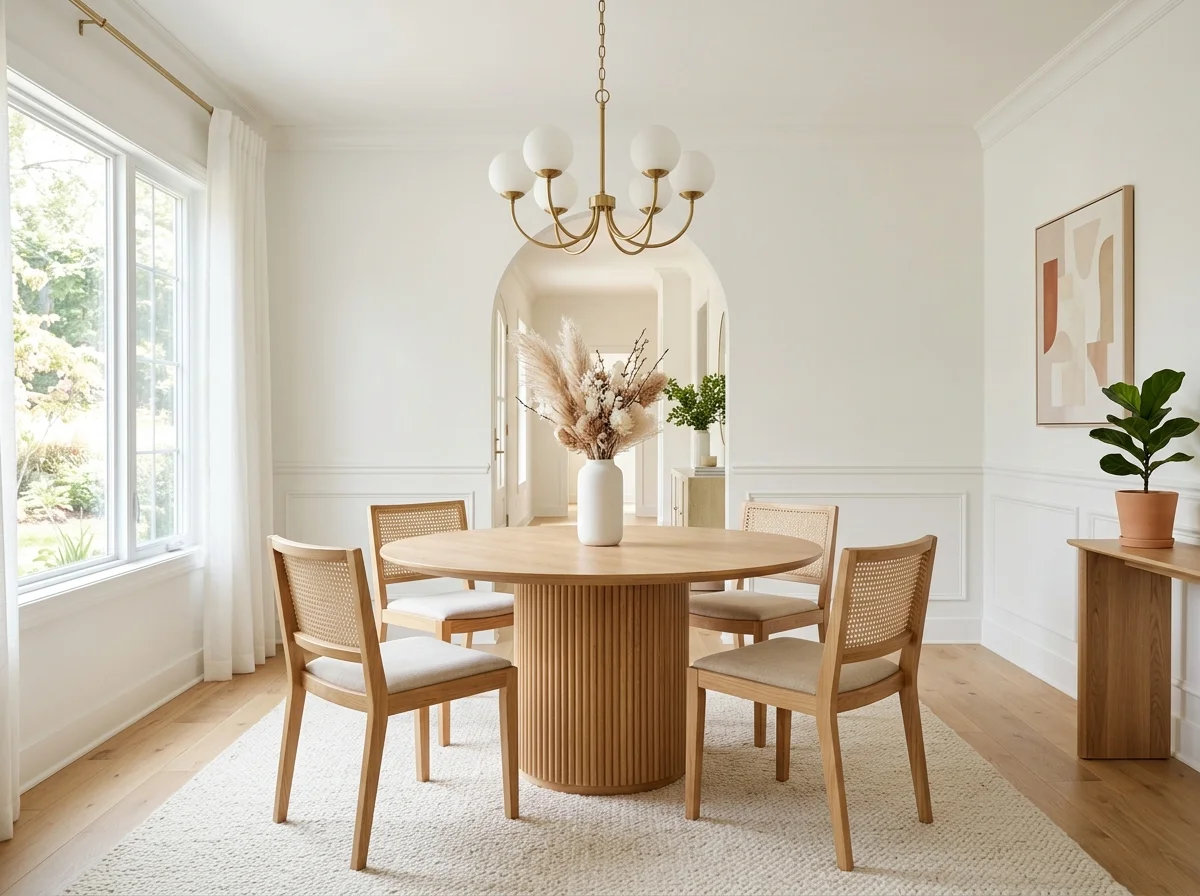
The dining table in this flat has held three Tuesday evening dinners this month and one homework session every weekday afternoon. It's an oak refectory table from a 1960s school auction, scarred from twenty years of pencils. The lamp at one end is a brass desk lamp salvaged from my grandfather's office. Together they have made the dining room the second most-used room in the house.
A dining room used only at Christmas cannot be cosy. The room is in the house seven days a week, but if it only earns its furniture twice a year, the rest of the time it reads as wasted space. Designing for daily use is what makes a dining room actually warm.
Keep reading from here: Cosy Room-by-Room Guide, Warm Kitchen Design Ideas Without Going Full, and Intimate Entertaining at Home.
A dining room earns its keep when people stay at the table after the plates are cleared. These thirteen ideas cover the lighting, the seating, and the small touches that turn a room used twice a year into one used every week. Choose what fits your table and your space.
1. Hang the Pendant Low and Warm
The single biggest cosy move in a dining room is the light over the table. Hang a pendant 75 to 90cm above the surface, warm bulb, on a dimmer. Low light pooled on the table draws people into a circle of warmth and signals that this is a place to stay, not pass through.
2. Add Candles for the Evening Shift
Nothing turns dinner into an occasion like candlelight. A pair of tapers in brass holders, a cluster of pillars, or tealights down the centre. Lit as the meal begins, candles drop the room into a register that overhead light can't reach — the flicker is the oldest dinner-table warmth there is.
3. Mix the Dining Chairs
A matching table-and-chairs suite reads as a showroom delivery. Mix it: the same chair in two finishes, a bench down one side, two carvers at the ends and simple chairs between, or genuinely mismatched vintage chairs unified by one cushion fabric. The variation reads collected and relaxed.
4. Ground the Table on a Rug
A rug under the dining table anchors the whole arrangement and warms the floor underfoot. Size it so the chairs stay on the rug even when pulled out — roughly 60cm of rug beyond the table edge on every side. A flat-weave or indoor-outdoor weave handles spills; the grounding is what makes the table feel placed.
5. Add a Bench for Sociable Seating
A bench down one side of the table seats more, reads relaxed, and lets people shuffle up to make room — the sociable opposite of formal individual chairs. It tucks fully under the table when not in use, which helps a small room, and children love it. Soften it with a long cushion or a sheepskin.
6. Put a Sideboard or Console to Work
A sideboard along one wall gives a dining room storage, a serving surface, and a place to style — a lamp, a stack of plates, a bowl, a piece of art above. It turns a room with just a table into a furnished room, and the lamp on top is the ambient light a dining room needs.
7. Hang Art or a Mirror to Furnish the Walls
A dining room with bare walls feels like a waiting room. One large piece of art, a salon-style cluster, or a big mirror to bounce candlelight gives the eye something to rest on between courses. A mirror does double duty, doubling the candle flames and the sense of space.
8. Choose a Table That Takes Daily Wear
A dining table used only when it's pristine is a table used twice a year. A solid wood top that takes rings and scratches into patina, or a wipeable surface for a family, means the table gets used on a Tuesday, not just at Christmas. The wear is the point — a marked table is a used table.
9. Add a Lamp for Ambient Glow
Beyond the pendant, a small lamp on a sideboard or a pair of wall sconces gives the dining room a second, lower layer of light. When the meal's over and the pendant's dimmed, the lamp is what keeps people at the table talking. Two light sources at different heights is the cosy minimum.
10. Layer a Tablecloth or Runner
A linen tablecloth or a runner down the centre softens a hard table and signals care without formality. Washed linen that creases naturally reads relaxed; a runner alone keeps the wood visible while adding a soft line. The textile is the easiest way to dress the table up or down by season.
11. Bring Greenery or Stems to the Centre
A low jug of cut stems, a bowl of seasonal fruit, or a small potted plant down the centre of the table brings life without blocking sightlines. Keep it low enough to see over. Foraged branches, garden flowers, or even herbs read more relaxed and warm than a formal florist arrangement.
12. Drench a Dining Room in a Deep Colour
A dining room used mostly after dark is the ideal place to be brave with colour. Drench the walls — even ceiling and trim — in a deep green, oxblood, or warm charcoal. By candlelight and lamplight the dark walls glow and enclose the table in exactly the intimate cocoon a dinner wants.
13. Make Room for a Window Seat or Banquette
A built-in banquette along one wall, or a window seat pulled up to the table, seats more in less space and reads as the cosiest spot at the table — backed, cushioned, enclosed. It's the seat everyone wants and the one that makes a dining area feel like a proper room rather than a passage.
The Method Behind a Dining Room That Gets Used
The ideas above are the menu; the principles below are the structure — the table, the light height, and the seating decisions that determine whether people linger or leave.
Make the Table Usable on a Tuesday
The dining table works as a homework desk, a project surface, a place to spread out the Sunday paper. Furnish it accordingly.
A table that takes scratches and water rings without looking ruined survives daily use. Oak, walnut, elm, and reclaimed pine all develop patina rather than damage. White-painted tables, glass tops, and high-gloss lacquer finishes show every mark and discourage actual use. If a table can't take a wet glass without a coaster, it's a furniture investment, not a working surface.
Add a lamp on the table — one of the few rooms where a table lamp on the dining surface makes sense. A brass desk lamp at one end or a small ceramic lamp on a side console transforms the room when the pendant is off. The lamp signals that the room is for sitting and reading, not just for hosting.
Hang the Pendant at the Right Height
The single most common dining-room mistake is the pendant hung too high. Centre the pendant 30 to 36 inches above the table surface — measure from the table to the bottom of the fixture. Higher than 36 inches and the light floats. Lower than 30 inches and it cuts across sightlines.
If the ceiling is over nine feet, the pendant can hang at the upper end of the range. For a standard eight-foot ceiling, 30 to 32 inches above the table is correct.
The pendant itself wants to be paper, woven rattan, brass with a fabric shade, or hand-blown glass. Chrome, industrial steel, and minimalist black metal pendants are popular but uncosy — they read as restaurant rather than home. A pleated paper shade, a Noguchi-style paper lantern, or a vintage brass pendant from any auction house all work better.
Mix the Dining Chairs
A matched set of six dining chairs reads as a furniture purchase. A pair of one design at the heads of the table and four of another along the sides — or six chairs that don't match at all — reads as collected. The cosy version of a dining room almost always has mismatched chairs.
The rule that keeps the mix from reading chaotic is seat height. All chairs should sit between 44cm and 46cm from the floor, which is standard. Beyond that, the chairs can vary in style, timber, and upholstery. Limit timber finishes to two across the full set (one warm oak plus one black-painted, say, or walnut plus caned wood).
Vintage chairs in particular are easier to find as singles or pairs than as full sets. A pair of bentwood chairs from a flea market for £80 plus four mid-century chairs sourced separately for £40-80 each gives a six-chair set for under £400 that no furniture chain can compete with.
The Centre of the Table
The middle of the dining table holds one or two objects at most. The standard cosy arrangement is one low vase or ceramic bowl with seasonal foliage (eucalyptus, branches, dried wheat, autumn leaves), and one or two candles in stick form.
Tall centrepieces are wrong for dining tables. The eye line across the table at seated height is around 40-45cm. Anything taller than 30cm at the centre interrupts conversation. Low and wide always beats tall and narrow on a dining table.
Candles want to be unscented when used during meals — scented candles compete with the food. Beeswax sticks in plain holders, or simple white dinner candles, work better than pillar candles or jar candles for table use.
A dining table arrangement higher than 30cm interrupts conversation. The centrepiece is for the periphery of the meal, not for showing off.
Curtains and Rugs in a Dining Room
A dining room often inherits a more formal treatment than the rest of the house — heavier curtains, a larger or fancier rug. The instinct is correct, but the execution often goes too far.
The rug under the dining table should be at least 60cm larger than the table on every side, so that chairs pulled out still sit on the rug. For a 150×90cm table, a 270×180cm rug is the minimum. Flat-weave is more practical than pile under a dining table — crumbs and spills come out of flat-weave more easily.
Curtains in a dining room can be a touch heavier than elsewhere — a linen with a slubby texture, a wool blend, or a velvet in a deep warm tone. Hang at the ceiling line, puddle at the floor, no exceptions.
What to Leave Out of a Dining Room
A china cabinet displaying a wedding china set never used. If you have inherited china, store it; the cabinet uncosies the room more than the china graces it.
A "buffet" or "sideboard" matched to the dining table. The dining set sold as a three- or four-piece package always reads as set dressing. A console table or a low chest of drawers from somewhere else does the same job and looks less like a showroom.
The crystal chandelier inherited from someone. If you love it, keep it; if you don't, replace it. The room is yours.
A cosy dining room is one that gets used more often than the calendar suggests. Add the lamp, mismatch the chairs, lower the pendant, and the room shifts.