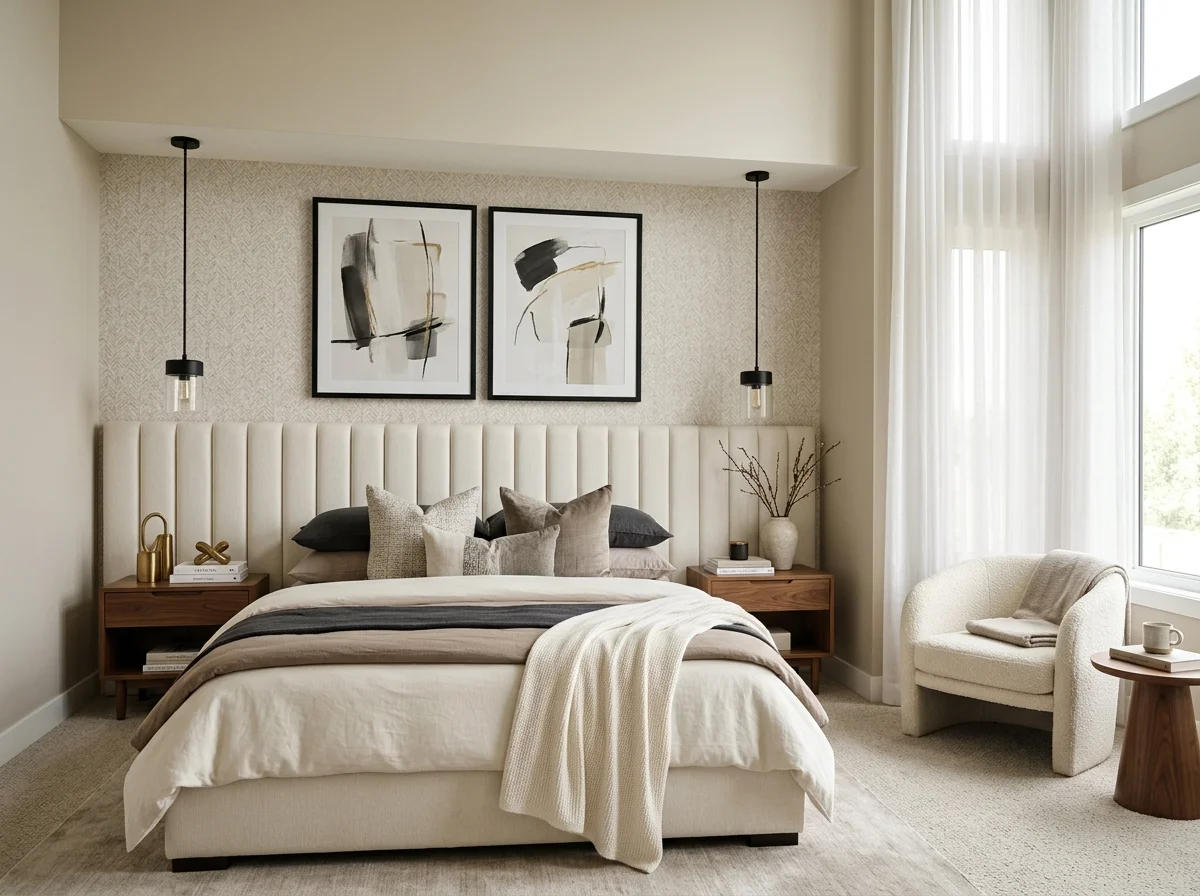
The room above the garage in my parents' house was a "bonus room" for the entire fifteen years they lived there. It held a treadmill nobody used, a Christmas-tree stand, three cardboard boxes that never got unpacked, and a sofa that never received a guest. When they sold the house, the room was the reason it sold under asking. A bonus room earning nothing is worse than no room.
The temptation with a bonus room is to keep options open — to call it a "flexible space" or "multipurpose room" and put a sofa, a desk, and a treadmill in it. This almost always ends the same way: the room becomes a storage area by year two. Bonus rooms reward commitment.
This sits alongside Cosy Room-by-Room Guide and Home Office Corner Design in the same series.
A bonus room — the spare room, the loft, the room over the garage — too often becomes a dumping ground. These twelve ideas turn that underused space into a room with a real purpose, cosy enough that the household actually uses it. Pick the one that matches what your home is missing.
1. Make It a Snug
The most rewarding bonus-room conversion is a snug — a small, enclosed room given over entirely to comfort. A deep sofa or a pair of squashy chairs, a side table, warm low lighting, a throw, and ideally a screen for film nights. Smaller and more enclosed than a living room, a snug is the room everyone gravitates to.
2. Build a Home Library
Line a bonus room with shelves, add a good reading chair and a directed light, and you've made a library — the room a book-loving household never has space for. Floor-to-ceiling shelving on one or two walls, a ladder if it's tall, a window seat or armchair. A whole room for reading is a rare luxury a bonus room can grant.
3. Set Up a Proper Guest Room
A bonus room makes the guest room most homes lack. A comfortable bed, bedside lamps, empty drawers and hangers for visitors, and a few hotel touches — a folded throw, a carafe, a small mirror. Furnished as a real bedroom rather than a storage room with a bed in it, it makes guests feel genuinely welcome.
4. Create a Hobby or Craft Studio
A bonus room is the place to give a hobby room to breathe in — a sewing table, an easel, a potter's bench, a model-making desk. Good task lighting, generous surfaces, open storage for materials, and a floor you don't mind getting messy. A dedicated studio is what turns an occasional hobby into a regular practice.
5. Fit a Home Gym
A bonus room over the garage or in the loft is the natural home gym. Rubber or cork flooring, a large mirror, warm but bright lighting, a rack for weights, and a screen for classes. Keeping the kit in its own room rather than the bedroom corner is what makes a home gym actually get used.
6. Make a Media or Cinema Room
A bonus room with few windows is the ideal media room. A large screen or projector, tiered or deep seating, blackout treatment, and warm low-level lighting along the floor. Soft surfaces everywhere for the acoustics. It's the use that turns the most awkward, light-starved bonus room into the household's favourite.
7. Build a Playroom That Contains the Mess
A bonus room as a playroom keeps the toys out of the living room and gives children a space of their own. Low open storage, a soft floor, a small table for crafts, and a corner for reading. Bounded clearly and easy to tidy, it lets the main rooms stay adult while the children get somewhere to genuinely play.
8. Carve Out a Dedicated Home Office
If you work from home, a bonus room means the office no longer has to share the bedroom or kitchen table. A real desk, a supportive chair, shelving, good light, and a door that closes on the work at the end of the day. The boundary a separate room gives between work and home is worth more than any productivity tool.
9. Split It Into Two Zones
A larger bonus room can hold two purposes if you zone it like an open plan — a guest bed at one end and a desk at the other, or a snug and a hobby corner. Use a rug, a bookshelf, or a screen to divide. One room, two functions, is often what makes a bonus room earn its keep in a busy household.
10. Warm Up the Loft Proportions
Loft and over-garage rooms often have awkward sloping ceilings and cold proportions. Work with the slope — put low furniture under the eaves, standing uses at the ridge — and warm the room with a rug, lined curtains, and soft 2700K light. The sloped ceiling, embraced, becomes the room's cocooning character.
11. Add a Sofa Bed for Flexibility
Where a bonus room mostly serves one purpose but occasionally needs to host, a sofa bed bridges it. A snug or a hobby room with a good-quality sofa bed becomes a guest room when needed, without committing the whole space to occasional visitors. Flexibility is how a single bonus room serves a household's changing needs.
12. Furnish It as Completely as a Main Room
The reason most bonus rooms fail is that they're half-furnished — a spare sofa, a bare bulb, nothing on the walls — so they never feel like real rooms and become dumping grounds. Commit: proper lighting, art, a rug, finished surfaces. A bonus room used daily is one furnished as carefully as the rooms downstairs.
The Method Behind Claiming a Bonus Room
The ideas above are the menu; the principles below cover how to choose the right single purpose, deal with awkward loft and over-garage proportions, and make a secondary room feel as considered as a primary one.
The Conversions That Actually Work
A library or reading room. A wall of bookshelves, one deep armchair with a footstool, a reading lamp at the right height (a swing-arm wall lamp or a floor lamp), a wool throw, and a small side table. Add a rug under the chair and the room is done. Total cost under £1,500 for materials if the shelving is IKEA Billy or Pax in a stained finish.
A snug or den. Smaller and more enclosed than a living room. One generous sofa or pair of armchairs, a low coffee table or trunk, layered lighting, heavy curtains for darkness, a television (which can live in this room without uncosying the rest of the house), and a fireplace if you can swing it — a bioethanol burner or wood stove if the structure allows.
A dedicated hobby room. Sewing, painting, model-making, gardening, music — any hobby with equipment that needs to be left out between sessions. The room earns its space by removing the friction of setting up and packing away. Pegboard walls, a sturdy work table at 95cm height, good task lighting (a daylight-balanced LED at 4000K is fine here, since the room is for working, not relaxing), and storage for materials.
A media room with acoustic treatment. A bonus room can become a proper cinema if the budget allows — wool curtains on all walls to absorb sound, a projector, a single deep sofa, blackout window treatment. Budget £3,000-8,000 depending on whether you go for a proper projector setup or a large TV.
The Conversions That Tend to Fail
Home gyms used less than weekly. Treadmills in bonus rooms gather dust at a remarkable rate. If you exercise daily and the equipment is genuinely used, a home gym is a great bonus room use. If the workout habit isn't established, building the room won't establish it.
Guest bedrooms for occasional guests. A guest bedroom earns its furniture when guests come more than four or five times a year. Less than that and the daybed-in-a-snug option serves better — the snug gets daily use, and the bed is available when needed.
"Flexible" multipurpose rooms. Without a clear primary function, the room tends to become a default storage zone. Pick one main use and let secondary uses be incidental.
A bonus room called a "flexible space" usually ends up as the place where Christmas decorations live the rest of the year.
The Cosy Bonus Room Standard
Whatever the purpose, the room earns its cosy with the same fundamentals as any other:
- Warm light at multiple heights (2700K bulbs throughout)
- One textile-heavy element (wool rug, heavy curtain, sheepskin on a chair)
- One vintage or older object that grounds the room
- A clearly defined entry point (the room knows what it's for from the door)
- Personal evidence of use (books for a library, instruments for a music room, a half-finished project for a hobby room)
A bonus room without personal evidence reads as set dressing. A snug with one open book on the arm of the chair, a half-drunk mug on the side table, and a wool throw bunched in one corner reads as inhabited within minutes of being arranged.