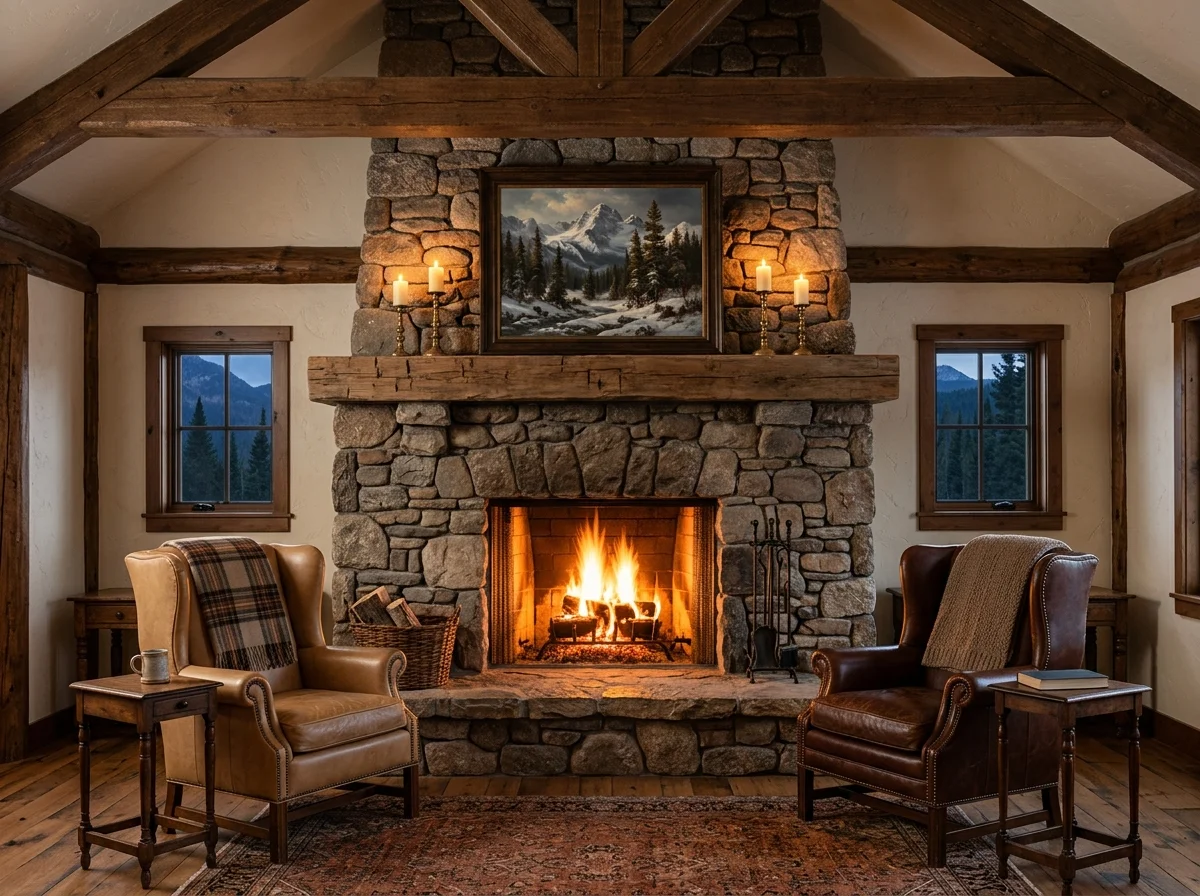
The flat I lived in during 2018 had a small Victorian fireplace 90cm off-centre on the longest wall of the living room. For a year I kept trying to put the sofa squarely on the same wall, centred with the fireplace, and the room never worked — there was always two feet of dead space at one end and the sofa felt visually orphaned. Eventually I floated the sofa perpendicular to the fireplace, put two chairs angled toward the fire on the opposite side, and the room finally settled. The asymmetric fireplace stopped being a problem when I stopped trying to make it symmetric.
The living room with the awkward fireplace is one of the most common interior design problems in older houses. Most rooms weren't designed around the fireplace position — the fireplace was installed first, the rest of the room evolved around it, and the result is often unsatisfactory by modern furniture-layout standards. The fix is rarely to move the fireplace. The fix is to stop fighting the geometry.
Worth reading next to this: Cosy Corner Design, Bay Window Seating Design, and Cosy Living Room Decorating Ideas That Actually.
An off-centre, corner, or TV-competing fireplace makes a room hard to arrange — but every awkward position has a fix. These twelve solutions cover the common problems and the layouts that turn a difficult hearth into the room's best feature. Find the one that matches your wall.
1. Centre the Seating on the Hearth, Not the Room
The commonest fix: ignore where the fireplace sits on the wall and build a symmetrical seating arrangement around the hearth itself. A sofa facing it, a chair to each side. The room reads balanced around the fire even when the fire is off-centre in the architecture.
2. Float a Sofa Perpendicular to a Corner Fireplace
A corner fireplace resists head-on seating. Float the sofa perpendicular to one of its walls and angle a pair of chairs toward the corner, so the seating addresses the fire diagonally. The asymmetry becomes the design rather than a problem to hide.
3. Stack the TV Above the Fireplace
When wall space is tight, mount the TV above the mantel so the fire and screen share one focal wall. A recessed niche or a pull-down mount keeps it from sitting too high. One wall, one focus — the competition between hearth and screen disappears.
4. Put the TV on the Adjacent Wall and Pivot the Seating
If the TV can't go above the fire, place it on the wall beside it and angle the seating into the corner between them, so a turn of the head moves from fire to screen. Swivel chairs make this effortless. Both focal points served without splitting the room.
5. Balance an Off-Centre Fire With a Tall Element
An off-centre fireplace looks less lopsided when you balance the short side with height — a tall bookcase, a large plant, or a leaning mirror. The visual weight on the empty side evens the wall, so the eye stops noticing the fire is off-centre.
6. Build Symmetrical Storage Either Side
Flanking the chimney breast with matching alcove shelving or cabinets makes an awkward fireplace read as a deliberate, symmetrical built-in. The joinery frames the hearth and absorbs the surrounding wall, turning a problem feature into the room's architecture.
7. Run Seating Along the Wall in a Narrow Room
In a long, narrow room with the fire on a long wall, place the sofa directly opposite against the other long wall and use a slim console behind it. Two chairs at the ends close the rectangle. The narrow proportion stops fighting the fireplace and starts framing it.
8. Use a Round Coffee Table to Ease a Tight Angle
When the seating has to angle around a corner or off-centre fire, a round coffee table removes the awkward gaps a rectangular one leaves. It sits comfortably in a non-square arrangement and lets chairs pull in at odd angles without the geometry clashing.
9. Make the Empty Hearth a Feature
A non-working or empty fireplace doesn't have to sit dark. Fill it with a stack of birch logs, a cluster of candles, a large vessel, or a small piece of art on the hearth. The fireplace stays the focal point even unlit, which keeps the room's anchor intact.
10. Anchor the Whole Arrangement With a Big Rug
An awkward layout reads intentional when one large rug ties the floating pieces together. Size it so the front legs of every seat sit on it. The rug draws the boundary of the seating zone, and within that boundary the angled, off-centre arrangement reads as a composed room.
11. Paint the Chimney Breast to Own It
Rather than disguise an awkward chimney breast, paint it a deeper tone than the walls — or drench the whole feature wall — so it becomes a deliberate focal panel. Owning the architecture reads more confident than trying to make the protrusion disappear.
12. Add Swivel Chairs for Flexible Focus
Swivel chairs are the quiet hero of an awkward fireplace room. They let people turn from fire to TV to conversation without the furniture committing to one focal point. In a room with competing anchors, the ability to pivot solves what a fixed layout can't.
The Method Behind Solving the Awkward Hearth
The ideas above are specific fixes; the principles below are how to diagnose your particular awkwardness — where the focal point really is, and how seating should respond to it.
The Off-Centre Fireplace
A fireplace positioned 60cm or more off-centre from the longest wall is the most common awkward configuration. Two approaches work:
Approach 1: Commit to the asymmetry. Place the sofa or main seating piece floated perpendicular to the wall with the fireplace, oriented to face the fireplace at an angle rather than straight on. Add chairs or another sofa creating an L or U around the fireplace. The asymmetry becomes the layout.
Approach 2: Balance with built-in shelving. Build floor-to-ceiling shelving or a built-in cabinet on the wall section opposite the fireplace, creating visual weight to balance the fireplace's mass. The room reads symmetric overall even though the fireplace is off-centre.
For the asymmetric approach: lean into it. A 60cm-off-centre fireplace with seating that respects the off-centring reads more sophisticated than seating awkwardly stretched to "compensate."
For the balanced approach: the built-in needs to be substantial. A small bookcase doesn't compensate for a Victorian fireplace surround. A floor-to-ceiling alcove built-in does.
The Corner Fireplace
A fireplace in the corner — common in 1970s and 1980s builds, and in some modern flats — creates a 45-degree focal point that resists conventional rectangular seating.
The solution: angle the seating to face the corner. Either two chairs angled at 45 degrees toward the fireplace (with a sofa parallel to one of the walls, perpendicular to the corner), or a U-shaped seating arrangement that opens onto the corner.
A rug under the seating should also angle — a square rug placed at 45 degrees, or a rectangular rug aligned with the chairs rather than with the walls.
The mistake: trying to put a sofa parallel to one of the walls forming the corner. This produces sight lines that look at the fireplace from a sharp angle, with awkward floor space between the sofa and the fire.
The Fireplace on a Window Wall
Fireplaces on a window wall (with windows on either side of the fireplace, or with the fireplace between two windows) tend to work better than the geometry suggests, because the symmetry of the windows compensates for the central fireplace.
The seating arrangement: a sofa perpendicular to the fireplace, two chairs facing it across a coffee table. The traditional "conversation circle" works here because the wall geometry is already symmetric.
Curtains on the windows hang from the ceiling line down to the floor, framing the fireplace without competing with it. Skip valances and complex window treatments — they fight the fireplace's focal weight.
The Fireplace Competing with the TV
The single biggest awkward-room problem in modern living rooms. The fireplace is a fixed focal point; the TV wants to be where you're already looking; the two demand the same wall.
Three solutions:
Adjacent walls. Place the TV on the wall perpendicular to the fireplace, not opposite or overlapping. Seating orients toward the fireplace as the primary focal point; the TV is visible from the same seating but at a side angle.
TV in a cabinet that closes. A cabinet on the same wall as the fireplace, or a media console with doors, hides the TV when not in use. The fireplace remains the unobstructed focal point during evenings without TV.
TV in a different room entirely. A snug, study, or media room holds the TV; the main living room remains TV-free. The cosiest solution if floor space allows.
TV above the fireplace is the most commonly suggested solution and almost always the wrong one. The viewing angle is too high (you look up uncomfortably), the heat damages the screen over time, and the two focal points fight even when the TV is off. Skip this approach unless absolutely necessary.
The Empty Firebox Problem
A fireplace that doesn't burn — disconnected, decommissioned, or never used — needs filling. An empty firebox reads as a hole in the room.
Fill options:
A stack of birch logs. Real birch logs cut to fit the firebox depth, stacked horizontally or vertically. Cosier than fake logs. Doesn't need to be functional fuel.
Pillar candles in varying heights. Five or seven pillar candles of different heights clustered inside the firebox. Beeswax or natural-coloured wax, not scented. Lit during evenings.
A wood-burning stove insert. If the chimney is structurally sound, a wood-burning stove insert turns a non-functional fireplace into a functional one. Installation costs £1,000-3,000 with installer; transforms the room.
A bioethanol burner. No chimney required, real flame, modern alternative for flats without chimney access. Insert designs from £200-800.
A single sculpture or vessel. A large ceramic vase, a piece of sculpture, or a vintage object placed inside the firebox. Works for fireboxes too small for logs or candles.
Don't leave the firebox empty. An empty firebox uncosies the entire arrangement.
The Mantel as a Cosy Anchor
Regardless of the fireplace's awkwardness, the mantel is the room's strongest cosy anchor. A well-styled mantel can compensate for layout difficulties.
The mantel approach for awkward fireplaces:
- One large dried or fresh foliage element to one side
- A cluster of three to seven candles to the other side or at intervals
- One focal object (mirror, painting leaning, vintage clock) centred or off-centred
- The visual weight to one side balances any layout asymmetry in the room
A heavily styled mantel can pull the eye toward the fireplace as the focal point, even when the seating arrangement doesn't perfectly align.
The awkward fireplace stops being a problem when you stop trying to make it not-awkward. Lean into the asymmetry; the asymmetry becomes the layout.
The Forgotten Solution: Move the Sofa Out
In many awkward living rooms, the problem is that the sofa is too large for the room, not that the fireplace is in the wrong place. A 240cm sofa in a room that wants a 180cm sofa creates conflict with any feature wall — fireplace included.
Before resorting to complex layouts, consider:
- Whether the sofa is the right size for the room
- Whether a smaller piece of seating (a two-seater or a loveseat) would actually serve better
- Whether two armchairs facing the fireplace, with a smaller sofa perpendicular, beats a single large sofa fighting the fireplace
A room is sized for its dimensions, not for the furniture inherited from a previous home. The sofa that worked in your old flat may not work in this one.
The Single Rule for Awkward Fireplace Rooms
If the layout doesn't settle within two weeks of moving in, change something. The mistake is living with an awkward layout for a year, hoping it will resolve itself. It won't.
Move furniture. Try the sofa at an angle. Put the chair where the sofa was. Live with the new arrangement for a week. Move again if needed. The layout that finally settles will reveal itself through this experimentation.
Photograph each iteration. The arrangement that looks acceptable in the room often reads differently in the photograph. The photograph flattens what the eye balances, revealing geometry problems the eye dismisses.