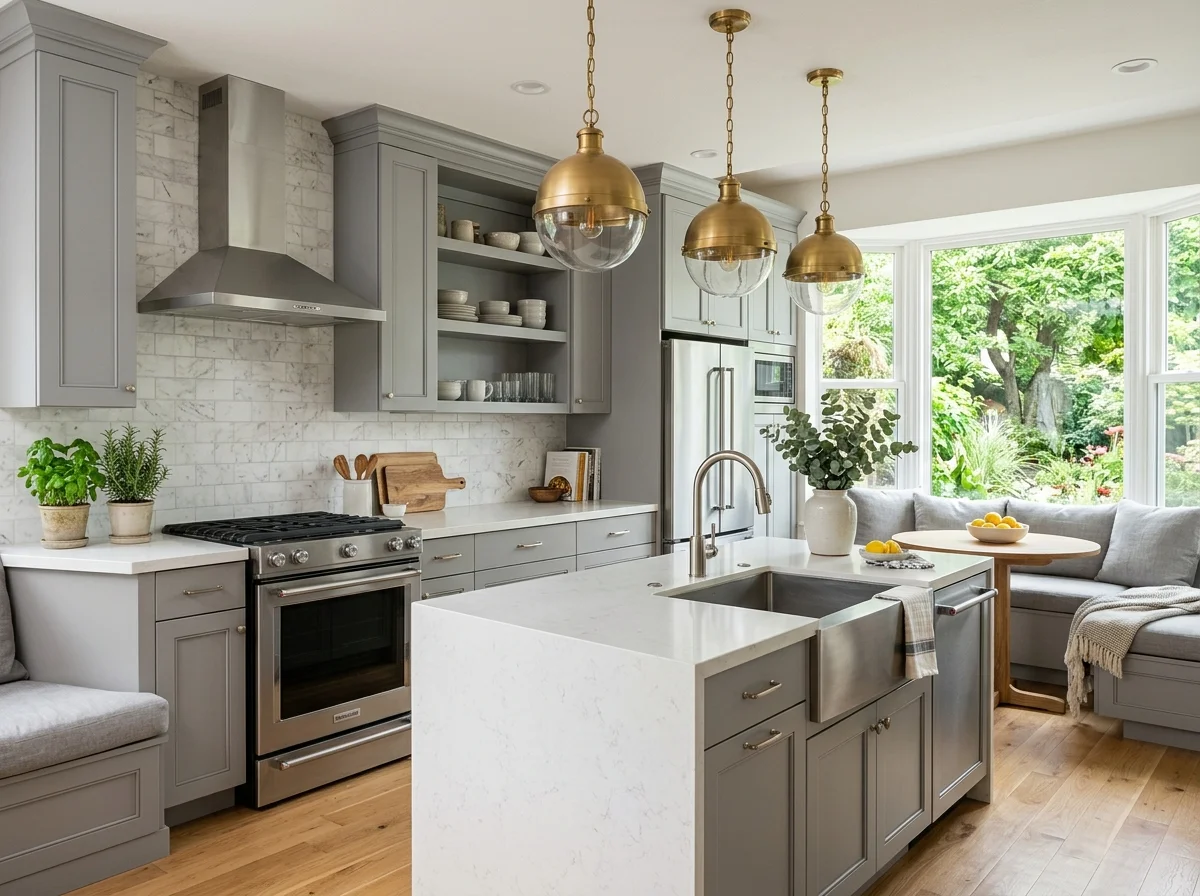
The kitchen had been redone in 2003 in pale lemon-yellow paint with chrome handles and a strip of cool-white LED under the cabinets. By 2023 it looked tired. The full renovation budget was £2,400. I painted the cabinets in a warm putty colour, replaced all the handles with unlacquered brass, swapped the LED strip for 2700K tape light, and installed a single oak butcher-block section over the existing laminate worktop near the hob. The kitchen looks completely different. The cabinets are the same cabinets.
The full kitchen renovation — ripping out cabinets, replacing flooring, installing new appliances — starts at £15,000 for a modest space and runs to £40,000+ for a generous one. Most kitchens don't need that level of intervention. The five changes below transform a tired kitchen for under £3,000 in materials, with one or two weekends of labour if you do most of it yourself.
This sits alongside Budget Cosy Home Playbook, Home Decor Ideas Under £100 That Aren't, and Warm Kitchen Design Ideas Without Going Full in the same series.
A full kitchen renovation runs to thousands; a transformation needn't. These thirteen upgrades — most under a few hundred pounds — warm and improve a small kitchen without ripping it out. Pick the ones that fit your kitchen and your budget; in order, they build from cheapest to most involved.
1. Paint the Cabinet Doors (£80-150)
The highest-value kitchen move: paint the existing cabinet doors a warm colour — a sage, a clay, a deep navy, or a warm cream — with proper cabinet paint. For £80 to £150 in materials and a weekend's work, a tired kitchen reads like a new one. If the carcasses are sound, paint beats replacement every time.
2. Swap the Hardware to Brass (£30-80)
New brass or aged-bronze handles and knobs transform painted or even unpainted cabinets for £30 to £80. It's the finishing touch that makes a budget kitchen look designed, and it takes an afternoon with a screwdriver. Brass warms a kitchen the way chrome never can; the small spend punches well above its weight.
3. Change Bulbs and Add Under-Cabinet Light (£40)
Warm 2700K bulbs throughout, plus a strip of warm under-cabinet LED lighting, transforms a small kitchen's atmosphere for around £40. The under-cabinet light puts a warm glow on the worktop and reads expensive; the warm bulbs stop the room feeling clinical. Light is the cheapest warmth a kitchen can buy.
4. Add Open Shelving (£40-100)
A run of open wood shelves on a bare wall — £40 to £100 in timber and brackets — adds storage, display, and warmth at once. Styled with everyday earthenware and a plant, open shelves read warm and lived-in where another cabinet would read closed-in. The wood brings the warmth a painted kitchen needs.
5. Lay a Runner (£30-60)
A washable runner along the working stretch warms the hardest floor in the house and adds colour and pattern for £30 to £60. Vintage-style cotton or a durable indoor-outdoor weave handles kitchen traffic and washes clean. Underfoot softness is warmth you feel immediately, and it hides a tired floor too.
6. Replace the Splashback With Tile (£60-150)
Re-tiling a small splashback with handmade-look zellige or a warm terracotta tile — £60 to £150 for a small run — brings light-catching texture where a flat panel reads cold. A small kitchen needs only a few square metres, so a characterful tile is affordable here where it wouldn't be in a big kitchen. Texture and warmth on the wall.
7. Add a Butcher-Block Worktop Section (£80-200)
Even if a full worktop replacement is out of reach, a single butcher-block section — a chopping zone or a small run — brings real wood warmth for £80 to £200. The wood contrasts with whatever hard worktop you have and gives a small kitchen a warm, natural surface. Spot-warming the worktop where it counts.
8. Hang a Warm Pendant (£50-120)
Swapping a flush ceiling light for a warm pendant — a brass dome, a rattan shade — over the sink, table, or a small island anchors a small kitchen and pulls the light down warm for £50 to £120. On a dimmer, it shifts the kitchen into evening mode. The single fitting that gives a small kitchen a focal point.
9. Add Café Curtains or a Blind (£30-60)
A linen café curtain or a Roman blind softens a small kitchen window and the whole room's acoustics for £30 to £60. The soft textile absorbs the kitchen's hardness and adds warmth and a little privacy. Even a single small panel makes a hard, tiled kitchen feel less clinical. Fabric is the cheap antidote to cold.
10. Decant and Display on the Worktop (£20-40)
Decanting dry goods into matching jars, lining up good olive oil, and keeping a wooden board and a bowl of fruit out turns worktop necessities into warm display for £20 to £40 in jars. A small kitchen's worktop is always on show, so styling it — rather than hiding everything — makes the room read considered and lived-in.
11. Add Herbs and a Plant (£10-25)
A row of potted herbs on the sill and a small plant on a shelf bring life and scent to a small kitchen for £10 to £25. Herbs earn their place twice — they look alive and they get cooked. Greenery is the quickest, cheapest warmth a hard-surfaced kitchen can get, and a small kitchen needs only a little.
12. Refresh the Grout and Seals (£15)
An overlooked transformation: regrouting tired tiles and replacing yellowed silicone seals for around £15 in materials makes a small kitchen read clean and cared-for. Grimy grout and peeling seals make even a tidy kitchen look run-down; fresh white grout and crisp seals are the cheapest way to make a kitchen feel renewed.
13. Prioritise: Paint, Hardware, Light First
With a small kitchen budget, order matters: paint the cabinets, swap the hardware, and fix the lighting first — these three, for under £250 together, deliver the biggest transformation. Tiling, worktops, and shelving come after if the budget stretches. Spend the first pounds where they change the room most, then build from there.
The Detailed Renovation Steps
The ideas above are the menu; below, the same upgrades as a costed step-by-step, so you can plan a small-kitchen refresh in order and know what each stage runs before you start.
Step 1: Paint the Cabinets (£80-150)
If the cabinet boxes are structurally sound and made of real wood, MDF, or quality laminate, painting them transforms the kitchen for the price of paint and a weekend's work.
The process:
- Remove all doors and drawer fronts. Label each one with painter's tape on the back, noting which cabinet it came from.
- Remove all hardware. Set the hardware aside for replacement (see step 2) or for reinstallation.
- Clean every surface with degreaser. Kitchen cabinets accumulate grease in ways living-room surfaces do not.
- Sand all surfaces lightly with 220-grit sandpaper. The goal is to give the new paint something to grip.
- Apply a bonding primer. Zinsser BIN, Coverstain, or Crown Trade Cover Plus work on most kitchen surfaces.
- Apply two coats of cabinet-specific paint. Farrow & Ball, Little Greene, Crown Solo, or Benjamin Moore Advance all produce durable cabinet paint. Allow 16+ hours between coats.
Colour choices that work in cosy kitchens:
- Warm putty or stone (Farrow & Ball Hardwick White, Little Greene Slaked Lime)
- Soft warm green (Farrow & Ball Bancha or Lichen, Little Greene Pleat or Etruria)
- Deep warm green for lower cabinets only (Farrow & Ball Studio Green or Calke Green)
- Warm cream or off-white (Farrow & Ball Skimming Stone or Slipper Satin)
Avoid stark white, cool grey, or any blue-toned colour. They don't read as cosy in kitchens.
Step 2: Replace the Hardware (£80-300)
Swapping cabinet pulls and knobs is the single highest-return change in any kitchen renovation. The visual impact per pound spent exceeds any other intervention.
The cosy hardware choices:
- Unlacquered brass (ages to deep amber over years)
- Aged brass with a darkened finish
- Solid brass with a brushed finish
- Hand-forged iron knobs (more rustic; suits country kitchens)
- Wooden knobs (suit Scandinavian or English cottage interiors)
Skip: chrome, brass-plated zinc (looks shiny then peels), polished nickel, and any "antique" finish that's spray-painted on. Solid metal handles last forever; plated handles fail within years.
Source from:
- Schoolhouse (US)
- The Cotswold Iron Foundry (UK)
- Plank Hardware (UK)
- DeVol Kitchens (UK, designer-grade)
- Howards Furniture Restoration (UK secondhand)
- Anthropologie (mixed quality, occasionally good)
For a small kitchen with 12 cabinet pulls and 6 drawer knobs, expect £80-300 total depending on choices.
Step 3: Swap the Lighting (£40-150)
The cool-white LED strip under the upper cabinets is the single most uncosy element in modern kitchens. Replace with 2700K tape light, £30-50 per cabinet length.
Replace bulbs in any pendant fixtures or recessed lights with 2700K equivalents. If the recessed lighting is integrated (no replaceable bulb), the lights stay until full renovation; switch them on dimmers if not already.
Add a single small table lamp on a worktop. A 20-25cm ceramic lamp with a small fabric shade, costing £40-80, transforms how the kitchen reads at 6pm. The lamp is unusual in kitchens and that's exactly why it works.
For a pendant over an island or breakfast bar (if you have one), replace with a paper, woven rattan, or brass-with-fabric pendant. Plug-in pendants exist for renters; hardwired replacements take a sparky's hour.
Step 4: One New Material Section (£150-500)
A small section of new material breaks up the existing worktop and adds visible warmth. The two highest-return options:
Hardwood butcher block. A 1.5-2m section of oak, walnut, or maple butcher block laid over the existing laminate or aged solid-surface worktop near the hob or the main prep area. Sealed with mineral oil and beeswax. £150-300 from IKEA (Karlby) or any hardwood supplier.
A small stone slab. A 1-1.5m section of marble, soapstone, or breccia near the hob. Stone offcuts from local fabricators run £200-500 for a small section. Cut to fit and laid over the existing worktop.
The new material doesn't have to cover the entire worktop — a single section near the most-used cooking area is enough. The contrast between the new material and the rest of the worktop reads as composed rather than half-finished.
Step 5: Refresh One Aged Element (£200-1,000)
Most kitchens have one element that's visibly aged — the cooktop, the sink, the tap, an old microwave above the hob. Replace that single element if budget allows.
Cooktop replacement. A new induction or gas cooktop runs £400-1,000 for a quality unit (Bosch, Neff, or Smeg). Install costs £150-300 for gas (requires a gas-safe engineer). The new cooktop transforms the cooking experience and reads as much newer than the surrounding cabinets.
Sink and tap replacement. A new ceramic or stainless steel sink (£100-400) and a brass or aged-metal tap (£150-500) transform the most-used part of the kitchen. Install requires a plumber for £150-300.
Replace a freestanding appliance. If the dishwasher, fridge, or oven is visibly worn, a single replacement reads as a full renovation.
Skip: replacing the floor (large cost, low return on small budgets), structural changes (the kitchen has the same layout for a reason), and replacing the splashback unless tiles are visibly damaged.
The Total Budget Walked Through
For a small UK kitchen with 12 cabinet doors:
- Paint and primer for cabinets: £120
- Hardware (12 pulls, 6 knobs in aged brass): £180
- LED tape light at 2700K (3 lengths): £90
- One ceramic table lamp: £60
- Oak butcher block 1.5m section: £220
- New brass kitchen tap: £180
- New under-mount sink: £160
- Painting equipment: £40
- Sparky for one hour to wire tape light: £80
Total: £1,130
This budget leaves room for upgrades (a new cooktop, more substantial stone work) or for an unexpected element. Without major appliance replacement, a small kitchen renovation lands comfortably under £1,500 and reads as transformative.
What Not to Bother With in a Budget Renovation
Replacing the entire flooring unless it's badly damaged. New flooring adds £800-2,500 and is rarely the highest-impact change.
Removing all the upper cabinets for open shelving. The aesthetic looks good in photographs and works poorly in practice for most people. Keep upper cabinets for actual storage; install a section of open shelving on one wall instead.
Adding a kitchen island when there isn't one. The £1,500-3,000 cost on islands could go into multiple other changes that affect the kitchen more.
Replacing all the appliances at once. Replace one element that's visibly aged. The others stay until they fail.
Adding heavy decorative elements (carved corbels, decorative crown moulding, ornate millwork). They date the kitchen faster than the existing finishes did.
The full kitchen renovation is expensive because it solves problems most kitchens don't have. The five changes above solve the actual problems for a fraction of the cost.