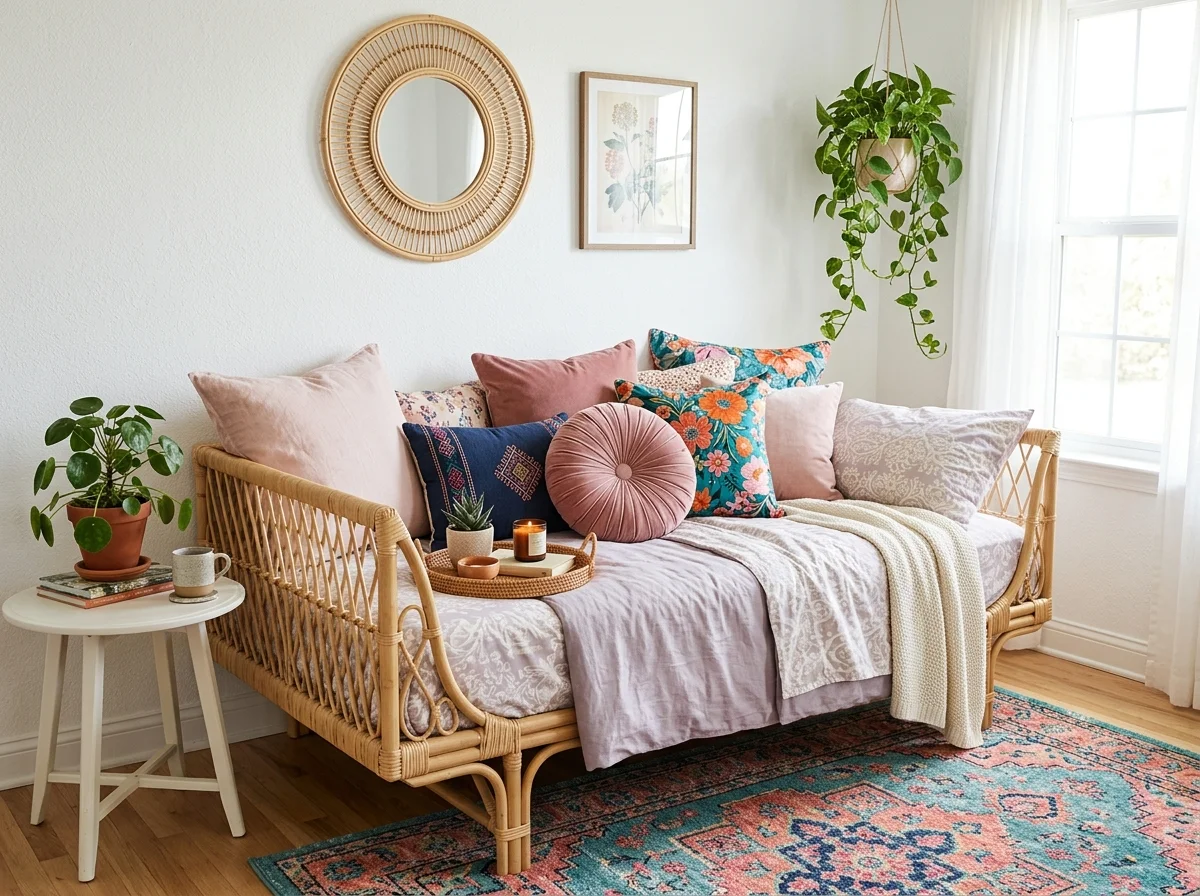
The cushions on the sofa here are five: two large 60x60cm linen cushions in oatmeal at the back corners, one 35x55cm lumbar in oxblood velvet centred, and two smaller 45x45cm in different linen weights as accents. None of them match. All of them sit within a four-colour palette. They are not removed at night. Three of them came from MagicLinen; one came from a charity shop; one is a vintage textile I had made into a cushion cover. The mix reads as collected.
The cushions on a sofa are the most-touched textiles in any room. They contribute substantially to cosy when chosen well and uncosy a room dramatically when chosen badly. Most cushion failures come from buying matching sets, choosing synthetic inserts, or simply having too many cushions.
If this is the room you're working on, Where to Buy Cosy Home Essentials and Textile Layering Guide go deeper on the pieces that fill it.
Throw pillows can lift a sofa or clutter it — the difference is in the inserts, the arrangement, and the fabric mix. These twelve ideas and rules cover how to choose, combine, and arrange cushions so they read considered rather than piled on. Pick what's useful for your sofa or bed.
1. Buy Down or Feather Inserts
Quality lives in the insert, not the cover. A down or feather-down insert plumps full, holds its shape, and can be karate-chopped or left to slouch naturally — where a cheap polyester insert goes limp and lumpy fast. Spend on good inserts and even budget covers look expensive. It's the single biggest cushion upgrade.
2. Size the Insert Up One
The trick to a full, luxurious cushion: put an insert one size larger than the cover — a 22 inch insert in a 20 inch cover. It fills the corners and gives the plump, generous look designers get, where a same-size or smaller insert leaves the cover limp and half-empty. Size up the fill, every time.
3. Go Bigger Than 18 Inches
The standard 18 inch cushion reads small and mean on most modern sofas. Go to 20, 22, or even 24 inches for a generous, luxurious look. Larger cushions read more expensive and suit the deeper, bigger sofas common now. When in doubt, size up — small cushions are the commonest throw-pillow mistake.
4. Mix Fabrics, Not Just Colours
A cushion group reads rich when the fabrics vary — a linen, a velvet, a wool, a subtle pattern — rather than matching covers in different colours. The textural mix catches light differently across each and gives the sofa depth. Vary the fabric and even a tonal, neutral group reads layered and considered.
5. Vary the Sizes for Rhythm
An arrangement of identical cushions reads flat; varied sizes create rhythm. Two large squares at the back corners, a lumbar or a smaller square in front. The variation in scale gives the sofa a layered, gathered look, where a row of matching cushions reads like a showroom display. Different sizes, deliberately.
6. Anchor With Solids, Lift With One Pattern
The reliable formula: mostly solid, textured cushions in the room's palette, lifted by one patterned cushion that ties the colours together. The solids ground the arrangement; the single pattern adds interest without chaos. Too many patterns fight each other — one good pattern among solids is the balance.
7. Use a Lumbar for Comfort and Contrast
A lumbar (rectangular) cushion sits in front of the square ones, supports the small of your back, and breaks the row of squares with a different shape. It's the most useful cushion on the sofa — actually comfortable to lean on — and the shape contrast finishes the arrangement. Function and styling in one piece.
8. Keep to the Room's Palette
Cushions are the easiest place to reinforce the room's colour scheme — pull the warm accents already in the room (the rug, the art, a ceramic) into the cushions so they tie the scheme together. Cushions in a colour that appears nowhere else read random; cushions echoing the room's palette read deliberate.
9. Don't Over-Cushion the Sofa
The commonest mistake is too many cushions. Three to five on a standard sofa; more than that and you're moving pillows to sit, which nobody keeps up. A sofa you have to clear before using isn't styled, it's staged. Leave breathing room and keep the arrangement to what you'd actually leave in place.
10. Add One Textured or Knit Cushion
A single chunky knit, bouclé, or heavily textured cushion adds dimensional interest the smooth covers lack, and reads especially cosy in the cooler months. It's the tactile hit in the arrangement — the cushion people reach out to touch. One textured piece among smoother ones gives the group depth.
11. Style the Bed With Restraint Too
On a bed, the same restraint applies: two sleeping pillows, two euro pillows behind in a contrast, one lumbar or a folded throw in front. Five surface elements, then stop. A bed buried in decorative cushions means removing them every night, which nobody does — keep it to what stays on while you sleep, plus a little.
12. Refresh Covers With the Seasons
Cushion covers are the cheapest way to shift a room seasonally — swap linen and lighter tones in summer for wool, velvet, and deeper warm tones in winter. Keep the inserts and just change the covers, which store flat. It's a low-cost, low-effort way to keep a room feeling current and seasonal without buying furniture.
The Method Behind Choosing Throw Pillows
The ideas above are the menu; the principles below are the structure — where quality lives (the inserts), the size and fill rules, and the arrangements that read intentional.
The Inserts: Where Quality Lives
The cushion's insert determines its feel as much as the cover fabric. Two main options:
Feather and down inserts. The standard for quality cushions. The feather core gives weight and substantial feel; the down softens the edges. Mould to the body when leaned against. Hold their shape across years if regularly fluffed. £20-50 per insert for quality.
Synthetic fibre fill (hollowfibre, polyester). Cheaper, washable, and lighter weight. Acceptable for guest rooms or for households where feather allergies are an issue. Lose shape within 12-18 months. Feel less substantial. £8-20 per insert.
Foam inserts. Used in specific upholstered cushions (back cushions of sofas, custom seating). Rigid and shaped rather than soft. Wrong for decorative throw cushions.
For decorative throw cushions, feather and down wins. The cost difference of £15-30 per cushion over the cushion's lifespan is minimal; the feel difference is dramatic.
Buying inserts separately from covers (the standard approach for cosy interiors) lets you replace covers without replacing inserts. A good feather insert lasts 7-10 years; covers can rotate seasonally or as the room evolves.
Insert size note: buy the insert 5-10cm larger than the cover dimension so the cushion fills the cover completely. A 60x60cm cover with a 65x65cm insert reads plump and inviting; a 60x60cm cover with a 55x55cm insert reads saggy.
Cushion Sizes and Where They Go
The standard sizes:
55x55cm or 60x60cm square cushions. The workhorse back cushion. Two at the corners of a three-seat sofa. Standard for living-room seating.
35x55cm lumbar cushions. Long rectangular cushions for the middle of a sofa or in front of taller back cushions. Excellent lower back support; visually anchors the centre of the sofa.
40x40cm or 45x45cm accent cushions. Smaller cushions used as one or two accents alongside the larger pieces. Often in the most visually interesting fabric of the set (velvet, vintage textile, hand-block-printed).
65x65cm euro cushions. For beds, behind sleeping pillows. Also work as back cushions on banquette seating or window seats.
Bolsters (long cylindrical cushions). For armchairs, daybeds, and sofa arms. Excellent for back support in lying-down positions. 50cm length is standard.
A standard three-seat sofa with the cushion mix below reads complete:
- Two 60x60cm cushions at the corners
- One 35x55cm lumbar cushion centred
- One 40x60cm accent cushion off-centre
Four cushions total. Add a fifth small accent if desired; stop there.
Mixing Without Matching
Matching cushion sets are the most common cushion mistake. The cosy alternative is intentional mismatch within a coherent palette.
The mix rules:
Mix textures. Linen, wool, velvet, woven cotton, and occasional leather. Three or four different textures across five cushions reads as collected.
Narrow the colour palette. All cushions live within the room's existing palette — typically 3-4 colours total. The textures vary; the colours are restrained.
Vary scale and pattern. Some plain, some with subtle texture (woven stripes, slubby linen), occasionally one with a small pattern. Avoid bold patterns on multiple cushions.
Allow one piece of personality. One cushion can be the visual focal point — a vintage textile, a hand-block-printed Indian cotton, a velvet in a deeper colour. The rest of the cushions support this single statement.
The cosy three-seat sofa cushion arrangement:
- Two 60x60cm in oatmeal linen (plain)
- One 35x55cm lumbar in oxblood velvet (the visual focal point)
- One 45x45cm in cream wool (textured but quiet)
- Optional fifth: 40x40cm in a vintage textile or hand-printed cotton
Four colours: oatmeal, cream, oxblood, plus whatever the accent introduces.
Fabric Choices
The fibres that consistently work in cosy cushion covers:
Linen. The workhorse. Soft, wrinkles correctly, washes well, takes natural dyes beautifully. Oatmeal, cream, soft pink, sage, deep oxblood — all suit. The first cushion in most cosy collections.
Wool. Heavier and more substantial than linen. Best for one or two cushions per sofa rather than all five. Welsh wool, Pendleton, or Fisher-Knit wool covers.
Velvet. Adds richness and visual depth. Best in deeper warm colours (oxblood, deep teal, moss, terracotta) as accent rather than as base. One velvet cushion among four others is the standard.
Woven cotton. Slubby cottons, hand-loomed cottons, ikat or stripe weaves. Lighter than wool, more textured than smooth linen.
Leather. Distressed brown leather cushions add an unusual texture. Best as a single accent piece rather than as multiple cushions.
Vintage textiles. Old Persian kilims, Indian block prints, Japanese boro cloth, Welsh blanket squares — repurposed into cushion covers. The most distinctive option; one cushion is often the most-loved object in a room.
What to skip:
- Polyester satin and "silk-look" cushion covers. Look cheap; don't age well.
- Cushion covers with sequins, embroidery in saturated colours, or appliqué. Date quickly and fight other textiles.
- Cushion covers with prints of cliché motifs (city skylines, "Live Laugh Love," nautical anchors). All age poorly.
- Matching cushion sets sold with a throw or in coordinated bundles. They read as catalogue.
Where to Buy
H&M Home: £8-20 per cushion cover. Linen covers in warm neutrals. The most consistent budget source.
IKEA Vigdis, Sanela, or Aina ranges: £5-25 per cushion cover. Real linen and velvet at IKEA pricing.
MagicLinen: £15-30 per cushion cover. Premium linen at mid prices.
Piglet in Bed (sale): £20-50 per cushion cover. Premium linen during seasonal sales.
Soho Home: £40-150 per cushion cover. Designer-grade textiles, slubby linens and velvets.
Anthropologie selectively: £30-100 per cushion cover. Good for accent cushions with character; skip the heavy trend pieces.
Charity shops in wealthy areas: £3-15 per cushion. Vintage cushion covers from estates often produce one-of-a-kind pieces.
Etsy independent textile makers: £20-100 per cushion cover. Hand-printed, block-printed, hand-loomed textiles. Best source for the single "personality" cushion in a set.
Vintage textile dealers: £50-300 per cushion cover. Antique kilims, vintage embroidery, repurposed textiles. The premium tier for distinctive cushions.
The Bed Cushion Strategy
Beds want a different cushion approach than sofas. The cosy bed has five visible surface elements:
- Two sleeping pillows in plain linen or cotton (matched, since these are what you sleep on)
- Two 65x65cm euro pillows behind the sleeping pillows in contrast fabric (stripes, deeper solid, subtle check)
- One folded throw at the foot of the bed
That's it. No decorative cushion pile that has to be removed every night. The two euros provide visual interest behind the sleeping pillows without crowding the bed.
For a fuller bedscape during photographs (not for daily use), add a 35x55cm lumbar cushion in front of the sleeping pillows. Remove it at night.
A sofa or bed with too many cushions is a styling shot, not a piece of furniture. The cosy version is fewer, better cushions that don't have to be moved before sitting or sleeping.
Common Cushion Mistakes
Too many cushions. Five is the ceiling for a three-seat sofa. Six and you're moving cushions to sit down.
Synthetic inserts. Cheaper upfront but feel rigid and lose shape fast. Feather inserts are worth the upgrade.
Matching sets. Three identical cushions in a row reads as catalogue. Mix instead.
Cushion covers too large for inserts (or vice versa). Sized correctly, the cushion reads plump. Wrong-sized, it reads saggy.
Cushions on every chair. A reading chair benefits from a single cushion or sheepskin draped on it. Three cushions on an armchair makes it less comfortable, not more.
Bright accent cushions in a muted room. A single bright cushion in an otherwise quiet palette reads as an afterthought. Either fully commit to colour across the cushions or stay within the room's palette.