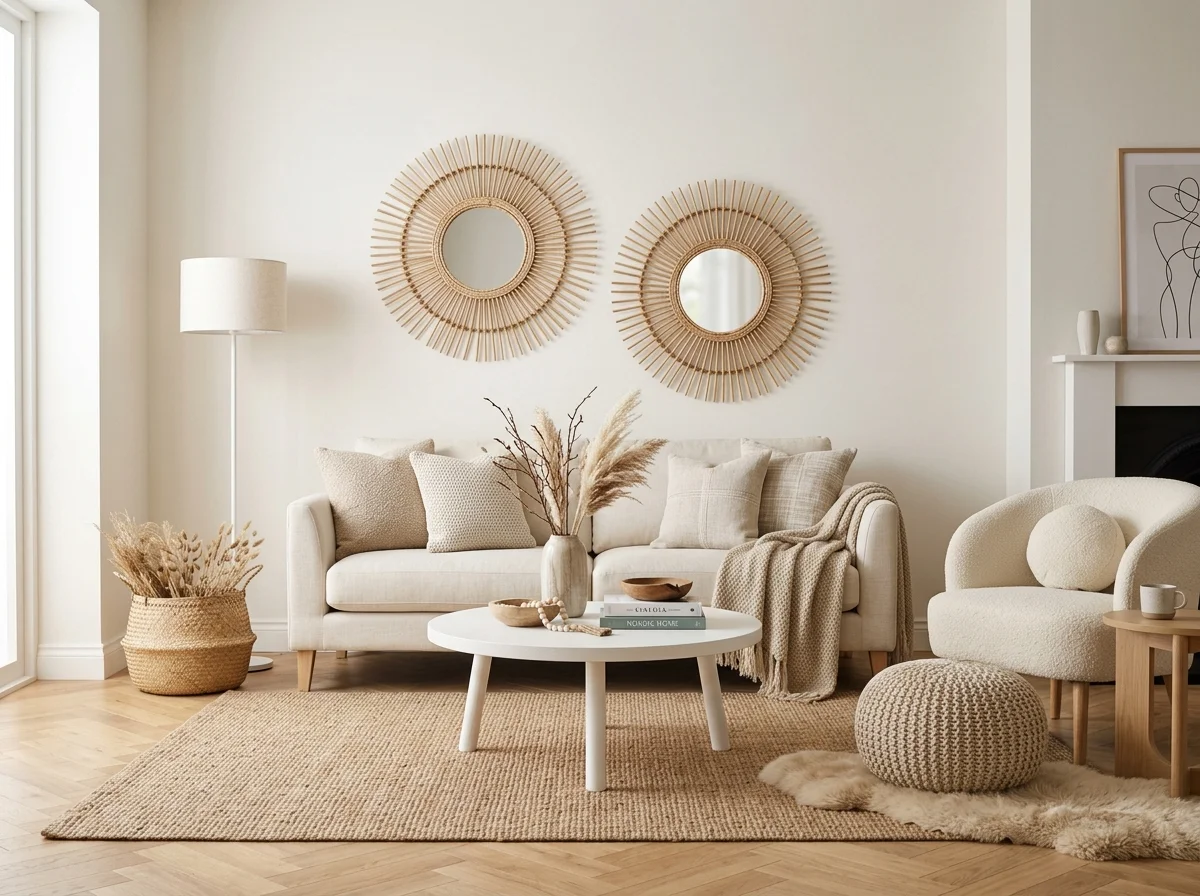
The cushion covers on the sofa took an afternoon in 2022 — twelve metres of unbleached linen from MagicLinen, four covers cut and sewn, total cost £42. The plywood floating shelves in the kitchen took a Saturday in 2023 — three lengths of birch ply from a local timber merchant, hard-wax oil, hidden bracket strips, total cost £68. The walls were painted by me in 2021 across three weekends. None of these projects look like DIY. They look like the rooms they're in. That is the standard.
The DIY home decor industry sells the wrong fantasy — that every project saves money and produces results indistinguishable from professional work. The actual practice is more selective. Some DIY genuinely saves money and looks better than the ready-made alternatives. Other DIY costs the same as buying ready-made and produces visibly amateur results.
This handbook covers the projects in the first category, with brief notes on the second category so you can avoid the wrong ones. Treat it as a working library of DIY home interior design ideas — the ones that actually look like the rooms they're in.
If this is the room you're working on, DIY Bedroom Decor Projects That Aren't Twee, Weekend DIY Projects for Home Decor That, and Budget Cosy Home Playbook go deeper on the pieces that fill it.
A handmade home is built one skill at a time. These eighteen projects and skills — the heart of the handbook — span the range from a first coat of paint to a built-in window seat, in roughly the order worth learning them. Start at the top; each project teaches the skills the next one needs.
1. Learn to Paint Properly First
Painting is the foundational DIY skill and the highest-impact one. Learn to prep, cut in cleanly, and lay off evenly, and you can transform any room for the price of paint. Master a roller and a brush before anything else — most decorating DIY rests on a good paint finish, and a well-painted room beats almost any other project.
2. Build a Basic Tool Kit
A handful of good tools makes every project easier: a drill-driver, a spirit level, a tape measure, a decent saw, a staple gun, sandpaper, brushes, and a filling knife. You don't need a workshop — these few tools cover most home DIY. Buy decent versions once rather than cheap ones twice; good tools make the difference.
3. Master the Upholstered Headboard
The upholstered headboard — plywood, foam, batting, fabric, staples — is the gateway project that teaches measuring, cutting, and stapling, and delivers a high-impact result in an afternoon. It costs a fraction of a bought headboard and works in any fabric. Learn this one and you've learned the skills half the other projects need.
4. Learn Simple Straight-Seam Sewing
Basic sewing — straight seams, hems, envelope closures — unlocks pillowcases, cushion covers, curtains, runners, and roman blinds. You don't need to be a tailor; a machine and the ability to sew a straight line covers most soft-furnishing DIY. The soft layers are half of cosy, and most are within a beginner's reach.
5. Build Open Shelving
Shelving is the workhorse DIY project — useful, satisfying, and beginner-friendly. A length of timber, brackets, sanding, and oil or paint, and you've added storage and display. From a single floating shelf to a full alcove run, shelving teaches fixing into walls and gives a room function and warmth. The most repeatable useful build.
6. Panel a Wall for Character
Panelling — batten, tongue-and-groove, or square frames — adds architectural character to a plain room and teaches measuring, mitring, and fixing. Painted out it reads built-in; in contrast it's a feature. It's the project that makes a builder-grade room look considered, and it's well within a confident beginner's reach in a weekend.
7. Upcycle Solid Old Furniture
Learn to rescue solid secondhand furniture — sand, prime, paint, re-handle, wax — and you can furnish a home with quality pieces for a fraction of new. A charity-shop chest becomes a characterful piece for the cost of paint. Upcycling is the budget DIYer's superpower, keeping good old furniture in use and out of landfill.
8. Hang Things Level and Secure
A surprising amount of DIY is just hanging things well — art, shelves, mirrors, curtain poles — level, centred, and fixed securely for the weight and wall type. Learn your wall types and fixings (plasterboard versus masonry), use a level, and measure twice. Good hanging is what separates a finished room from a wonky one.
9. Sew Lined Curtains
Lined curtains are the soft-furnishing project with the biggest payoff — full, floor-length, thermal-lined panels in your fabric for the cost of materials, where made-to-measure runs into hundreds. The lining is the upgrade. It's a step up from basic sewing but well worth learning; curtains are the room's largest soft surface.
10. Fit New Hardware and Lighting
Swapping cabinet hardware to brass and fitting new light fittings are low-skill, high-impact jobs — a screwdriver and basic electrical confidence (or an electrician for the wiring). New handles and warm lighting transform a kitchen or a room with no structural work. The smallest skills with some of the biggest visible effects.
11. Build a Window Seat or Bench
A box bench — for a bay, under a window, or at the foot of a bed — is the project that teaches real carpentry and delivers seating, storage, and the cosiest spot in the room. Ply and MDF, a cushion on top. It's an ambitious but achievable build that levels up your skills and adds genuine value to a room.
12. Make Your Own Wall Art
You don't need to buy art. Stretch fabric over canvas frames, paint a large abstract, make cyanotype prints, frame textiles or book pages, press botanicals. DIY art fills walls with character for the cost of materials, and one large homemade piece anchors a room. The walls are prime real estate; make something for them.
13. Learn Basic Tiling
Tiling a splashback or a small floor — adhesive, spacers, cutting, grouting — is a learnable weekend skill that transforms a surface with texture and warmth. A small area is forgiving for a first attempt. Learn it and you can warm a kitchen or bathroom with a characterful handmade tile that would cost a fortune to have fitted.
14. Restore Rather Than Replace
The DIY mindset that saves the most: restore what you have. Wax tired wood, rewire an old lamp, reupholster a good-framed chair, refinish a scratched table. A restored quality piece beats anything new at the price and keeps character and craftsmanship in the room. Learn the basic restoration skills and little needs replacing.
15. Match Ambition to Skill
The handbook's core discipline: attempt projects at or just above your current skill, not far beyond it. Start with painting and shelving, build to panelling and sewing, then tackle joinery and tiling. A simple project finished well reads handmade; an ambitious one botched reads homemade. Grow the skills in order and every project succeeds.
16. Finish Everything Properly
The single thing that separates handmade from homemade is the finish. Fill the holes, sand the edges, hem straight, paint the unseen edges, hide the fixings, wipe off the glue. The extra hour of finishing is what makes a DIY project read intentional and professional. Never skip it — the finish is the project's reputation.
17. Buy Materials Once, Well
False economy haunts DIY: cheap brushes shed, cheap timber warps, cheap fixings fail. Buy decent materials and tools once rather than cheap ones you replace or that ruin the job. Good paint covers in two coats not four; good brushes leave no marks. The material quality shows in the result, so spend a little more on what matters.
18. Build a Home Over Time, Not a Weekend
The handbook's final principle: a home made by hand comes together over months and years of projects, not a single frantic weekend. Each project teaches the next, each room improves as your skills grow, and the result is a home that's genuinely yours, made and not just bought. Patience and accumulation are the real DIY method.
The Skills Worth Learning
The eighteen projects above are the menu; below, the underlying skills examined in depth — what each is good for, how to build it, and the order to learn them in, so your DIY grows from confident painting to real joinery over time.
The Skills Worth Learning
Six skills cover almost all the DIY worth doing in a cosy home:
Painting walls and trim. The most useful single skill. Modern paints are forgiving and the equipment is cheap. A weekend of painting saves £200-500 versus hiring a decorator.
Straight-seam sewing. A basic sewing machine and the ability to sew a straight line opens up cushion covers, simple curtains, linen napkins, table runners, and pillowcases. Beginners are productive within an afternoon.
Hanging and basic carpentry. Drilling correctly, mounting shelves, hanging heavy art, basic stud-finding. The tools are an initial investment (£100-200 for a starter set) that pays back across years.
Refinishing wood. Stripping old finish, sanding, oiling or waxing solid wood furniture. Brings thrifted pieces up to standards that exceed factory finishes.
Simple framing. Buying ready-made frames or building basic ones, mounting artwork and prints. The framing industry charges 5-10x the material cost. DIY framing pays back fast.
Making art. Cyanotype, simple monoprint, hand-cut paper work, photography. Real art at zero or near-zero cost.
The Projects Worth a Weekend
Sewing Linen Cushion Covers
A basic cushion cover (envelope-back style) requires three rectangles of linen, a sewing machine, and an afternoon. The envelope back avoids zip installation entirely.
Cutting: for a 50x50cm cushion insert, cut one 53x53cm rectangle for the front and two 53x32cm rectangles for the back overlap.
Sewing: hem one long edge of each back piece. Lay them on the front piece with their hemmed edges overlapping by 10cm in the middle. Pin around all four sides. Sew with a 1cm seam allowance. Turn right-side-out and insert cushion.
Materials cost: about £15-25 per cover from MagicLinen, Linen Tales, or IKEA Aina cut linen. Equivalent ready-made covers cost £40-80.
A set of four cushion covers takes one Saturday afternoon. The skill compounds — once you can sew cushion covers, simple curtains and table runners follow easily.
Building Plywood Floating Shelves
Plywood floating shelves with hidden bracket strips cost £20-30 each in materials and look better than most ready-made shelves because they're sized to the wall.
Materials per 90cm shelf:
- 18mm or 24mm birch plywood, cut to 90x25cm — £20-35
- A 50x50cm offcut for the bracket strip — £5-10
- Hard wax oil for finish — £8 (does many shelves)
- Heavy-duty wall fixings — £5
Method: cut the plywood shelf to length and depth. Cut a triangular bracket strip 90cm long that screws into wall studs at the back. Slide the plywood shelf onto the bracket strip and screw discreetly from the bottom. Oil the visible surfaces with hard wax oil.
The shelf looks identical to a £150 ready-made floating shelf of the same dimensions. The DIY version is structurally stronger because you've used real plywood and proper wall fixings.
Refinishing a Thrifted Wooden Table or Chest
A thrifted oak or walnut piece with old varnish or worn finish becomes a piece worth £400-800 of new equivalent for the price of materials.
Process:
- Strip the old finish with chemical stripper or by sanding. Strippers like Peel Away or Nitromors handle thick old varnish.
- Sand to bare wood with progressive grits: 80, 120, 180, 220.
- Apply hard wax oil (Osmo Polyx Oil, Saicos, or Fiddes) with a soft cloth in thin coats. Two coats minimum, sometimes three.
- Let cure for 24 hours between coats.
Total time across the weekend: 6-10 hours of active work plus 24-48 hours of drying. The result is a finish that feels and looks better than most factory-applied varnishes.
Painting a Room Yourself
The painting basics:
- Equipment: two 4-inch rollers, two 9-inch rollers, two paintbrushes (1-inch and 2-inch), drop cloths, painter's tape, a paint tray, a step ladder. Total £30-50.
- Prep: take down everything from the walls. Move furniture to the centre. Cover with drop cloths. Mask trim with tape.
- Paint: apply with the roller for most of the wall, paintbrushes for edges and trim. Two coats minimum on most colours; three coats for major colour changes.
- Time: a 4x5m bedroom takes about 8-10 hours across a Saturday and Sunday including dry time.
Skill tips: cut in (paint along edges) before rolling. Maintain a "wet edge" — don't let the roller dry between sections. Use a paint pad for ceilings if possible. Sand-fill-sand any wall damage before painting.
Cost: £80-150 for paint and materials for a small room. Versus £400-700 for a decorator. The skill develops quickly.
Building a Simple Wall Panelling Project
Half-height tongue-and-groove panelling on one wall transforms a bedroom or dining room. The DIY version uses primed MDF strips and finish nails.
Materials for a 3-metre wall at half-height (1.2m up):
- Primed MDF tongue-and-groove panels, 8 sheets — £70-100
- A horizontal "chair rail" moulding at the top — £15-25
- A baseboard or skirting strip at the bottom — £15-25
- Finish nails, wood glue, filler, primer, paint — £30-50
Total around £130-200 for the wall. Equivalent professional installation runs £400-700.
The technique: measure carefully, cut panels to wall height, glue to wall and nail with finish nails through the tongues. Cover seams with filler, then prime and paint. Install chair rail and baseboard as the finishing strips.
A first-timer can complete one wall in a weekend including paint. The result looks indistinguishable from professional installation.
Making Cyanotype or Simple Monoprint Art
Cyanotype is the easiest "real art" technique. Buy cyanotype paper (£8-15 for a pack of 20 sheets from Jacquard or Lawrence Art Supplies). Place objects on the paper (leaves, lace, paper cutouts), expose to sunlight for 5-20 minutes, then rinse in water. The result is a deep Prussian blue print of the object's silhouette.
Each print costs £0.50-1 in materials. A series of 4-6 cyanotypes framed in matching frames produces a gallery wall for under £50 including the frames.
Monoprint with watercolour or printing ink is similarly simple — paint or ink onto a smooth surface (glass, perspex), press paper onto it, peel off to reveal the print. Materials: about £30 for ink, paper, and basic tools.
The results look like real art because they are real art. The materials are honest and the marks are made by hand.
Projects to Skip
Upholstery. Restoring upholstery looks visibly amateur unless done by a professional. The cost of professional reupholstery often exceeds the value of the underlying piece. Better to buy reupholstered vintage pieces or to use slipcovers.
Curtains for windows over 1.2m wide. Sewing a straight seam 2.5m long is harder than it sounds. The hem alone produces visible wobbles that ready-made curtains avoid. Stick to small projects or use ready-made.
Electrical work. Illegal without certification in the UK, dangerous everywhere. Replacing a pendant on an existing fitting is acceptable; rewiring a fitting is not.
Plumbing. Same logic. Replacing a tap with the same fitting is acceptable; new pipes require a plumber.
Tile installation. Looks visibly amateur for years afterwards. Hire a tradesperson.
Built-in cabinetry. Custom built-ins from amateur DIY rarely look right. The geometry is unforgiving. Buy quality flat-pack instead.
The DIY worth doing has a low skill ceiling and a high visible quality. The DIY worth skipping is the opposite — high skill ceiling, low margin for error, visible amateur work that lasts years.
Tools Worth Investing In
For someone starting from zero, a useful kit costs around £150-250:
- A sewing machine (Janome, Singer, or Brother basic model) — £100-180
- A cordless drill with bits — £60-100
- A stud finder — £20-40
- A long spirit level — £15-30
- A set of paintbrushes and rollers — £30-50
- A good pair of fabric scissors — £15-30
- An iron and ironing board (sewing essential) — usually already owned
These tools cover the cushion-sewing, hanging, painting, and basic carpentry projects. Specialist tools (chisels, planes, more sewing equipment) follow as skills develop.
The DIY worth doing is concentrated in projects where the gap between amateur and professional is small. Within that range, the skills compound across rooms and across years.